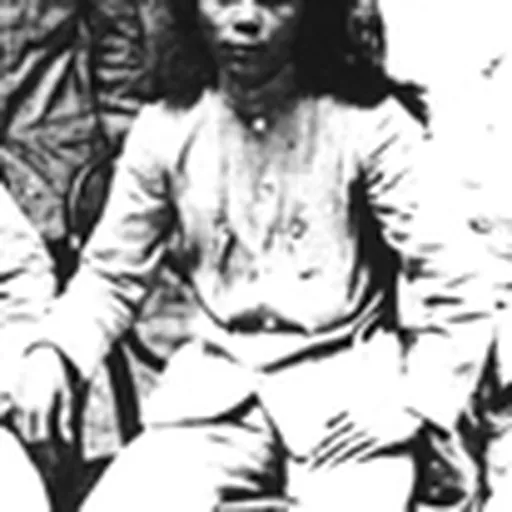
About Macario Sakay
Lived 1870 – 1907 (aged 36). Macario Sakay was a Filipino politician and military personnel.
Early life Macario Sakay de León was born on March 1, 1870, along Tabora Street, Tondo, in the City of Manila. He first worked as an apprentice in a kalesa (carriage) manufacturing shop. He was also a tailor and a stage actor, performing in a number of plays including Principe Baldovino, Doce Pares de Francia, and Amante de la Corona.
After the war Sakay was one of the founders of the Partido Nacionalista (unrelated to the present Nacionalista Party founded in 1907), which sought to achieve Philippine independence through legal means. The party appealed to the Philippine Commission, but the Commission passed the Sedition Law, which prohibited any form of propaganda advocating independence. Sakay took up arms again. Several forces remained at large, including one led by Sakay. Sakay's rank and association within Aguinaldo's Revolutionary Government is unknown. When Aguinaldo surrendered to the US, Sakay seized the leadership of the revolution and declared himself Supreme President of the Tagalog Republic. He said this included all the islands of the Philippines from Luzon to Mindanao. Taking over the Morong–Nueva Ecija command and assigning his deputies to take charge of the other Tagalog regions, Sakay wrote a constitution in which traitors, or supporters of the enemy, were to be punished with exile, imprisonment, or death. In May 1902, Sakay and his men declared open resistance to the US and conducted guerrilla raids that lasted for five years.
Tagalog Republic
Around 1902, Sakay established the Tagalog Republic somewhere in the mountains of Rizal. His first military circulars and presidential orders as "President and Commander-in-Chief" were issued in 1903. With Villafuerte, Sakay travelled to Manila, where they were welcomed and invited to receptions and banquets.
One invitation came from the Constabulary Chief, American Colonel Harry H. Bandholtz, to a party in Cavite hosted by the acting governor Colonel Louis J. Van Schaick on July 17; it was a trap. Sakay and his principal lieutenants were disarmed and arrested while the party was in progress. 1907 satirical cartoon of Lipang Kalabaw (Lipag-Kalabaw) that depicts Dominador Gomez an assemblyman as Longinus, a Roman centurion, delivering final blows of spear to the crucified freedom fighters, (from the left) Macario Sakay, Francisco Carreon, Julian Montalban, and Lucio De Vega who were sentenced to death by the American government for banditry. At his trial, Sakay was accused of bandolerismo "under the Brigandage Act of Nov. 12, 1902, which interpreted all acts of armed resistance to American rule as banditry." The American colonial Supreme Court of the Philippines upheld the decision. Sakay was convicted and sentenced to death, and hanged on September 13, 1907.
Before his death, he made the following statement:
He was buried at Manila North Cemetery later that day. That same month, the Senate adopted two separate resolutions honouring Sakay's life and his fellow freedom fighters for their contribution to the cause of independence. Camp General Macario Sakay in Los Baños, Laguna was named after the general in January 2016, when Armed Forces of the Philippines Chief of Staff Gen. Hernando Iriberri issued General Order No. 30, changing the camp's name from Camp Eldridge, a name the camp had been given during the American occupation a century prior.
In popular culture Sakay was noted for keeping long hair. His name is used in the Philippines to refer to persons needing a haircut. Portrayed by Salvador Zaragoza in the 1939 film Sakay. Portrayed by Julio Díaz in the 1993 film, Sakay. Portrayed by Dindo Arroyo in the 1997 TV series, Bayani and 2012 film, El Presidente. Portrayed by Jerald Napoles in the 2013 TV series, Katipunan. Portrayed by Remus Japitana Villanueva in the 2017 Tanghalang Pilipino musical, Aurelio Sedisyoso: A Rock Sarswela.
Don’t just read it —
keep it.
Full-length biographies made to live with: read them, listen on the way to work, watch them tonight.
- E-book
- Audio
- Video
Instant download · yours to keep · every purchase keeps this site free
Important facts
Related people
Same field, nearest in time





Contemporaries
People whose lives overlapped Macario Sakay's



Frequently asked questions
Who was Macario Sakay?
Filipino general, merchant and revolutionary (1870–1907)
When was Macario Sakay born?
Macario Sakay was born on 1 March 1870 in Tondo.
When did Macario Sakay die?
Macario Sakay died on 9 January 1907 in Manila.
What was Macario Sakay's occupation?
Macario Sakay was a politician and military personnel.
What nationality was Macario Sakay?
Macario Sakay was Filipino.
Sources & further reading
Cite this page
APA: Biography.guide. (2026). Macario Sakay. https://biography.guide/macario-sakay/
MLA: "Macario Sakay." Biography.guide, https://biography.guide/macario-sakay/.
Chicago: "Macario Sakay." Biography.guide. https://biography.guide/macario-sakay/.
Data last updated: 2026-09-20 · Spot an error? Report a correction.
Portrait: Wikimedia Commons · author & licence
Page generated 2026-09-27 04:57 UTC