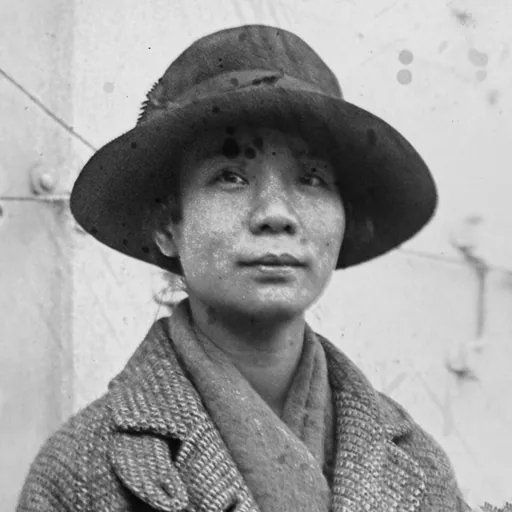
Mabel Ping-Hua Lee
Chinese advocate for women's suffrage in the United States
About Mabel Ping-Hua Lee
Lived 1896 – 1966 (aged 69–70). Mabel Ping-Hua Lee was a Chinese suffragette and missionary.
Mabel Ping-Hua Lee (; October 7, 1896 – 1966) was a Chinese-American women's rights activist and minister who campaigned for women's suffrage in the United States. Later in life, Lee became a Baptist minister, working with the First Chinese Baptist Church in Chinatown, New York City.
Born in China and raised in New York City, Lee received a bachelor's degree and master's degree from Barnard College of Columbia University, and later a doctorate in economics from Columbia University in 1921, becoming the first Chinese woman in the United States to earn a doctorate in economics. In the 1910s, Lee became an activist for women's suffrage, and participated in the 1912 New York City women's suffrage parade, where she rode on horseback. Following the eventual passage of the Nineteenth Amendment in 1920, Lee still was unable to vote due to her status as a Chinese immigrant per the Chinese Exclusion Act. She would not gain the right to vote until at least the passage of the Chinese Exclusion Repeal Act in 1943.
Lee became a Baptist minister in 1924, after taking over her father's church following his death. She went on to run the First Chinese Baptist Church for forty years, while also becoming a leader within the American Baptist Home Mission Society. Lee additionally became a community advocate for the Chinese community in New York and residents of Chinatown, working with the Chinese Community Center. In recognition of her life and advocacy on behalf of women and Chinese immigrants in the United States, the Chinatown U.S. Post Office on Doyers Street was renamed in her honor in 2017.
Early life Mabel Ping-Hua Lee was born on October 7, 1896 in Guangzhou during the Qing dynasty of China. He first served as a missionary to the Chinese community in Washington state in 1898 and then was appointed to minister at the Morning Star Mission in New York City, where he became a leading member in New York's Chinatown. Her mother's name is recorded in US census documents alternately as Lennick or Libreck Lee. A 1911 photo of The Young China Association headquarters flying the flag of the Chinese revolutionary movement in New York. Morning Star Mission is to the left. Lee spent her early childhood in China, attending a missionary school where she learned English. She was raised by her mother and grandmother while her father was in America. It has been reported she traveled with her mother to America in the summer of 1900 when she was four years old to reunite with her father. Her thesis was the first agricultural economics text written by a foreign Chinese student and maintained a balanced view of western economic ideology and Chinese traditional economic thought within the context of modern agricultural reform.
According to the only directly attributed quote from Lee in a 1912 New-York Tribune article about her, entitled Chinese Girl Wants Vote, Lee's definition of suffrage was framed in the context of its benefit to the family, specifically a husband.
Ministry
When Mabel Lee's father died from a heart attack in 1924, she took over his role as head of the Baptist mission in Chinatown at the age of 28. Although this was meant to be a temporary position, it would become her life's work. Lee traveled three times to China during the 1920s and 1930s, and even had job offers awaiting her there, but she eventually chose to settle permanently in New York and focus on her father's church.
The First Chinese Baptist Church is still standing and continues to offer the social services Lee started and strives to maintain the community's civil rights she fought for. The bill was passed in the U.S. House of Representatives in March 2018. There was a dedication ceremony at the First Chinese Baptist Church at 21 Pell St. on December 3, 2018, at 11am.
In March 2018, Lee was honored as one of a featured series of women's suffrage activists displayed on LinkNYC kiosks in New York City as part of a partnership with the Museum of the City of New York.
Lee was named a National Women's History Alliance honoree in 2020. Mabel Ping-Hua Lee was featured in the New York Times Overlooked series obituaries on remarkable people whose deaths initially went unreported in newspaper in September 2020.
Don’t just read it —
keep it.
Full-length biographies made to live with: read them, listen on the way to work, watch them tonight.
- E-book
- Audio
- Video
Instant download · yours to keep · every purchase keeps this site free
Important facts
People in Mabel Ping-Hua Lee's life
Named in this biography and alive at the same time

Related people
Same field, nearest in time
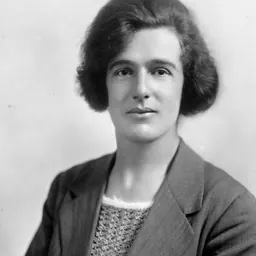


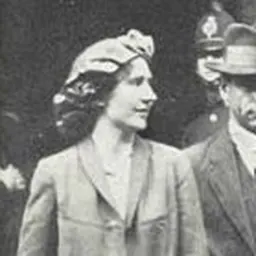

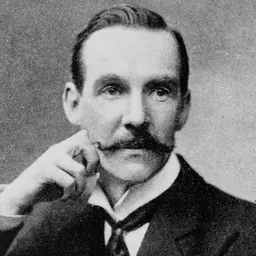
Contemporaries
People whose lives overlapped Mabel Ping-Hua Lee's


Frequently asked questions
Who was Mabel Ping-Hua Lee?
Chinese advocate for women's suffrage in the United States
When was Mabel Ping-Hua Lee born?
Mabel Ping-Hua Lee was born on 7 October 1896 in Guangzhou.
When did Mabel Ping-Hua Lee die?
Mabel Ping-Hua Lee died in 1966 in New York City.
What was Mabel Ping-Hua Lee's occupation?
Mabel Ping-Hua Lee was a suffragette and missionary.
What nationality was Mabel Ping-Hua Lee?
Mabel Ping-Hua Lee was Chinese.
Sources & further reading
· Wikipedia: Mabel Ping-Hua Lee
Cite this page
APA: Biography.guide. (2026). Mabel Ping-Hua Lee. https://biography.guide/mabel-ping-hua-lee/
MLA: "Mabel Ping-Hua Lee." Biography.guide, https://biography.guide/mabel-ping-hua-lee/.
Chicago: "Mabel Ping-Hua Lee." Biography.guide. https://biography.guide/mabel-ping-hua-lee/.
Data last updated: 2026-09-22 · Spot an error? Report a correction.
Portrait: Wikimedia Commons · author & licence
Page generated 2026-09-27 05:04 UTC