
About Ma Chengyuan
Lived 1927 – 2004 (aged 76). Ma Chengyuan was a Chinese archaeologist, anthropologist and historian, known for Chinese bronzes.
Ma Chengyuan (; 3 November 1927 – 25 September 2004) was a Chinese archaeologist, epigrapher, and president of the Shanghai Museum. He was credited with saving priceless artifacts from destruction during the Cultural Revolution, and was instrumental in raising funds and support for the rebuilding of the Shanghai Museum. He was a recipient of the John D. Rockefeller III Award, and was awarded the Legion of Honour by French President Jacques Chirac.
Ma was an authority on ancient Chinese bronzes and published more than 80 books and academic papers, including a 16-volume encyclopedia of the bronzes. He was responsible for recovering ancient relics including the Jin Hou Su Bianzhong and Warring States period bamboo strips, which are now considered China's national treasures.
Early life and career Ma Chengyuan was born in 1927 in Shanghai. In 1946, he joined an underground cell of the Chinese Communist Party, and graduated from the history department of Daxia University in Shanghai, a predecessor of East China Normal University, in 1951. He worked for the education department of the Shanghai Municipal Government before joining the Shanghai Museum in 1954. Ma was originally assigned to be a manager and Communist Party secretary of the museum, but he resigned from his political positions in 1956 to focus on academic work, and later became director of the bronze research department.
Ma initially kept the Red Guards out of the museum by organizing his employees as fake Red Guards, and protected the relics by painting Maoist slogans over the display cases. and invited Ma to accompany Chinese President Jiang Zemin to a private dinner with him in France. Ma Chengyuan was active in recovering many of the items from the Hong Kong antique market. In 1992, he purchased the 3,000-year-old Jin Hou Su bianzhong , which were listed by the Chinese government as one of the first 64 national treasures forbidden to be exhibited abroad in 2002.
In 1994, Ma recovered more than 1,200 Warring States period bamboo slips from the Kingdom of Chu, now known as the Shanghai Museum bamboo slips. Several ancient texts were written on the strips, including the Kongzi Shi Lun, a previously unknown commentary on the Confucian Classic of Poetry attributed to Confucius himself. The discovery caused a sensation in academia, and the texts have been the subject of intense studies by numerous scholars, including Ma himself.
Academics Ma was an authority on ancient Chinese bronzes and published more than 80 books and academic papers. His book Ancient Chinese Bronzes, translated into English and published by Oxford University Press , is highly influential and widely used as a university textbook. His 16-volume encyclopedia, Zhongguo Qingtongqi Quanji (中国青铜器全集, "Complete Compilation of Chinese Bronzes"), is the most comprehensive book on Chinese bronzes ever published. He was also the chief editor of Shanghai Bowuguan cang Zhanguo Chu zhushu (上海博物馆藏战国楚竹书, "Warring States Chu Bamboo Books of the Shanghai Museum"), a groundbreaking research on the Warring States bamboo strips recovered by Ma himself. Other books he published include Zhongguo Qingtongqi Yanjiu (中国青铜器研究, "Research on Chinese Bronzes"), a collection of 40 of his academic papers, Yangshao Wenhua de Caitao (仰韶文化的彩陶, "Painted Ceramics of the Yangshao Culture"), and Shang Zhou Qingtongqi Mingwen Xuan (商周青铜器铭文选, "Selected Bronze Inscriptions of the Shang and Zhou Dynasties").
In addition to his main position as Director of the Shanghai Museum, Ma also taught as a part-time professor at Shanghai's East China Normal University and Fudan University. He was also a council member of the Archaeological Society of China, and vice chairman of the China Museum Society.
Retirement and suicide Ma retired in 1999, but still served as an advisor to the Shanghai Museum. However, he had conflicts with the new management which became increasingly bitter. He was accused of misusing US$250,000 donated by a Chinese-American collector, but an investigation cleared him of wrongdoing. There were also rumours that some of the ancient bamboo strips he purchased for a high sum from public funds were fake.
In his final years, Ma allegedly experienced high blood pressure and kidney problems, yet followed his doctor's advice meticulously. It is also said that he had depression, and committed suicide on 25 September 2004. Official newspapers in China reported his death but did not initially disclose the cause. When President Chirac organized his visit to Shanghai in October, he insisted on meeting with Ma, without realizing that he had died.
Personal life Ma Chengyuan was married to Chen Zhiwu. They had a daughter, who lived in Australia. Before Ma's death, he invited his daughter to spend two weeks with him in Shanghai. He committed suicide three days after his daughter returned to Australia.
Don’t just read it —
keep it.
Full-length biographies made to live with: read them, listen on the way to work, watch them tonight.
- E-book
- Audio
- Video
Instant download · yours to keep · every purchase keeps this site free
Important facts
People in Ma Chengyuan's life
Named in this biography and alive at the same time



Related people
Same field, nearest in time

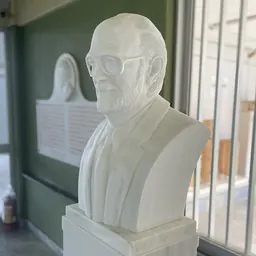
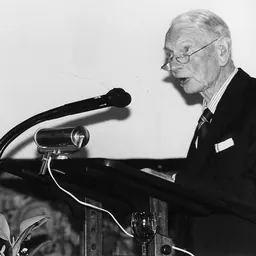
Contemporaries
People whose lives overlapped Ma Chengyuan's
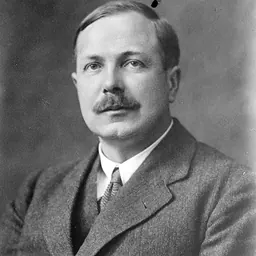


Frequently asked questions
Who was Ma Chengyuan?
Chinese archaeologist (1927-2004)
When was Ma Chengyuan born?
Ma Chengyuan was born on 3 November 1927 in Shanghai.
When did Ma Chengyuan die?
Ma Chengyuan died on 25 September 2004 in Shanghai.
What was Ma Chengyuan's occupation?
Ma Chengyuan was an archaeologist, anthropologist and historian.
What was Ma Chengyuan known for?
Ma Chengyuan was known for Chinese bronzes.
What nationality was Ma Chengyuan?
Ma Chengyuan was Chinese.
Sources & further reading
Cite this page
APA: Biography.guide. (2026). Ma Chengyuan. https://biography.guide/ma-chengyuan/
MLA: "Ma Chengyuan." Biography.guide, https://biography.guide/ma-chengyuan/.
Chicago: "Ma Chengyuan." Biography.guide. https://biography.guide/ma-chengyuan/.
Data last updated: 2026-09-20 · Spot an error? Report a correction.
Page generated 2026-09-27 05:29 UTC