
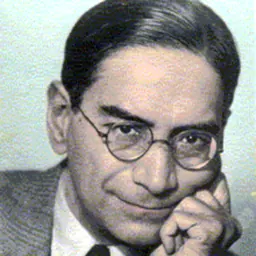
M. T. Vasudevan Nair
Indian author, screenplay writer and film director
About M. T. Vasudevan Nair
Lived 1933 – 2024 (aged 91). M. T. Vasudevan Nair was an Indian film director, screenwriter, writer, novelist, short story writer and screenplay writer.
Madath Thekkepaattu Vasudevan Narayanan Nair (15 July 1933 – 25 December 2024) was an Indian author, lecturer, screenplay writer, filmmaker and literary statesman. He was a prolific and versatile writer in modern Malayalam literature, and was one of the masters of post-Independence Indian literature. Randamoozham, which retells the story of the Mahabharata from the point of view of Bhimasena, is widely credited as his masterpiece.
At the age of 20, as a chemistry undergraduate, he won the prize for the best short story in Malayalam for Valarthumrigangal at World Short Story Competition jointly conducted by New York Herald Tribune, Hindustan Times, and Mathrubhumi. His first major novel, Naalukettu (The Legacy), written at the age of 23, won the Kerala Sahitya Akademi Award in 1958. His other novels include Manju (Mist), Kaalam (Time), Asuravithu (The Demon Seed), and Randamoozham (The Second Turn). The emotional experiences of his early days went into his novels, and most of his works are oriented towards the basic Malayalam family structure and culture. His three novels set in traditional tharavads in Kerala are Naalukettu, Asuravithu, and Kaalam.
Nair was a screenwriter and director of Malayalam films. He directed seven films and wrote the screenplay for around 54 films. He won the National Film Award for Best Screenplay four times, for: Oru Vadakkan Veeragatha (1989), Kadavu (1991), Sadayam (1992), and Parinayam (1994), which is the most by anyone in the screenplay category. In 1995 he was awarded the highest literary award in India, Jnanpith, for his overall contribution to Malayalam literature. In 2005, India's third-highest civilian honour, Padma Bhushan, was awarded to him. He died in Kozhikode on 25 December 2024. In 2025, he received Padma Vibhushan, India's second-highest civilian honour, posthumously.
Early life and education M.T. Vasudevan Nair at Malayalam Wikipedia annual meetup 2015
Madath Thekkepaattu Vasudevan Narayanan Nair was born on 15 July 1933 in the village of Kudallur, then in Ponnani Taluk (now in Pattambi Taluk, Palakkad District). His birthplace fell under Malabar District in erstwhile Madras Presidency of the British Raj. He was the youngest of four children born to T. Narayanan Nair and Ammalu Amma. His father was in Ceylon, and he spent his early days in Kudallur and in his father's house in Punnayurkulam, a village in the present-day Thrissur district. He obtained a degree in chemistry from Victoria College, Palakkad in 1953.
Nair taught mathematics in Pattambi Board High School and Chavakkad Board High School for over a year and worked in M.B. Tutorial College, Palakkad during 1955–56. His first book, Raktham Puranda Manaltharikal was published in 1952. "Iruttinte Athmavu" ("Soul of Darkness"), one of the most celebrated among his short stories, is the heart wrenching story of a 21-year-old man, regarded as a lunatic by everyone and treated abominably. The story reveals the insanity behind the civilised and supposedly sane world. The story "Sherlock" moves between the rural milieu familiar to Nair's readers and the sophisticated world of Indian immigrants in the US, highlighting the contrast between them with subtle irony. Nair wrote passionately of the cruelty hidden at the heart of a seemingly idyllic rural life ("Kurukkante Kalyanam" or "The Jackal's Wedding" and "Shilalikhithangal" or "Stone Inscriptions") and of the privations endured by those dependent on the agricultural cycle ("Karkitakom" and "Pallivalum Kalchilambum" or "Sacred Sword and Anklets"). In the story "Vanaprastham", he studies the delicately balanced relationship between a teacher and a student that has miraculously survived the years.
Nair was of the opinion that short story is a genre in which a writer can achieve near perfection. He, along with T. Padmanabhan, served as bridges between the early modern short story writers in Malayalam, of the so-called renaissance, and the new short story of the late fifties and sixties. It was given the Kerala Sahitya Akademi Award in 1959. It has had 23 reprints and was translated into 14 languages and had a record sale of a half a million copies (as of 2008) and still features in the best-seller lists. Nair himself adapted the novel into a television film for Doordarshan in 1995. It won the Kerala State Television Award for the year 1996.
Asuravithu (The Demon Seed; 1972) which is set in a fictional Valluvanadan village named Kizhakkemuri can be considered almost as a sequel to Naalukettu. It has the same geophysical and socio-cultural setting. The novel describes the plight of the protagonist Govindankutty, the youngest son of a proud Nair tharavadu, as he is trapped between the social scenario, social injustice and his own inner consciousness. In Asuravithu there are clear indications of the damaging impact of an alien culture in the pollution of the indigenous culture and the disintegration of the family and the community. These two early novels—Naalukettu and Asuravithu—depict a phase in which the economic and cultural scenario of Kerala manifested symptoms which were to develop into dangerous ecocidal tendencies at a later stage.
Manju and Kaalam
His later novels, such as Manju (Mist; 1964) and Kaalam (Time; 1969), are characterised by profuse lyricism which cannot be found in Naalukettu or Asuravithu. The eco-feminist theme of patriarchal domination and exploitation gained more prominence in Manju, Nair's only novel with a female protagonist (Vimala). Set in the splendid landscape of Nainital, it stands apart as set in a milieu different from the usual one, the Valluvanadan village. The plot of the novel is allegedly similar to a Hindi story Parinde (Birds, 1956), by Nirmal Verma. However, both Nair and Verma had rejected these claims.
In the novel Kaalam, Nair returned to his favourite milieu, the dilapidated joint-family Nair tarwad set against the wider backdrop of the Valluvanadan village in the backdrop of the crumbling matrilineal order of Kerala in a newly independent India. Sethu, the protagonist, is toppled over by the eddies of social, cultural and economic transformation. Kaalam, though not strictly autobiographical, has a strong autobiographical element in it. Manju had a film adaptation in 1983, written and directed by Nair himself. The novel also had a Hindi-language film adaptation titled Sharad Sandhya.
Randamoozham
Randamoozham (The Second Turn; 1984), retells the story of the Mahabharatha from the point of view of Bhimasena, supposed to be the son of Vayu; this is demystified or demythified in the novel. In this novel, Bhima gains, through the author's ironic undertones, a new psychological depth. "I have not changed the framework of the story by the first Vyasa, Krishna-Dwaipayana. I have read between his lines and expanded on his pregnant silences," says the author.
Varanasi Nair's novel Varanasi (2002) is based around a journey to Varanasi, a pilgrim centre in North India. With no intricate plot, the novel is an experiment. It was well received in the literary circles but received criticism from critic and painter M. V. Devan.
Other works Nair wrote the novel Arabi Ponnu (The Gold of Arabia) along with N. P. Mohammed. Nair and Mohamed stayed in a rented house in Karuvarakkundu village, Malappuram for a period of two weeks to complete this work.
Nair authored two books on the craft of writing—Kaathikante Panippura and Kaathikante Kala—and his anecdotal columns articles on various topics and speeches on different occasions have been compiled under the titles Kilivaathililude, Kannanthalippookkalude Kaalam, Vakkukalude Vismayam and Eekakikalude Sabdam. Manushyar Nizhalukal and Aalkkoottathil Thaniye are his travelogues.
Other activities Nair occupied many important positions in various literary bodies, including the presidency of Kerala Sahitya Akademi and the chairmanship of Tunchan Memorial Trust. He served as editor of periodicals and chief editor of Mathrubhumi Illustrated Weekly.
He espoused and promoted secularism through his literature, cinema, and public life. Nair created secular intellectual movement in Kerala in the 1990s for peace with many intellectuals.
Film career Nair along with Ramachandra Babu, who served as cinematographer in many of his films. Nair is one of the most distinguished and well accepted script writers and directors in Malayalam cinema. He has directed seven films and written the screenplay for around 54 films. He won the National Film Award for Best Screenplay four times for: Oru Vadakkan Veeragatha (1989), Kadavu (1991), Sadayam (1992), and Parinayam (1994), which is the most by anyone in the screenplay category.
Nair was the first and foremost script writer in Malayalam who wrote screenplays after having learnt cinema as a distinctive visual art which has its own language, grammar and structure. According to the folklore Vadakkanpattu (Northern Ballads), Chandu is said to have betrayed his cousin because he was jealous of Aaromal's popularity and abilities. But Nair's Oru Vadakkan Veeragatha, The film is about a village oracle whose services are no longer needed by the community and whose family begins to fall apart. Nair scripted and directed many more films including the award-winning Bandhanam, Kadavu and Oru Cheru Punchiri. Kadavu won awards at the Singapore International Film Festival and Tokyo International Film Festival. His cinema work also includes three documentaries and one TV series. He has written songs for the 1981 film Valarthumrugangal which were set to tune by M. B. Sreenivasan.
Nair was the chairman of Indian Panorama of the 46th National Film Awards (1998). He has also been a member of Film Finance Corporation, National Film Development Corporation and Film Censoring Committee. He has also served as a faculty in the Film and Television Institute, Pune.
Literary style and themes
Nair was born and brought up in a sylvan village on the banks of Nila. The writer has so often acknowledged his indebtedness to the ethos of his village and to Nila which has ever been the mainspring of his creative inspiration. Nila occurs and re-occurs in Nair's fiction, as a presence and as a symbol, endorsing this view. The staple locale of his fiction is the Valluvanadan village. The landscape and ethos of the Valluvanad region and the transformations undergone by them in the course of the century, involving relics of the tarawad and the communal tensions provide a challenging theme for the highly evocative style of Vasudevan Nair's narrative art. The temporal milieu of Nair's fiction stretches over the second half of the twentieth century, a period of tremendous social, cultural and economic changes.
It was in the sixties that Nair rose to prominence as a writer. The phase of social realism had come to an end. He had a daughter from this marriage, Sithara, who works as a business executive in the United States. with whom he had a daughter, dancer Aswathy Nair.
Nair resided in Sithara, Kottaram Road, Kozhikode, named after his eldest daughter.
He died on 25 December 2024, at the age of 91. He had been admitted to Baby Memorial Hospital in Kozhikode on 15 December due to breathing difficulties. Despite medical intervention, his condition worsened, and he suffered a cardiac arrest, leading to his death.
Recognition, awards, and honours Nair is regarded as one of the masters of post-Independence Indian literature.
He was bestowed with honorary D.Litt. degree by the Calicut University and Mahatma Gandhi University.
As of 2016 the Library of Congress in Washington, D.C., United States, had a collection of 62 books authored by Nair (including some English translations) or about him.
Honours 1996: Honorary doctorate (D.Litt.) from University of Calicut 1996: Honorary doctorate from Mahatma Gandhi University 2005: Padma Bhushan, India's third highest civilian award 2008: Honorary doctorate from Netaji Subhas Open University 2022: Kerala Awards, instituted by the Government of Kerala 2025: Padma Vibhushan (posthumously), India's second-highest civilian award
Literary awards
1958: Kerala Sahitya Akademi Award for Novel – Naalukettu 1970: Kendra Sahitya Academy Award – Kaalam 1982: Kerala Sahitya Akademi Award for Drama – Gopura Nadayil 1985: Vayalar Award for Randamoozham 1986: Kerala Sahitya Akademi Award for Story – Swargam Thurakkunna Samayam 1993: Odakkuzhal Award – Vanaprastham 1994: Muttathu Varkey Award 1995: Jnanpith Award for his contributions to Malayalam literature 1998: Padmarajan Award – Kaazhcha 2001: Bahrain Keraleeya Samajam Sahithya Award 2003: Lalithambika Antharjanam Smaraka Sahitya Award 2005: Kerala Sahitya Akademi Fellowship 2005: Vallathol Award 2005: Mathrubhumi Literary Award 2011: Ezhuthachan Award 2011: T. K. Puraskaram 2011: Suvarnamudra Award 2011: Mayilpeeli Award 2013: Sahitya Akademi Fellowship 2013: Sree Chithira Thirunal Award 2013: K. P. S. Menon Award 2014: Nalappadan Award 2014 for his Holistic Contributions to Malayalam Literature (Nalappadan Memorial Cultural Society-NMCS) 2014: Suvarnamudra Award by Guruvayur Naadha Brahmolsavam 2014: A. R. Raja Raja Varma Award 2014: Kakkanadan Award 2014: Balamani Amma Award 2014: Tata-Landmark Literature Live! Lifetime Achievement Award 2015: O.M.C. Narayanan Namboodiripad Memorial Devi Prasadam Trust's Award for Literature 2015: Thakazhi Award 2016: Deshabhimani Award 2018: O. N. V. Literary Award 2024: Amar Ujala Aakashdeep Award
Film awards National Film Awards
Nair won the following National Film Awards: 1973: Best Film – Nirmalyam 1989: Best Screenplay – Oru Vadakkan Veeragatha 1991: Best Screenplay – Kadavu 1991: Best Feature Film in Malayalam – Kadavu 1994: Best Screenplay – Parinayam 2000: Best Film on Environment Conservation/Preservation – Oru Cheru Punchiri
Kerala State Film Awards
He won the following Kerala State Film Awards: 1970: Best Screenplay – Olavum Theeravum 1973: Best Film – Nirmalayam 1983: Best Story – Aaroodam 1991: Best Director – Kadavu 2009: Best Screenplay – Pazhassi Raja
Kerala Film Critics Association Awards
He also won Kerala Film Critics Association Awards: 1978: Best Screenplay – Bandhanam 1980: Best Screenplay – Vilkkanundu Swapnangal 1981: Best Story – Valarthumrugangal 1982: Best Story – Vaarikuzhi 1984: Best Screenplay – Aalkkoottathil Thaniye 1985: Best Screenplay – Anubandham 1985: Best Story – Anubandham 1994: Best Screenplay – Sukrutham 1997: Best Screenplay – Ennu Swantham Janakikutty
Other film awards Other film awards won by Nair include: 1991: Filmfare Special Award – South 1992: Singapore International Film Festival – Special Jury Award – Kadavu 1992: Tokyo International Film Festival – Asia Future Prize – Kadavu 2016: Asianet Film Awards – Lifetime Achievement Award 2013: J. C. Daniel Award by the Government of Kerala
Don’t just read it —
keep it.
Full-length biographies made to live with: read them, listen on the way to work, watch them tonight.
- E-book
- Audio
- Video
Instant download · yours to keep · every purchase keeps this site free
Important facts
People in M. T. Vasudevan Nair's life
Named in this biography and alive at the same time




Related people
Same field, nearest in time



Contemporaries
People whose lives overlapped M. T. Vasudevan Nair's



Frequently asked questions
Who was M. T. Vasudevan Nair?
Indian author, screenplay writer and film director (1933–2024)
When was M. T. Vasudevan Nair born?
M. T. Vasudevan Nair was born on 15 July 1933 in Kudallur.
When did M. T. Vasudevan Nair die?
M. T. Vasudevan Nair died on 25 December 2024 in Kozhikode.
What was M. T. Vasudevan Nair's occupation?
M. T. Vasudevan Nair was a film director, screenwriter, writer, novelist, short story writer and screenplay writer.
What nationality was M. T. Vasudevan Nair?
M. T. Vasudevan Nair was Indian.
Sources & further reading
· Wikipedia: M. T. Vasudevan Nair
· DBpedia: M. T. Vasudevan Nair
Cite this page
APA: Biography.guide. (2026). M. T. Vasudevan Nair. https://biography.guide/m-t-vasudevan-nair/
MLA: "M. T. Vasudevan Nair." Biography.guide, https://biography.guide/m-t-vasudevan-nair/.
Chicago: "M. T. Vasudevan Nair." Biography.guide. https://biography.guide/m-t-vasudevan-nair/.
Data last updated: 2026-09-20 · Spot an error? Report a correction.
Page generated 2026-09-27 05:27 UTC