
About M. Stanley Livingston
Lived 1905 – 1986 (aged 81). M. Stanley Livingston was an American physicist, known for Cyclotron and Strong focusing.
Milton Stanley Livingston (May 25, 1905 – August 25, 1986) was an American accelerator physicist, co-inventor of the cyclotron with Ernest Lawrence, and co-discoverer with Ernest Courant and Hartland Snyder of the strong focusing principle, which allowed development of modern large-scale particle accelerators. He built cyclotrons at the University of California, Cornell University and the Massachusetts Institute of Technology. During World War II, he served in the operations research group at the Office of Naval Research.
Livingston was the chairman of the Accelerator Project at Brookhaven National Laboratory, director of the Cambridge Electron Accelerator, a member of the National Academy of Sciences, a professor of physics at MIT, and a recipient of the Enrico Fermi Award from the United States Department of Energy. He was associate director of the National Accelerator Laboratory from 1967 to 1970.
Early life Livingston was born in Brodhead, Wisconsin, on May 25, 1905, the son of McWhorter Livingston, a minister of religion, and his wife Sarah Jane. Sarah was a member of the Ten Eyck family, an influential New York family whose Dutch origins date back to the 1640s. He had three sisters. The family moved to California when Livingston was five years old, and he grew up in Burbank, Pomona and San Dimas. His father became a high school teacher and principal. His mother died when he was 12 years old, and his father later remarried. Livingston thereby acquired five half-brothers.
After graduating from high school in 1921, Livingston entered nearby Pomona College, intending to major in chemistry, with a double major in physics and chemistry. Tileston arranged for him to then enter Dartmouth College with a teaching fellowship. and stayed on for another year as an instructor. a topic suggested by Ernest Lawrence, who had noticed that ions of mass and charge moving in a uniform magnetic field circulate at a constant frequency independent of energy:
In theory, therefore, if a particle traversed an electrode with a voltage V N times, it would acquire energy of NeV. Stanley's task was to verify if this would work. In January 1931, Stanley managed to do just that, using a voltage of 1 kV to accelerate hydrogen ions to 80 keV. At Lawrence's prompting, Stanley quickly wrote up his thesis and submitted it in April 1931 so that he would be eligible for an instructorship the following year.
In the cyclotron, they had a powerful scientific instrument, but this did not translate into scientific discovery. In April 1932, John Cockcroft and Ernest Walton at the Cavendish laboratory in England announced that they had bombarded lithium with protons and succeeded in transmuting it into helium. The energy required turned out to be quite low—well within the capability of the 11-inch cyclotron. On learning about it, Lawrence wired the Berkeley and asked for Cockcroft and Walton's results to be verified. It took the team until September to do so, mainly due to lack of adequate detection apparatus.
Between 1932 and 1934, Livingston authored or co-authored over a dozen papers on nuclear physics and the cyclotron, but he felt overshadowed by Lawrence, and did not think that he had gotten sufficient credit for his part in designing the cyclotron, for which Lawrence would receive the Nobel Prize in Physics in November 1939. Livingston therefore accepted an offer of an assistant professorship from Cornell University in 1934. He also teamed up with Bethe to demonstrate for the first time that the neutron has a magnetic moment. Livingston recalled that Bethe:… gave me a feeling for the fundamentals of physics, and of what was going on in nuclear physics. With him for the first time I sensed how deep the field was, how involved it was, and how much we needed in the way of new information. I learned of many new kinds of concepts like magnetic moments and quantum aspects, that I had never heard of while with Lawrence. It was a different environment. I was now following a scholar and was really impressed.
Livingston was unable to stay at Brookhaven to see the Cosmotron project completed because he faced losing his tenure at MIT, and elected to return there in 1948. The advantages of strong focusing were then quickly realised, and deployed on the Alternating Gradient Synchrotron, which achieved 33 GeV in 1960.
The National Accelerator Laboratory, was renamed the Fermi National Accelerator Laboratory in 1974, was established in Batavia, Illinois, in 1967. Like Brookhaven, it was run by a consortium of universities.
Awards and distinctions Honorary degrees from Dartmouth College (1963), Hamburg, Germany (1967), and Pomona College (1971). Enrico Fermi Award from United States Department of Energy (1986) (posthumous)
Don’t just read it —
keep it.
Full-length biographies made to live with: read them, listen on the way to work, watch them tonight.
- E-book
- Audio
- Video
Instant download · yours to keep · every purchase keeps this site free
Important facts
People in M. Stanley Livingston's life
Named in this biography and alive at the same time

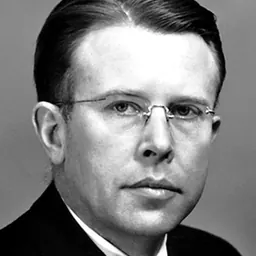
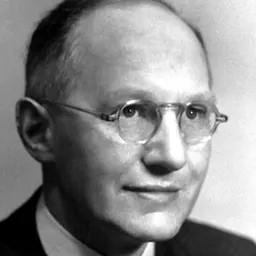
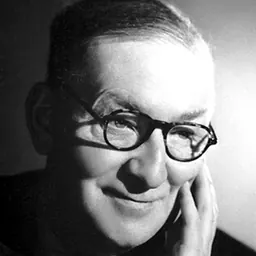

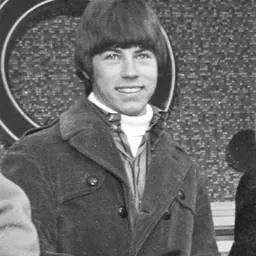

Related people
Same field, nearest in time

Contemporaries
People whose lives overlapped M. Stanley Livingston's




Frequently asked questions
Who was M. Stanley Livingston?
U.S.-American physicist (1905–1986)
When was M. Stanley Livingston born?
M. Stanley Livingston was born on 25 May 1905 in Brodhead.
When did M. Stanley Livingston die?
M. Stanley Livingston died on 25 August 1986 in Santa Fe.
What was M. Stanley Livingston's occupation?
M. Stanley Livingston was a physicist.
What was M. Stanley Livingston known for?
M. Stanley Livingston was known for Cyclotron and Strong focusing.
What nationality was M. Stanley Livingston?
M. Stanley Livingston was American.
Sources & further reading
· Wikipedia: M. Stanley Livingston
· DBpedia: M. Stanley Livingston
Cite this page
APA: Biography.guide. (2026). M. Stanley Livingston. https://biography.guide/m-stanley-livingston/
MLA: "M. Stanley Livingston." Biography.guide, https://biography.guide/m-stanley-livingston/.
Chicago: "M. Stanley Livingston." Biography.guide. https://biography.guide/m-stanley-livingston/.
Data last updated: 2026-09-26 · Spot an error? Report a correction.
Page generated 2026-09-27 05:14 UTC