
About Lygia Pape
Lived 1927 – 2004 (aged 77). Lygia Pape was a Brazilian sculptor, painter, draftsperson, graphic artist, installation artist and filmmaker.
Lygia Pape (7 April 1927 – 3 May 2004) was a Brazilian visual artist, sculptor, engraver, and filmmaker, who was a key figure in the Concrete movement and a later co-founder of the Neo-Concrete Movement in Brazil during the 1950s and 1960s.
Early life and career Lygia Pape was born on 7 April 1927 in Nova Friburgo, Brazil. Afterwards, she received an informal training in fine arts, and studied with Fayga Ostrower at the Museum of Modern Art, Rio de Janeiro.
Concrete art At age 20, Pape joined the concrete art movement. The term "concrete art" was coined by the Dutch artist Theo van Doesburg in 1930.
Tecelares Series In the 1950s, Pape created her Tecelares Series. The Tecelares wood prints were originally seen purely as works of Concrete art because of their precise and geometric aesthetic. The woodblock prints are minimalistic; they feature planes of black ink and thin lines that reveal the white rice paper underneath. The production of the series seems straightforward: Pape incised the entire surface of the woodblock with thin lines, adding several non-orthogonal lines to create the appearance of distinct planes and the suggestion of movement and space in a work that would be otherwise flat and static. In Tecelares, Lygia Pape used "weaving" as a metaphor to evoke handiwork and a connection to Brazil's traditional and indigenous culture. The Grupo Frente organized a subtle movement that rejected the national painting style of Brazil. Grupo Frente began exploring abstract and concrete art styles that distanced themselves from overly political art. Grupo Frente organized two solo exhibitions. Their first exhibition was at the Ibeu gallery in Rio in 1954, under the artist guidance of Ferreira Gullar. Their second exhibition was in 1955 at the Museum of Modern Art in Rio. Both exhibits highlighted non-traditional use of line, geometric shapes and color.
Neo-Concrete Movement After her involvement with the Grupo Frente Concrete artists, Pape transitioned into the short wave of Neo-Concrete art.
As scholar Adele Nelson suggested, the Grupo Ruptura artist Waldemar Cordeiro and the Grupo Frente Ferreira Gullar had a debate on each other's “inadequate and overzealous rigor in their respective approaches to geometric abstraction”, which promoted and inspired the former members of Grupo Frente including Lygia Pape to initiate the Neo-Concrete movement in 1959. Neo-Concrete Movement advocates for a more expressive and corporeal viewing experience than the “overly rational” art-making approach embraced by Grupo Ruptura.
In 1959 Pape was a signatory of the Neo-Concrete Manifesto, along with Lygia Clark and Helio Oiticica. In explaining her approach, Lygia Pape said:
Pape specifically during her Neo-Concrete period was interested in the “proposal to ‘live the body.’” This phrase indicates Pape’s interest in how the physical body acts as our mediator for all sensual experiences. Pape sought to explore this idea of the body’s relation in space by creating multi-sensorial experiences in her artwork.
Among the videos produced in this period, the seminal film made in 1975 by Pape, Eat Me, has evoked the interest in exploring the attraction and repulsion in gender and sexuality. The sensual movements of a female and a male mouth are presented in slow motion, which is referred to as an implication of a vagina as well as the actions of “sucking and expelling objects”, according to Claudia Calirman. Although Pape persisted that this work should not be viewed as a thesis, the film reveals sexism by “implicating the viewer in the objectification of women”.
From 1972 to 1985, Pape taught semiotics at the School of Architecture at the Universidade Santa Úrsula in Rio de Janeiro, and was appointed professor in the School of Fine Arts of the Universidade Federal do Rio de Janeiro in 1983 as well. In 1980 she received a master's degree in philosophy from the Federal University of Rio de Janeiro. In her films, photography, and teaching of the 1970s and 1980s, Pape sought to investigate architectural forms and sociability of urban space in Rio de Janeiro.
Pape's first retrospective exhibition was held in 2000, with a close focus on her print practice in chronological delineation. She viewed these works as “a generative source of her fifty-plus years of artistic creation”. When reinterpreting these artworks, Pape also adopted the form of photography with no surprise. Pape invented the word "Ttéias", which is a pun based on the Portuguese word for "web" ("teia") and for "a person or thing of grace" ("teteia"). This series consists of an immersive staging of semi-transparent prisms, which were created using gold thread. This piece blends realism and imaginary art, allowing the viewer to interpret Ttéias by walking through it.
Her work is in the collections of the Museum of Modern Art, the Museo Nacional Centro de Arte Reina Sofía, and the Tate,
Pape's work was included in the 2021 exhibition Women in Abstraction at the Centre Pompidou.
In 2025/2026 Pape was given her first solo exhibition in France, called Weaving Space, at the Pinault Collection, Bourse de Commerce.
Select exhibitions 2000 Artur Barrio, Antonio Manuel, Lygia Pape, Museu Serralves, Porto 2002 Brazil: Body and Soul, Solomon R. Guggenheim Museum, New York 2003 50. Biennale di Venezia 2009 Making Worlds, 53rd Biennale di Venezia, Venice 2009 Folder Museum of Modern Art, New York 2011 Lygia Pape: Magnetized Space, Serpentine Galleries, London 2011 Museo Nacional Centro de Arte Reina Sofía, Madrid 2017 Lygia Pape: A Multitude of Forms, Metropolitan Museum of Art, New York; catalog 2018 Lygia Pape: Ttéia 1, C, Moderna Museet, Stockholm 2022 Lygia Pape. The Skin of ALL, Kunstsammlung Nordrhein-Westfalen, Düsseldorf
Art market and estate Pape did not work with a commercial gallery until later in life.
Projeto Lygia Pape, the artist's estate, was founded by the artist before her death in 2004 and is administered by her daughter Paula Pape. In 2017, Paula Pape filed a suit in the United States District Court for the Southern District of New York against LG Electronics, several vendors of its mobile phones and Getty Images Korea alleging an infringement of copyright of her mother's 2003 sculpture TtEia 1, C in packaging materials, advertising and promotions for the K20 V mobile phone.
Don’t just read it —
keep it.
Full-length biographies made to live with: read them, listen on the way to work, watch them tonight.
- E-book
- Audio
- Video
Instant download · yours to keep · every purchase keeps this site free
Important facts
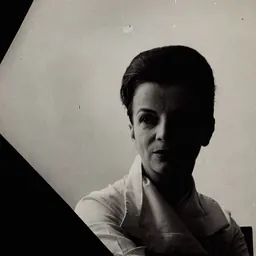
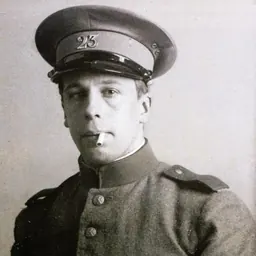
People in Lygia Pape's life
Named in this biography and alive at the same time




Related people
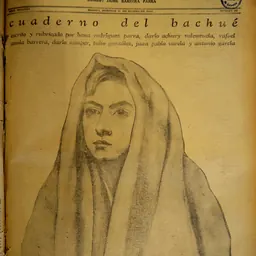
Same field, nearest in time


Contemporaries
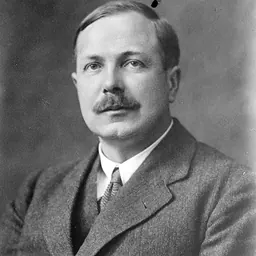
People whose lives overlapped Lygia Pape's


Frequently asked questions
Who was Lygia Pape?
Brazilian artist (1927–2004)
When was Lygia Pape born?
Lygia Pape was born on 7 April 1927 in Nova Friburgo.
When did Lygia Pape die?
Lygia Pape died on 3 May 2004 in Rio de Janeiro.
What was Lygia Pape's occupation?
Lygia Pape was a sculptor, painter, draftsperson, graphic artist, installation artist and filmmaker.
What nationality was Lygia Pape?
Lygia Pape was Brazilian.
Sources & further reading
Cite this page
APA: Biography.guide. (2026). Lygia Pape. https://biography.guide/lygia-pape/
MLA: "Lygia Pape." Biography.guide, https://biography.guide/lygia-pape/.
Chicago: "Lygia Pape." Biography.guide. https://biography.guide/lygia-pape/.
Data last updated: 2026-09-20 · Spot an error? Report a correction.
Page generated 2026-09-27 05:25 UTC