
About Lydia Thompson
Lived 1838 – 1908 (aged 70). Lydia Thompson was a British actor, dancer, stage actor and actor-manager.
Lydia Thompson (born Eliza Hodges Thompson; 19 February 1838 – 17 November 1908), Her father died in 1842, and her mother remarried Edward Hodges. By the age of 14, Thompson had left home and joined the stage professionally as a dancer.
In 1852, she became a member of the corps de ballet at Her Majesty's Theatre, London. By the following year she was playing a solo role, Little Silverhair, in the pantomime Harlequin and the Three Bears, or, Little Silverhair and the Fairies at the Haymarket Theatre.
There, she also played in the burlesque Ganem, the Slave of Love, and in the ballet-farce Magic Toys. These performances brought a period of prosperity to what had come to be regarded as one of the unluckiest theatres in London. She also appeared that year in The King's Rival by Tom Taylor and Charles Reade (J. L. Toole's first London role), Beauties of the Harem, and, again at the Haymarket, in the title role in the Christmas pantomime Little Bo Peep, or, Harlequin and the Girl who Lost her Sheep. She then returned to complete the season at the St James's in Cupid's Ladder and the fairy spectacle, The Swan and Edgar. She returned to England in the summer of 1859, by which time The Times referred to her as "one of the most eminent of English dancers."
In the winter season of 1859–60, Thompson danced at the St James's in several pieces, including Virginius, or, The Trials of a Fond Papa, Lester Buckingham's burlesque Virginus, Valentine in Magic Toys, Dolly Mayflower in Black-Eyed Susan and Young Norval in the ballet-burlesque My Name is Norval. In 1860, Thompson performed at Dublin's Queen's Theatre. was a strong success. Nearly a half century later, an article in the New York Clipper recalled: "The present school of burlesque originated with Lydia Thompson."
Thompson became engaged to Henderson, and together they sailed in August 1868 to the United States. Thompson's troupe, called the "British Blondes", was the most popular entertainment in New York during the 1868–1869 theatrical season: "The eccentricities of pantomime and burlesque – with their curious combination of comedy, parody, satire, improvisation, song and dance, variety acts, cross-dressing, extravagant stage effects, risqué jokes and saucy costumes – while familiar enough to British audiences, took New York by storm." The six-month tour was extended to almost six years, and during two subsequent tours the British Blondes drew large crowds at leading theatres across the US. The troupe launched the careers of several actors, including Markham, Alice Burville, Lisa Weber and Rose Coghlan, and of comedian Willie Edouin. After this untimely closure, the hatred toward American burlesque continued to grow. Thompson's shows were described as a “disgraceful spectacle of padded legs jiggling and wriggling in the insensate follies and indecencies of the hour”. Times called their shows “an idiotic parody of masculinity”. The New York Times constantly expressed its disgust of burlesque, even headlining an article with the plea “Exit British Burlesque”. Then, on 24 February 1870, Thompson, Henderson and her colleague, Pauline Markham, horsewhipped Storey at gunpoint, for which they were arrested and fined. Thompson told a reporter that Storey "had called her by the most odious epithet that could be applied to a woman, and she could stand it no longer. She was glad at what she had done."
Thompson married Henderson on 28 July 1873 in Westminster. They and her troupe finally returned to England in 1874, and she resumed her starring roles in London and provincial productions, including H. B. Farnie's burlesques of Bluebeard (which she had already made a hit in America) and Robinson Crusoe, and Robert Reece's Carmen, or, Sold for a Song, as well as Piff-Paff (Le Grand Duc de Matapa), Oxygen, The Lady of Lyons, Pluto! and other burlesques. In her production of Bluebeard, she received a review in the Illustrated Sporting and Dramatic News saying, “the acting of Miss Lydia Thompson not even the most fastidious can find fault. Her chic amuses, her abandon bewitches, her personal charms delight and indeed, in all she does, whether speaking, singing or dancing she exercises over her audiences an influence which is perfectly irresistible, taking by storm the hearts of all who see and hear her.” In the following years, Thompson returned to America several times, where she remained popular. Her final performances were in 1904, as the Duchesse du Albuquerque in A Queen's Romance.
Thompson died in London at the age of 70. and later for playing wise or evil older characters in films, such as Grandma in The Grapes of Wrath (1940) and Grandma Lester in Tobacco Road (1941).
Don’t just read it —
keep it.
Full-length biographies made to live with: read them, listen on the way to work, watch them tonight.
- E-book
- Audio
- Video
Instant download · yours to keep · every purchase keeps this site free
Important facts
Family & relationships
People in Lydia Thompson's life
Named in this biography and alive at the same time


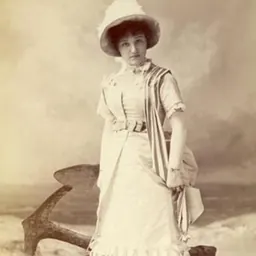
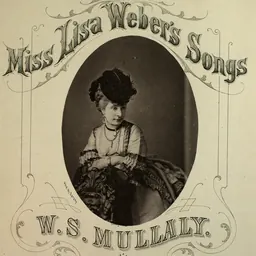


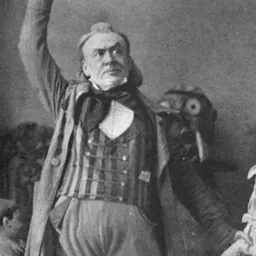
Related people
Same field, nearest in time
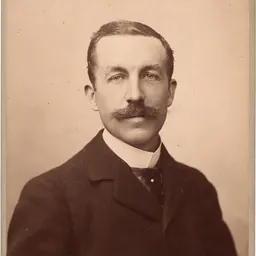



Contemporaries
People whose lives overlapped Lydia Thompson's

Frequently asked questions
Who was Lydia Thompson?
British burlesque performer
When was Lydia Thompson born?
Lydia Thompson was born on 19 February 1838 in London, Catherine Street.
When did Lydia Thompson die?
Lydia Thompson died on 17 November 1908 in London.
What was Lydia Thompson's occupation?
Lydia Thompson was an actor, dancer, stage actor and actor-manager.
What nationality was Lydia Thompson?
Lydia Thompson was British.
Sources & further reading
Cite this page
APA: Biography.guide. (2026). Lydia Thompson. https://biography.guide/lydia-thompson-actor/
MLA: "Lydia Thompson." Biography.guide, https://biography.guide/lydia-thompson-actor/.
Chicago: "Lydia Thompson." Biography.guide. https://biography.guide/lydia-thompson-actor/.
Data last updated: 2026-09-22 · Spot an error? Report a correction.
Page generated 2026-09-27 05:25 UTC