
About Lujo Bezeredi
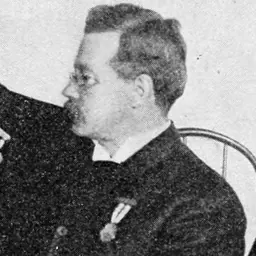
Lived 1898 – 1979 (aged 80). Lujo Bezeredi was a Hungarian and Yugoslav sculptor and ceramicist.
Lujo Bezeredi (also spelled Bezeredy, ; 1898 – April 20, 1979) was a Croatian-Hungarian sculptor and painter.
His life He was born in Nova, Kingdom of Hungary, to a Hungarian-Slovak father and a Croatian mother. After the death of his parents, he moved to Csáktornya (present-day Čakovec, Croatia), where he completed his schooling at the public school and teacher's training school. In 1917 he was drafted to the army. He took part in the establishment of the Serbian–Hungarian Baranya–Baja Republic. After the collapse, he fled to Yugoslavia, but was briefly detained in Osijek. He later studied at the College of Education in Budapest and enrolled in the Academy of Fine Arts in Zagreb in 1922.
He emigrated to Bulgaria. He lived on casual manual jobs, and was finally hired in a brick factory in Plovdiv where he began to make clay in his spare time. In 1922, he returned to Zagreb and enrolled in the sculpture department of the Academy of Fine Arts. His teachers were Rudolf Valdec, Robert Frangeš-Mihanović and Frano Kršinić. Kršinić liked his work, but due to lack of funds, he had to interrupt his studies and made ceramics for sale. During these years he lived in great poverty. In 1927, his exhibition opened in Zagreb.
Between 1936 and 1941 he lived in Belgrade. In 1941, during the German occupation of Belgrade, he fled to Budapest with a group of Hungarians to join the Budapest anti-fascist group connected to the British SIS (Secret Intelligence Service). As a material for sculptures he mostly used terra cotta, with engobe being his favourite pottery technique along with less frequently used faience and glazing techniques. His work is characterized by social motifs from urban and rural life.
In 1942, he returned to Csáktornya, taught drawing, but was dismissed from the school because of his principles. He remained in the city until his death and continued to create. In the beginning, he created figurative, later abstract sculptures. From 1927 to 1969, his works were featured in individual and joint exhibitions in the cities of Croatia, Belgrade and Vienna. In 1968, he was awarded the second grade of the Yugoslav Medal of Merit. In 1969, he received the Vladimir Nazor Award for his life's work.
Bezeredi donated his entire collection of 485 various works of art to the Međimurje County Museum in Čakovec. He is buried at the city cemetery in the same town.
Gallery
Don’t just read it —
keep it.
Full-length biographies made to live with: read them, listen on the way to work, watch them tonight.
- E-book
- Audio
- Video
Instant download · yours to keep · every purchase keeps this site free
Important facts
People in Lujo Bezeredi's life
Named in this biography and alive at the same time

Related people
Same field, nearest in time




Contemporaries
People whose lives overlapped Lujo Bezeredi's




Frequently asked questions
Who was Lujo Bezeredi?
Hungarian artist
When was Lujo Bezeredi born?
Lujo Bezeredi was born on 21 November 1898 in Nova.
When did Lujo Bezeredi die?
Lujo Bezeredi died on 20 April 1979 in Čakovec.
What was Lujo Bezeredi's occupation?
Lujo Bezeredi was a sculptor and ceramicist.
What nationality was Lujo Bezeredi?
Lujo Bezeredi was Hungarian and Yugoslav.
Sources & further reading
Cite this page
APA: Biography.guide. (2026). Lujo Bezeredi. https://biography.guide/lujo-bezeredi/
MLA: "Lujo Bezeredi." Biography.guide, https://biography.guide/lujo-bezeredi/.
Chicago: "Lujo Bezeredi." Biography.guide. https://biography.guide/lujo-bezeredi/.
Data last updated: 2026-09-20 · Spot an error? Report a correction.
Page generated 2026-09-27 05:30 UTC