
About Luiz Saldanha
Lived 1937 – 1997 (aged 59). Luiz Saldanha was a Portuguese biologist.
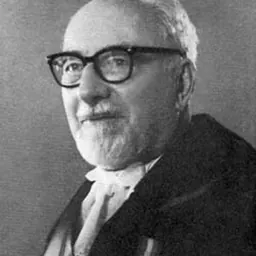
Luiz Vieira Caldas Saldanha (16 December 1937 – 16 November 1997) was a Portuguese marine biologist, oceanographer and university professor at the Faculty of Sciences, University of Lisbon. He was noted for research on marine fauna of the Atlantic Northeast and for his participation in international oceanographic campaigns and institutions, as well as for his role in developing and coordinating marine science and technology in Portugal.
Saldanha took part in oceanographic campaigns and expeditions across multiple ocean basins and regions worldwide, and worked for extended periods with research institutions in countries including France, the United Kingdom, the United States and Monaco. He was a nephew of the archaeologist Eduardo da Cunha Serrão and accompanied him on excavations and other archaeological work from an early age, which contributed to his scientific curiosity. According to family testimony, his later interest in animal life and biology was primarily self-motivated. He requested the fort's classification as a Property of Public Interest in April 1974, approved in 1977, and supervised research and undergraduate field projects there in marine biology and biological oceanography. He directed the laboratory from 1974 until his death in 1997. The breadth of these voyages led some Portuguese media to refer to him as the “man of the seven seas”.
From 1969, he regularly dived using the French submersibles Archimède and Nautile and the American Alvin to study deep-sea biology and hydrothermal fauna. and O Mar e a Terra (1985, 1987).
Nature conservation View from the Serra da Arrábida over the waters later included in the Professor Luiz Saldanha Marine Park. Committed to nature conservation from early on, in 1965 Saldanha and colleagues from the Portuguese Centre for Underwater Activities (CPAS) submitted a proposal to the Navy Ministry calling for a marine reserve along the coast of the Serra da Arrábida. Although the proposal was not adopted at the time, 33 years later, in 1998, the area proposed by Saldanha was designated the Professor Luiz Saldanha Marine Park, within the Arrábida Natural Park.
He collaborated with organisations dedicated to conservation, notably the Liga para a Protecção da Natureza (LPN), serving as president of its board (1985–1987) and later president of its general assembly.
Honours and tributes
Honours received during his lifetime During his lifetime, Saldanha received multiple honours, particularly from international organisations. Notable distinctions include: Grande Médaille Albert Ier (Monaco): awarded in 1988 by the Institut océanographique of Monaco in recognition of his contributions to marine science. Officer of the Order of Grimaldi (Monaco): awarded by Prince Rainier III of Monaco.
Posthumous tributes After his death, Saldanha was widely honoured for his legacy. Major tributes include: Professor Luiz Saldanha Marine Park: created in 1998 and named in his honour as the first marine reserve on mainland Portugal, integrated in the Arrábida Natural Park. Saldanha Hydrothermal Field and "Missão Saldanha": in 1998 an expedition led by Fernando Barriga discovered a seamount and hydrothermal vent system in the Azores region, named in his honour. Lisbon Oceanarium: in 1998 a venue space was named “Sala Professor Luiz Saldanha”; after the Oceanarium concession changed in 2016, it was renamed “Sala Sophia de Mello Breyner”. Professor Luiz Saldanha Library: in 1999 the Funchal City Council created a specialised library with his scientific collection at the Funchal Marine Biology Station, later enriched with Armando J. Almeida's collection (2011). Grand Officer of the Order of Saint James of the Sword: awarded posthumously on 28 October 1999 by President Jorge Sampaio. CTT Post of Portugal: on 16 November 1999, a commemorative “Sea Day” postcard was issued with his image.
Recent tributes Funchal municipality: on 16 November 2021, Funchal again marked the anniversary of his death as part of Sea Day commemorations, with an evocative session at the Funchal Marine Biology Station. Sesimbra municipality: on 7 May 2022 he was posthumously awarded the "Medalhão da Vila de Sesimbra" for his role in identifying and helping protect dinosaur track sites at Cape Espichel (Pedra da Mua, Lagosteiros and Pedreira do Avelino). Vasco da Gama Aquarium: on 6 June 2023, he was honoured at the launch of the book Missão Oceanográfica Arquipélago da Madeira 1984, which reproduces drawings and watercolours from his diary and underwater photography from Jorge Albuquerque, also honoured at the event.
Taxa named after Saldanha Saldanha has also been honoured in biological nomenclature, with species and subspecies named after him: Charaxes lucretius saldanhai (Bivar de Sousa, 1983) – Angolan butterfly subspecies. Coloconger saldanhai (Quéro, 2001) – species of eel in genus Coloconger. Geocharis saldanhai (A. Serrano & Aguiar, 2001) – beetle species. Ilyophis saldanhai (Karmovskaya & Parin, 1999) – eel species. Ophidion saldanhai (Matallanas & Brito, 1999) – fish species recorded from Cabo Verde and the Gulf of Guinea region. Pachycara saldanhai (Biscoito & Almeida, 2004) – deep-sea fish species. Puellina saldanhai (Harmelin, 2001) – microscopic marine animal recorded from southern Portugal.
Selected works Saldanha published around 130 scientific works in Portuguese and international journals, and five books. Due to the long list of publications, only a selection is provided here.
1959 – Alguns processos usuais para a preparação e conservação de animais marinhos. Naturália, 8(1): 1–14. 1959 – Como nasceu a secção de estudos submarinos da Sociedade Portuguesa de Ciências Naturais. Naturália, 8(1): 1–5. 1960 – Recordando a Zoologia. CPAS. Revista Portuguesa de Actividades Subaquáticas, 2: 1–2. 1962 – Exploração submarina. O Sesimbrense, 359: 1, 3. 1965 – Sobre três espécies de teleósteos (Nettastomidae e Notacanthidae) novas para a Costa de Portugal. Notas e Estudos do Instituto de Biologia Marinha, 32/3: 1–18. 1965 – As espécies cinegéticas do Norte de Angola. Caça e tiro ao voo, 7: 32–33, 36. 1965 – Como colher, preparar e conservar animais marinhos. Boletim do Centro Português de Actividades Subaquáticas, 11: 8–9. 1966 – Fauna do Nordeste de Angola. Geographica (Bulletin of the Lisbon Geographic Society), Year II, no. 8: 2–15. 1967 – Vasos cerâmicos de Angola. Geographica, Year III, no. 10: 35–56. 1968 – Noroeste de Angola. Geographica, Year IV, no. 13: 71–85. 1971 – Observations bionomiques à “Pedra da Anixa”. Bulletin de l’Association des professeurs de Biologie–Géologie, Suppl. 201: 127–132. 1973 – La côte du Mozambique. Résultats d’une exploration zoologique préliminaire. Bulletin du Muséum national d’Histoire naturelle (Paris), (3), 158, Écologie générale, 14: 249–259. 1974 – Estudo do povoamento dos horizontes da rocha litoral da costa da Arrábida. Museu Bocage (PhD thesis). 1974 – Sobre a forma das grandes profundidades marinhas e sua origem. Museu Bocage (doctoral complementary examination). 1980 – Fauna Submarina Atlântica. Publicações Europa-América. 1980 – Estudo ambiental do estuário do Tejo: povoamentos bentónicos, peixes e ictioplancton do estuário do Tejo. Comissão Nacional do Ambiente/Tejo, no. 5 – Report 4. 1982 – O rei D. Carlos pioneiro da Oceanografia europeia. Revista de Marinha, no. 110: 3–8. 1986 – A protecção e a conservação do meio marinho. In Que futuro para a costa Sudoeste (Ambiente em discussão 1), pp. 51–55. Liga para a Protecção da Natureza. 1988 – A protecção e a conservação do meio marinho nos Açores e na Madeira. Primeiras Jornadas Atlânticas de Protecção do Meio Ambiente, pp. 315–317. Angra do Heroísmo. 1989 – Euskal Herriko itsas sakonetaro fauna (Fauna marinha profunda do País Basco). Krisaly, 101 pp. 1992 – Um parque marinho no Espichel. Sesimbra cultural, 2: 41–43. 1993 – Prince Albert of Monaco and King Carlos of Portugal: Their contribution to the knowledge of the Atlantic deep-sea fauna. Abstracts of the V International Congress on the History of Oceanography, 1 p. 1994 – Germano da Fonseca Sacarrão – Um Biólogo Marinho, um Grande Amigo. In Professor Germano da Fonseca Sacarrão (1914–1992). Museu Bocage, pp. 73–86. 1995 – Fauna submarina Atlântica: Portugal continental, Açores, Madeira (2nd ed., revised and expanded). Publicações Europa-América. 1997 – One hundred years of Portuguese Oceanography in the footsteps of King Carlos Bragança. Museu Bocage.
Don’t just read it —
keep it.
Full-length biographies made to live with: read them, listen on the way to work, watch them tonight.
- E-book
- Audio
- Video
Instant download · yours to keep · every purchase keeps this site free
Important facts
People in Luiz Saldanha's life
Named in this biography and alive at the same time


Related people
Same field, nearest in time

Contemporaries
People whose lives overlapped Luiz Saldanha's




Frequently asked questions
Who was Luiz Saldanha?
Portuguese biologist
When was Luiz Saldanha born?
Luiz Saldanha was born on 16 December 1937 in Lisbon.
When did Luiz Saldanha die?
Luiz Saldanha died on 16 November 1997 in Cascais.
What was Luiz Saldanha's occupation?
Luiz Saldanha was a biologist.
What nationality was Luiz Saldanha?
Luiz Saldanha was Portuguese.
Sources & further reading
Cite this page
APA: Biography.guide. (2026). Luiz Saldanha. https://biography.guide/luiz-saldanha/
MLA: "Luiz Saldanha." Biography.guide, https://biography.guide/luiz-saldanha/.
Chicago: "Luiz Saldanha." Biography.guide. https://biography.guide/luiz-saldanha/.
Data last updated: 2026-09-20 · Spot an error? Report a correction.
Page generated 2026-09-27 05:09 UTC