
About Luis Ortiz Monasterio
Lived 1906 – 1990 (aged 83). Luis Ortiz Monasterio was a Mexican sculptor, painter and university teacher.
Luis Ortiz Monasterio (August 23, 1906 – February 16, 1990) was a Mexican sculptor noted for his monumental works such as the Monumento a la Madre and the Nezahualcoyotl Fountain in Chapultepec Park. His work was recognized in 1967 with the Premio Nacional de Artes and was a founding member of the Academia de Artes.
Life
Luis Ortiz Monasterio del Campillo was born in Mexico City, losing his father the year he was born.
In 1920, he spent a year at a teacher's training course at the Escuela Normal para Maestros while studying drawing at night at the Academy of San Carlos. He later registered as a matriculated student, specializing in engraving, drawing and sculpture.
Because of the family's economic situation, he went to Los Angeles, where he worked and studied, coming into contact with the works of Auguste Rodin, Brâncuși and Wilhelm Lehmbruck.
For the next several years, he lived in the United States and Mexico, before permanently settling in Mexico City. In addition to art, he was an author of books and monographs, which generally contained philosophic and poetic references. He is one of few to be active during the dominance of the Mexican muralism movement and one of fewer of the century to be remembered. the Monumento a los defensores de la ciudad de Puebla (1943), and a retrospective in 2011 at the Museo Casa Estudio Diego Rivera y Frida Kahlo.
Artistry Ortiz Monasterio is of the generation of Mexican sculptors which includes Oliverio Martínez, Francisco Marín, Juan Cruz Reyes, Federico Cantú, Federico Canessi and Carlos Bracho, which adopted elements of Art Deco and Cubism, using figures from the working class and indigenous populations. His artistic style is characterized by the use of classical and geometric elements, along with pre-Hispanic influence. There is also influence from an artist named Ivan Mestrock, a Yugoslav artist whose works he saw in art magazines from Europe. In his works, he applied concepts from numerology and Pythagorism along with metaphysical concepts from the Aztec and Mayan cultures.
His work can be divided into two types. The first are monumental public works with historical themes, such as the Nezahualcoyotl Fountain in Chapultepec (1956) and the Plaza Cívica de la Unidad Independencia (1962). His smaller works often consists of sensual human forms as well as those with a mechanical feel.
Don’t just read it —
keep it.
Full-length biographies made to live with: read them, listen on the way to work, watch them tonight.
- E-book
- Audio
- Video
Instant download · yours to keep · every purchase keeps this site free
Important facts
People in Luis Ortiz Monasterio's life
Named in this biography and alive at the same time







Related people
Same field, nearest in time
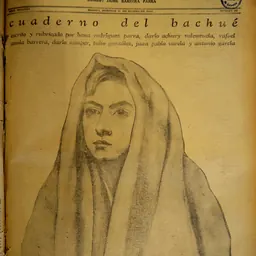


Contemporaries
People whose lives overlapped Luis Ortiz Monasterio's


Frequently asked questions
Who was Luis Ortiz Monasterio?
Mexican artist (1906-1990)
When was Luis Ortiz Monasterio born?
Luis Ortiz Monasterio was born on 23 August 1906 in Mexico City.
When did Luis Ortiz Monasterio die?
Luis Ortiz Monasterio died on 16 February 1990 in Mexico City.
What was Luis Ortiz Monasterio's occupation?
Luis Ortiz Monasterio was a sculptor, painter and university teacher.
What nationality was Luis Ortiz Monasterio?
Luis Ortiz Monasterio was Mexican.
Sources & further reading
· Wikipedia: Luis Ortiz Monasterio
· DBpedia: Luis Ortiz Monasterio
Cite this page
APA: Biography.guide. (2026). Luis Ortiz Monasterio. https://biography.guide/luis-ortiz-monasterio/
MLA: "Luis Ortiz Monasterio." Biography.guide, https://biography.guide/luis-ortiz-monasterio/.
Chicago: "Luis Ortiz Monasterio." Biography.guide. https://biography.guide/luis-ortiz-monasterio/.
Data last updated: 2026-09-20 · Spot an error? Report a correction.
Page generated 2026-09-27 05:31 UTC