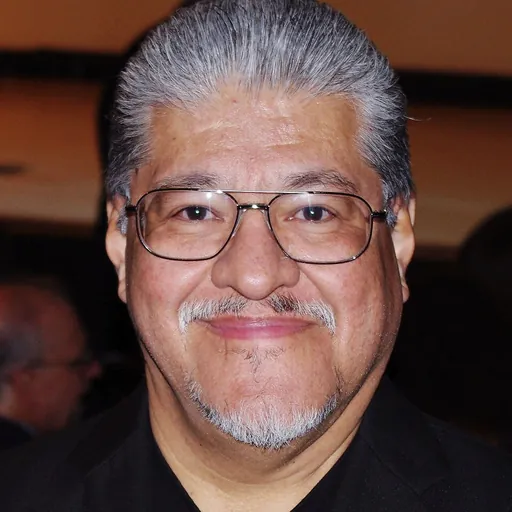
About Luis J. Rodriguez
Born 1954. Luis J. Rodriguez is an American poet, writer, novelist, politician, children's writer and journalist, known for Always Running: La Vida Loca, Gang Days in L.A.
Luis Javier Rodriguez (born 1954) is an American poet, novelist, journalist, critic, and columnist. He was the 2014 Los Angeles Poet Laureate. Rodriguez is recognized as a major figure in contemporary Chicano literature, identifying himself as a native Xicanx writer. His best-known work, Always Running: La Vida Loca, Gang Days in L.A., received the Carl Sandburg Literary Award and has been controversial on school reading lists for its depictions of gang life.
The founder and co-founder of nonprofit organizations including Tía Chucha's Centro Cultural, Rodriguez has been active in politics. Rodriguez was the 2012 vice-presidential nominee of the Justice Party. In 2014, Rodriguez ran as the Green Party of California's candidate for Governor of California and received 66,872 votes (1.5 percent of the vote) in the June primary. He ran again as candidate in the 2022 California gubernatorial election, endorsed by the Green Party and the Peace and Freedom Party.
Early life Rodriguez was born in the United States-Mexico border city of El Paso, Texas. His parents, natives of Ciudad Juárez, Chihuahua, had their children on the US side of the border to ease the transition there, where they had intentions of relocating.
In Ciudad Juarez, his father was a high school principal, but in Los Angeles he worked in a dog food factory, a paint factory, in construction, and selling pots and pans and Bibles. He retired as a laboratory custodian at Pierce Community College in Woodland Hills, California, a wealthier neighborhood in Los Angeles. Luis's mother, who is descended from the Raramuri, a people indigenous to Chihuahua, was a school secretary in Mexico, but in Los Angeles she worked cleaning homes and in the garment industry when she was not taking care of the children.
Legal issues During the 1960s and 1970s, Luis was an active gang member and drug user in East Los Angeles, developing a long rap sheet. However, his criminal activity did not preclude his participation in the Chicano Movement, and he joined the 1968 East L.A. walkouts and took part in the August 31, 1970 Chicano Moratorium against the Vietnam War.
However, unlike other arrestees, Luis with four other "cholos" (Chicano gang youth) was held briefly in the Murderer's Row of the Hall of Justice Jail and threatened with charges in the three persons killed during subsequent rioting after law enforcement attacked a mostly-peaceful crowd. He had a cell next to Charles Manson. out of an office at Self Help Graphics & Art. He began facilitating writing workshops and talks in prisons and juvenile lockups in 1980 starting in Chino Prison. In the early 1980s, he also worked for the American Federation of State, County and Municipal Employees, in public radio, and as a freelance journalist, including covering indigenous uprisings in Mexico and the Contra War in Nicaragua and Honduras, until he moved to Chicago in 1985. There, he was editor of the People's Tribune, linked to the League of Revolutionaries for a New America, for three years, then a typesetter for the Liturgy Training Publications of the Archdiocese of Chicago, and a writer/reporter for WMAQ-AM, All News Radio. Luis became active in the Chicago poetry scene, birthplace of the Poetry Slam, and founded Tia Chucha Press to publish his first book. "Poems Across the Pavement." and the books of leading Chicago poets, later doing the same on a national level. His readings and talks extended to prisons around the country as well as homeless shelters, migrant camps, Native American reservations, public & private schools, colleges, universities, libraries, and conferences.
In 1993, Curbstone Press of Willimantic, CT published Luis's first memoir, Always Running as a cautionary tale for his son Ramiro, who joined a Chicago street gang at the age of fifteen. The following year, Touchstone Books/Simon & Schuster released the paperback. In 1994, Luis became a poet/teacher for men's conferences sponsored by the Mosaic Multicultural Foundation, founded by mythologist/storyteller Michael Meade, and co-founded Youth Struggling for Survival (YSS) to work with gang and non-gang youth and their families. His son Ramiro and his daughter Andrea were also founding members. In addition, Luis began Native American and Native Mexican spiritual practices in 1995 with elder/teachers among the Lakota, Navajo (Dine), Mexica, and Mayan nations. However, Ramiro began state prison terms at age 17 for various violent acts, eventually serving a total of fifteen years, including thirteen and a half years for three counts of attempted murder. Ramiro was released in July 2010.
In 1998, Rodriguez received the Hispanic Heritage Award for Literature. He has been awarded other prizes for his writing and community work, including the Lila Wallace-Reader's Digest Writer's Award, Anderson was the party's first presidential nominee. In July 2012, Anderson selected Rodriguez to be his vice presidential running mate. The 2012 ticket received 43,018 votes, equal to approximately 0.03% of the total.
2014 California gubernatorial election
In 2014, Rodriguez was endorsed by the Green Party of California to be its Gubernatorial candidate in the "Top Two" primary election. It was the first California governor's race using the new top two system in which the top two vote-getters advance to November's general election, regardless of party. Rodriguez received 66,872 votes for 1.5 percent of the vote. He came in sixth—first among independents and third-party candidates, but did not advance to the November election. A key concern for Rodriguez, economic inequality, is described in his campaign document "A New Vision for California":
There have always been two states – one ripe for developers, corporations, financial institutions, and robber barons. The other state consists of the working class and poor, including immigrant whites and Asians, African Americans, natives, Mexicans, and refugees from El Salvador, Guatemala, Honduras, Armenia, Southeast Asia, the Middle East, and elsewhere. ... Here is the California story we can't cover up or push aside: increased job eliminations, evictions, [and] home foreclosures as well as cuts in welfare and needed services in the face of a deepening poverty-creating economic crisis. Which way for California? Which way for the country?
Rodriguez cited failures by incumbent Jerry Brown, stating, "with Governor Brown's budget cuts, his stand on prisons, the ensuing growth of poverty under his watch, he's just another bead on a long string of unresponsive pro-corporate politicians."
2022 California gubernatorial election
Rodriguez ran for Governor of California as a Green Party and Peace and Freedom Party candidate in 2022. In the June primary he received 1.8% of the vote with the support of 124,456 California voters.
Awards Carl Sandburg Literary Award Chicago Sun-Times Book Award Duke University Lange-Taylor Prize (1993) Lila Wallace Reader's Digest Writer's Award (1996) Hispanic Heritage Award (1999) PEN Josephine Miles Literary Award (1992, 2003, 2013) Paterson Poetry Prize (2005) Robert Kirsch Award for lifetime achievement (2022)
Don’t just read it —
keep it.
Full-length biographies made to live with: read them, listen on the way to work, watch them tonight.
- E-book
- Audio
- Video
Instant download · yours to keep · every purchase keeps this site free
Important facts
People in Luis J. Rodriguez's life
Named in this biography and alive at the same time
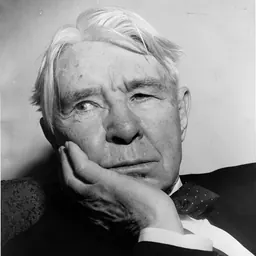




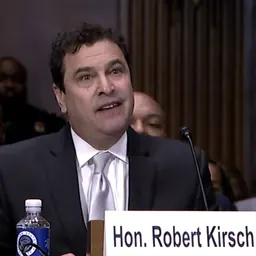
Related people
Same field, nearest in time
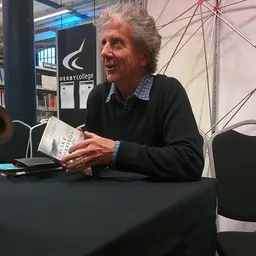
Contemporaries
People whose lives overlapped Luis J. Rodriguez's



Frequently asked questions
Who is Luis J. Rodriguez?
pinto poetry, Chicanismo, and Chicano literature
When was Luis J. Rodriguez born?
Luis J. Rodriguez was born in 1954 in El Paso.
What is Luis J. Rodriguez's occupation?
Luis J. Rodriguez is a poet, writer, novelist, politician, children's writer and journalist.
What is Luis J. Rodriguez known for?
Luis J. Rodriguez is known for Always Running: La Vida Loca, Gang Days in L.A.
What nationality is Luis J. Rodriguez?
Luis J. Rodriguez is American.
Sources & further reading
· Wikipedia: Luis J. Rodriguez
Cite this page
APA: Biography.guide. (2026). Luis J. Rodriguez. https://biography.guide/luis-j-rodriguez/
MLA: "Luis J. Rodriguez." Biography.guide, https://biography.guide/luis-j-rodriguez/.
Chicago: "Luis J. Rodriguez." Biography.guide. https://biography.guide/luis-j-rodriguez/.
Data last updated: 2026-09-22 · Spot an error? Report a correction.
Portrait: Wikimedia Commons · author & licence
Page generated 2026-09-27 05:03 UTC