
Luis Alarcón de la Lastra
Spanish businessperson and politician
About Luis Alarcón de la Lastra
Lived 1891 – 1971 (aged 79). Luis Alarcón de la Lastra was a Spanish businessperson, politician, farmer and military personnel.
Luis Alarcón de la Lastra (3rd marqués de Rende and 7th Conde de Gálvez) (24 November 1891 – 19 November 1971) was a Spanish army officer, deputy, businessperson, Spanish Civil War commander under Francisco Franco, governor of Madrid and then government minister. He owned large areas of land around Carmona, province of province of Seville.
Biography He was born in Seville. He studied at the Real Colegio de Artillería from 1907 and was promoted to second lieutenant in 1912. After a posting in Melilla, he worked in Algeciras and Seville, becoming captain in 1927. When the Second Spanish Republic began, he refused an oath of loyalty to the new Republic and left the army. He began working in an agricultural business in Carmona. In 1933, he was vice president of the Agrarian Employers' Federation. He became a diputado of the Partido Agrario Español (Spanish Agrarian Party) – made up of right-wing monarchist elements – for Seville. In 1935, he joined a number of Confederación Española de Derechas Autónomas (CEDA) deputies of the Cortes in a right-wing coalition led by José María Lamamié de Clairac y Colina in support of their landowner-dominated traditions and specifically in opposition to a law from Manuel Giménez Fernández (also a CEDA diputado) which provided that peasants who had worked land for twelve years were given the opportunity He was not able to win a seat in the elections of February 1936.
When the Spanish Civil War commenced in 1936, he rejoined the army on 18 July under general Gonzalo Queipo de Llano, commanding groups of falangists operating in working-class suburbs of Seville with artillery fire. Most of the falangists were from the Real Círculo de Labradores, a Sevillian aristocratic landowners' organisation which he became president of in the 1940s. On 8 August, leading the 9th battery of the third light regiment, he joined the ruthless commander Antonio Castejón Espinosa. Alarcón de la Lastra directed artillery which bombarded towns as part of the Nationalists' advance; bombing from the air was also used. Where the resistance to the bombardment was strong it was followed up with the usage of human shields, but in any case the abuse and killings were extreme. Alarcón de la Lastra was thereafter involved in all actions on the march to Madrid, including the Battle of Badajoz and the capture of Toledo. This advance was later under the command of Juan Yagüe (known as the "Butcher of Badajoz" after that particular ensuing massacre), whose forces had joined the Nationalists from Ceuta. On 19 November, he was injured twice at the front of his battery. Thereafter he remained at the vanguard or in charge of artillery as in Teruel in the Galician army corps. In 1937, he was promoted first to commander and then lieutenant-colonel. By late 1937, he was in command of the Moroccan Army Corps artillery.
Death and legacy He died in Seville on 19 November 1971, survived by twelve children. On 16 February 2012, the city council of Seville instigated a change of name of an avenue which had previously been named in his honour, the avenida General Luis Alarcón de la Lastra in Seville, to avenida Parque Amate. This was in line with what is commonly referred to in Spain as the Ley de Memoria Histórica (Law of Historical Memory) which gives rights to the victims and descendants of victims of the Spanish Civil War.
Don’t just read it —
keep it.
Full-length biographies made to live with: read them, listen on the way to work, watch them tonight.
- E-book
- Audio
- Video
Instant download · yours to keep · every purchase keeps this site free
Important facts
People in Luis Alarcón de la Lastra's life
Named in this biography and alive at the same time

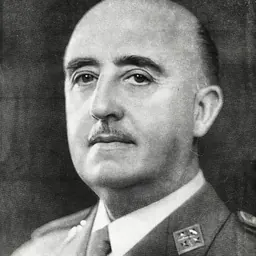



Related people
Same field, nearest in time
Contemporaries
People whose lives overlapped Luis Alarcón de la Lastra's




Frequently asked questions
Who was Luis Alarcón de la Lastra?
Spanish businessperson and politician (1891-1971)
When was Luis Alarcón de la Lastra born?
Luis Alarcón de la Lastra was born on 24 November 1891 in Seville.
When did Luis Alarcón de la Lastra die?
Luis Alarcón de la Lastra died on 19 November 1971 in Seville, Málaga.
What was Luis Alarcón de la Lastra's occupation?
Luis Alarcón de la Lastra was a businessperson, politician, farmer and military personnel.
What nationality was Luis Alarcón de la Lastra?
Luis Alarcón de la Lastra was Spanish.
Sources & further reading
· Wikipedia: Luis Alarcón de la Lastra
· DBpedia: Luis Alarcón de la Lastra
Cite this page
APA: Biography.guide. (2026). Luis Alarcón de la Lastra. https://biography.guide/luis-alarcon-de-la-lastra/
MLA: "Luis Alarcón de la Lastra." Biography.guide, https://biography.guide/luis-alarcon-de-la-lastra/.
Chicago: "Luis Alarcón de la Lastra." Biography.guide. https://biography.guide/luis-alarcon-de-la-lastra/.
Data last updated: 2026-09-20 · Spot an error? Report a correction.
Page generated 2026-09-27 04:57 UTC