
About Gonzalo Queipo de Llano
Lived 1875 – 1951 (aged 76). Gonzalo Queipo de Llano was a Spanish military officer, military personnel and politician.
Gonzalo Queipo de Llano y Sierra (5 February 1875 – 9 March 1951) was a Spanish Army general. He distinguished himself quickly in his career, fighting in Cuba and Morocco, later becoming outspoken about military and political figures which led to his imprisonment, removal from posts and involvement in plots against Spanish governments. He was a Nationalist military leader during the Spanish Civil War under Francisco Franco, gaining the soubriquet "El general de la radio" ("radio" or "broadcasting general" in English media) for his threats and explicitness on air. Under his control of southern Spain, tens of thousands of Spaniards perished as part of the Nationalists' White Terror. In his post-war roles he was effectively sidelined by Franco.
Biography Early years He was born in Tordesillas, to María de las Mercedes Sierra y Vázquez de Novoa and Gonzalo Queipo de Llano y Sánchez. His father was the municipality's judge. He had seven siblings. At the age of 14, he was enrolled in a seminary, but he ran away four months later and hid in the house of his aunt in El Ferrol. After completing the Instituto de Ponferrada entrance exam, he excelled in courses there, also studying at the diocesan seminary. In 1891, he joined the 4.º Batallón de Artillería de Plaza in Ferrol as a trumpet player. Aged 18, he became an artilleryman and enrolled at the in 1893 along with Santiago Mateo Fernández (whom he later arrested and executed).
Cuba In February 1896, he graduated and was promoted to 2nd Lieutenant in the Regimiento de Dragones de Santiago, Granada. He requested a transfer to Cuba, arriving in Havana in August and joining battle in the Regimiento de Caballería Pizarro. For bravery, he was promoted to 1st lieutenant in October. In 1897, with the Regimiento Expedicionario del Príncipe, he was made captain for numerous actions. The following year he received the , Spain's second-highest wartime medal, amongst his other awards. He left Cuba in October for the Regimiento de Reserva de Valladolid. he was promoted to commander in 1911. In 1912, he was in Albacete before joining the Regimiento de Cazadores de Vitoria (Granada) leaving for Ksar el-Kebir to command three squadrons (this part of Morocco became a Spanish protectorate that year) then a Larache cavalry group in 1913 - through which he gained another María Cristina cross - promotion to lieutenant colonel (1914) and placement in charge of a military court (1916). Illness forced his convalescence in Madrid. Upon recovery in February 1917, he was posted to Córdoba then requested leave to Ávila. Queipo de Llano had written a defamatory letter against an uncle of José Antonio and against the Dictator himself. José Antonio, ready to defend the honour of his family abused by the Republican general, went to the café where the latter used to socialize, and after asking whether he was the author of the writing, and after receiving the general's affirmative reply, delivered a spectacular punch that made the general roll on the floor, sparking a free-for-all between the companions of José Antonio and the companions of the general. He took part in José Sánchez-Guerra y Martínez's failed coup on 15 December 1930, taking over the Cuatro Vientos aerodrome with Ramón Franco. He proclaimed a republic over the radio while his co-conspirator took a plane to leaflet Madrid and bomb the royal palace. The plans fell apart due to a lack of union support so Ramon Franco flew back to Cuatro Vientos and Queipo de Llano and others joined him in the escape to Portugal, whence they journeyed to France as exiles. In February 1931, his discharge was ordered because of his absence. He returned on 14 April when Manuel Azaña's republic was declared and was promoted to division general, leading the Madrid-based 1.ª División Orgánica and becoming head of the Inspección General del Ejército. Niceto Alcalá-Zamora placed him in charge of his military quarter, a post he lost in March 1933. In September, with Alejandro Lerroux as prime minister, he was made inspector general de Carabineros a post he also lost soon after but regained in February 1935 after his daughter married the president's son. Others also persuaded him to join. Mola sent him to look at overcoming local reluctance in Seville to another coup after the debacle of the 1932 Sanjurjada and its poor consequences for army officers. He reported back confidently. In early July, he went to Granada and Málaga then Seville and Huelva, to encourage hesitant officers. General José Fernández de Villa-Abrille refused to meet him. On 18 July, he arrested Villa-Abrille and persuaded enough junior officers in the Regimiento de Infantería n.º 6 to revolt, arresting Colonel Manuel Allanegri and his old classmate, Santiago Mateo, colonel of the Regimiento de Caballería (who at his trial was defended by his son - a Queipo de Llano supporter - before execution). He gained control of the División Orgánica n.º 2 and Regimiento de Artillería Ligera n.º 3. Of the remaining units in Andalucia, only the commanders in Cádiz - a crucial port - and Córdoba would support him initially. The murder and torture of opponents by the Falange began immediately. Plans went ahead to secure Seville. The local Guardia de Asalto (Assault Guard) resisted around the town hall but was well beaten that day by the coup rebels. In the evening, having captured the radio station Unión Radio Sevilla, Queipo de Llano declared martial law, making the first of his terror-filled propaganda broadcasts, declaring his control of Seville, commencing a series of doom-laden edicts, announcing the arrival of Moroccan troops and the rebels' control of other cities - including Madrid, one of many fabrications to come. One of Queipo de Llano's appointments, captain Manuel Díaz Criado, with a history of sedition and murder who accepted his victims' sexual bribes, gravely insulted the Portuguese ambassador, a Nationalist ally. Franco ordered his removal and told Queipo de Llano to apologise. Torture, unfettered rapes, murders and massacres were committed by Nationalist forces (as allowed by commanders in North Africa) and justified by Queipo de Llano. Corpses were publicly displayed to terrorise; body parts were frequently cut off, following a grim tradition from Spanish Morocco (international journalists were offered such souvenirs). In 1943, he was transferred to the army reserves but not appointed to Franco's Cortes Españolas like other former generals. Significantly, he didn't support the restoration of the monarchy. Franco finally gave him the San Fernando cross but only for the first nine days of the Civil War.
In the media The historical podcast In Search of Lost Crime made an episode on Queipo de Llano's execution of Andalusian nationalist Blas Infante and Queipo de Llano's complicated relationship with Francisco Franco.
Don’t just read it —
keep it.
Full-length biographies made to live with: read them, listen on the way to work, watch them tonight.
- E-book
- Audio
- Video
Instant download · yours to keep · every purchase keeps this site free
Important facts
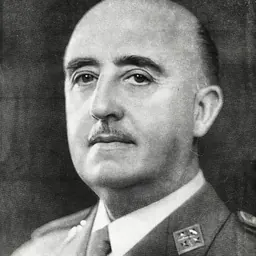
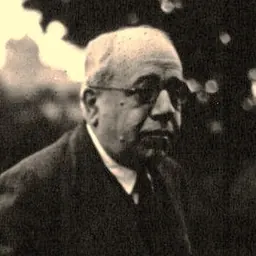
People in Gonzalo Queipo de Llano's life
Named in this biography and alive at the same time





Related people
Same field, nearest in time




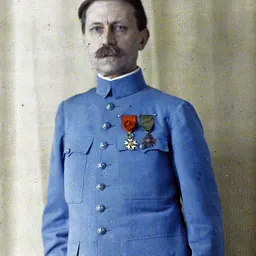
Contemporaries
People whose lives overlapped Gonzalo Queipo de Llano's
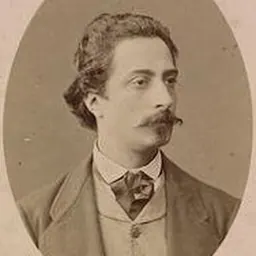

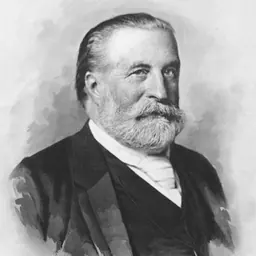
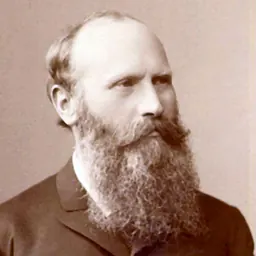
Frequently asked questions
Who was Gonzalo Queipo de Llano?
Spanish general (1875-1951)
When was Gonzalo Queipo de Llano born?
Gonzalo Queipo de Llano was born on 10 February 1875 in Tordesillas.
When did Gonzalo Queipo de Llano die?
Gonzalo Queipo de Llano died on 9 March 1951 in Seville, Camas.
What was Gonzalo Queipo de Llano's occupation?
Gonzalo Queipo de Llano was a military officer, military personnel and politician.
What nationality was Gonzalo Queipo de Llano?
Gonzalo Queipo de Llano was Spanish.
Sources & further reading
· Wikipedia: Gonzalo Queipo de Llano
· DBpedia: Gonzalo Queipo de Llano
Cite this page
APA: Biography.guide. (2026). Gonzalo Queipo de Llano. https://biography.guide/gonzalo-queipo-de-llano/
MLA: "Gonzalo Queipo de Llano." Biography.guide, https://biography.guide/gonzalo-queipo-de-llano/.
Chicago: "Gonzalo Queipo de Llano." Biography.guide. https://biography.guide/gonzalo-queipo-de-llano/.
Data last updated: 2026-09-20 · Spot an error? Report a correction.
Page generated 2026-09-27 05:24 UTC