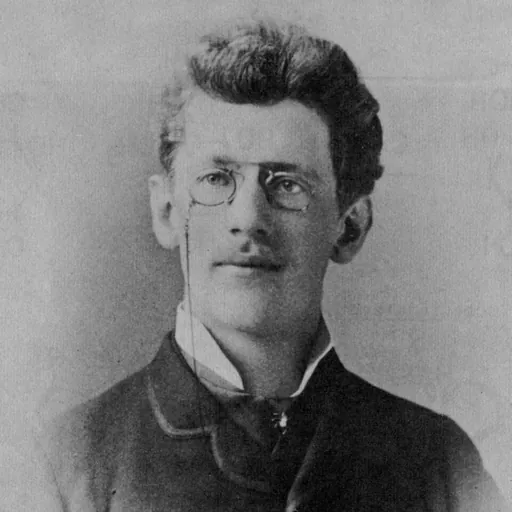
About Ludwig Knorr
Lived 1859 – 1921 (aged 61). Ludwig Knorr was a German chemist and university teacher, known for Knorr pyrrole synthesis, Knorr quinoline synthesis and Paal-Knorr synthesis.
Ludwig Knorr (2 December 1859 – 4 June 1921) was a German chemist. Together with Carl Paal, he discovered the Paal–Knorr synthesis, and the Knorr quinoline synthesis and Knorr pyrrole synthesis are also named after him. The synthesis in 1883 of the analgesic drug antipyrine, now called phenazone, was a commercial success. Antipyrine was the first synthetic drug and the most widely used drug until it was replaced by Aspirin in the 1900's.
Early life Ludwig Knorr was born to a wealthy merchant family in 1859. He grew up in the Sabbadini-Knorr company headquarters, located in the Kaufingerstraße in the center of Munich, and in the family house near the Lake Starnberg. After the early death of his father, the education of him and his four brothers lay in the hands of their mother. In 1878, Knorr received his Abitur and started to study chemistry at the Ludwig-Maximilians-Universität München.
In the beginning, he studied under Jacob Volhard; then, after Volhard left for the University of Erlangen, Hermann Emil Fischer became his tutor. In the summer of 1880, Knorr worked with Robert Wilhelm Bunsen at Heidelberg University, and later assisted Adolf von Baeyer at the Ludwig-Maximilians-Universität München. When Emil Fischer became professor at the University of Erlangen, he asked Knorr to follow him. In 1885, Knorr married Elisabeth Piloty, the sister of his laboratory colleague Oskar Piloty at the Ludwig-Maximilians-Universität München.
University of Würzburg In 1885 Fischer became professor at the University of Würzburg and Knorr followed him and was made associate professor. Knorr described the time in Würzburg as most untroubled and most productive period of his life. Reactions of ethyl acetoacetate with numerous other compounds were the main focus of his work there. After the death of Johann Georg Anton Geuther in 1889, the University of Jena was searching for a new full professor and Ernst Haeckel was sent to Würzburg to evaluate whether Knorr was qualified for the position.
University of Jena
Knorr became full professor at the University of Jena in 1889. In the following two years, he planned and built a new laboratory suitable for his research. His focus gradually shifted from the structure of pyrazoles to the more general concept of tautomerism. In collaboration with various other chemists, Knorr proved the concept that ethyl acetoacetate existed in a keto and an enol forms. In his later years, the structural conformation of morphine became his main point of interest. During the World War I, Knorr served in the medical corps and returned to the University of Jena after the war ended. Knorr died after a short illness on 4 June 1921.
Don’t just read it —
keep it.
Full-length biographies made to live with: read them, listen on the way to work, watch them tonight.
- E-book
- Audio
- Video
Instant download · yours to keep · every purchase keeps this site free
Important facts
People in Ludwig Knorr's life
Named in this biography and alive at the same time

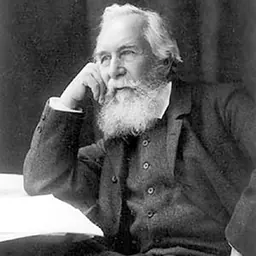




Related people
Same field, nearest in time
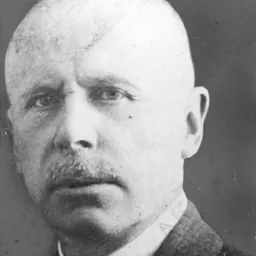


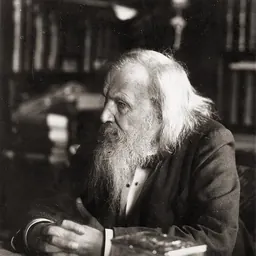
Contemporaries
People whose lives overlapped Ludwig Knorr's

Frequently asked questions
Who was Ludwig Knorr?
German chemist (1859-1921)
When was Ludwig Knorr born?
Ludwig Knorr was born on 2 December 1859 in Munich.
When did Ludwig Knorr die?
Ludwig Knorr died on 4 June 1921 in Jena.
What was Ludwig Knorr's occupation?
Ludwig Knorr was a chemist and university teacher.
What was Ludwig Knorr known for?
Ludwig Knorr was known for Knorr pyrrole synthesis, Knorr quinoline synthesis, Paal-Knorr synthesis and Phenazone.
What nationality was Ludwig Knorr?
Ludwig Knorr was German.
Sources & further reading
Cite this page
APA: Biography.guide. (2026). Ludwig Knorr. https://biography.guide/ludwig-knorr/
MLA: "Ludwig Knorr." Biography.guide, https://biography.guide/ludwig-knorr/.
Chicago: "Ludwig Knorr." Biography.guide. https://biography.guide/ludwig-knorr/.
Data last updated: 2026-09-23 · Spot an error? Report a correction.
Portrait: Wikimedia Commons · author & licence
Page generated 2026-09-27 05:06 UTC