
Ludwig Guttmann
German-British neurologist who created the Paralympic Games
About Ludwig Guttmann
Lived 1899 – 1980 (aged 80). Ludwig Guttmann was a British and German neurologist, neurosurgeon and physician, known for Paralympic Games.
Sir Ludwig Guttmann (3 July 1899 – 18 March 1980) was a German-British neurologist who established the Stoke Mandeville Games, the sporting event for people with disabilities (PWD) that evolved in England into the Paralympic Games. A Jewish doctor who fled Nazi Germany just before the start of the Second World War, Guttmann was a founding father of organized physical activities for people with disabilities.
Early life Ludwig Guttmann was born on 3 July 1899 to a German Jewish family, in the town of Tost, Upper Silesia, in the former German Empire (now Toszek in southern Poland), the son of Dorothy (née Weissenberg) and Bernard Guttmann, a distiller. When Guttmann was three years old, the family moved to the Silesian city of Königshütte (today Chorzów, Poland).
In 1917, while volunteering at an accident hospital in Königshütte, he encountered his first paraplegic patient, a coal miner with a spinal fracture who later died of sepsis. With the arrival of the Nazis in power, Jews were banned from practising medicine professionally; Guttmann was assigned to work at the Breslau Jewish Hospital, where he became medical director in 1937.
In early 1939, Guttmann and his family left Germany because of the Nazi persecution of the Jews. An opportunity for escape had come when the Nazis provided him with a visa and ordered him to travel to Portugal to treat a friend of the Portuguese dictator António de Oliveira Salazar. Guttmann was scheduled to return to Germany via London, when the Council for Assisting Refugee Academics (CARA) arranged for him to remain in the United Kingdom. He arrived in Oxford, England, on 14 March 1939 with his wife, Else Samuel Guttmann, and their two children: a son, Dennis, and a daughter, Eva, aged six. Both children were offered free places by the headmistress of Greycotes School. The family were members of the Oxford Jewish community, and Eva remembers becoming friendly with Miriam Margolyes, now a famous actress. The Jewish community in Oxford was growing rapidly as a result of the influx of displaced academic Jews from Europe.
With the outbreak of the Second World War, Guttmann and his family stayed in the home of Lord Lindsay, CARA Councillor and Master of Balliol College.
Stoke Mandeville and Paralympic Games In September 1943, the British government asked Guttmann to establish the National Spinal Injuries Centre at Stoke Mandeville Hospital in Buckinghamshire. When the centre opened on 1 February 1944, the United Kingdom's first specialist unit for treating spinal injuries, Guttmann was appointed its director (a position he held until 1966). He believed that sport was an important method of therapy for the rehabilitation of injured military personnel, helping them build up physical strength and self-respect.
Guttmann became a naturalised British citizen in 1945. He organised the first Stoke Mandeville Games for disabled war veterans, which was held at the hospital on 29 July 1948, the same day as the opening of the London Olympics. All participants had spinal cord injuries and competed in wheelchairs.
In 1961, Guttmann founded the British Sports Association for the Disabled, which would later become known as the English Federation of Disability Sport.
Later life Guttmann was appointed Officer of the Order of the British Empire (OBE) in the 1950 King's Birthday Honours, as "Neurological Surgeon in charge of the Spinal Injuries Centre at the Ministry of Pensions Hospital, Stoke Mandeville". On 28 June 1957, he was made an Associate Officer of the Venerable Order of Saint John.
He was promoted to Commander of the Order of the British Empire (CBE) in 1960, and he was knighted by Queen Elizabeth II in 1966. He became the first editor of the journal Paraplegia (now named Spinal Cord). He retired from clinical work in 1966 but continued his involvement with sport. He is buried at the Bushey Jewish Cemetery, about NW of London. A specialist neurorehabilitation hospital in Barcelona, the Institut Guttmann, is named in his honour. In June 2012, a life-sized cast-bronze statue of Guttmann was unveiled at Stoke Mandeville Stadium as part of the run-up to the London 2012 Summer Paralympics and Olympic Games. After the Games, it was moved to its permanent home at the National Spinal Injuries Centre. Guttmann's daughter, Eva Loeffler, was appointed the mayor of the London 2012 Paralympic Games athletes' village. The Sir Ludwig Guttmann Health and Wellbeing Centre is a health centre named in his honour in East Village, London, on the site of the 2012 Olympic and Paralympic village.
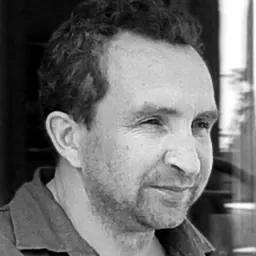
In August 2012, the BBC broadcast The Best of Men, a TV film about Guttmann's work at Stoke Mandeville during and after the Second World War. The film, written by Lucy Gannon, starred Eddie Marsan as Dr. Guttmann and Rob Brydon as one of the seriously injured patients, who were given a purpose in life by the doctor.
The Sir Ludwig Guttmann Lectureship was established by the International Medical Society of Paraplegia (now ISCoS) to recognize Guttmann's pioneering work and lifelong contribution to spinal cord care.
On 24 October 2013, a commemorative plaque was unveiled by the Association of Jewish Refugees (AJR) at the National Spinal Injuries Centre to celebrate Guttmann's life and work. As an active member of the AJR, he had served on the board for more than 25 years. In 2019 the National Paralympic Heritage Centre, a small accessible museum, was opened at Stoke Mandeville Stadium celebrating the birthplace of the Paralympics, sharing the collections of the early Paralympic Movement and the central role played by Professor Sir Ludwig Guttmann.
On 3 July 2021, a Google Doodle of Guttmann was featured on the Google homepage for Guttmann's 122nd birthday. A statue of Guttman at the Stoke Mandeville Hospital was added to the Buckinghamshire's protected Local Heritage List in 2024.
Selected publications 1959. The Place of Our Spinal Paraplegic Fellow-Man in Society: A Survey on 2000 Patients. Dame Georgina Buller Memorial Lecture. 1973. Spinal Cord Injuries: Comprehensive Management and Research. Blackwell Science. . 1973. "Sport and Recreation for the Mentally and Physically Handicapped" in The Journal of the Royal Society for the Promotion of Health. 1973; 93(4): 208–21. 1976. Textbook of Sport for the Disabled. Aylesbury: HM+M. .
Don’t just read it —
keep it.
Full-length biographies made to live with: read them, listen on the way to work, watch them tonight.
- E-book
- Audio
- Video
Instant download · yours to keep · every purchase keeps this site free
Important facts
People in Ludwig Guttmann's life
Named in this biography and alive at the same time





Related people
Same field, nearest in time

Contemporaries
People whose lives overlapped Ludwig Guttmann's



Frequently asked questions
Who was Ludwig Guttmann?
German-British neurologist who created the Paralympic Games (1899-1980)
When was Ludwig Guttmann born?
Ludwig Guttmann was born on 3 July 1899 in Toszek, Poland.
When did Ludwig Guttmann die?
Ludwig Guttmann died on 18 March 1980 in Aylesbury.
What was Ludwig Guttmann's occupation?
Ludwig Guttmann was a neurologist, neurosurgeon and physician.
What was Ludwig Guttmann known for?
Ludwig Guttmann was known for Paralympic Games.
What nationality was Ludwig Guttmann?
Ludwig Guttmann was British and German.
Sources & further reading
Cite this page
APA: Biography.guide. (2026). Ludwig Guttmann. https://biography.guide/ludwig-guttmann/
MLA: "Ludwig Guttmann." Biography.guide, https://biography.guide/ludwig-guttmann/.
Chicago: "Ludwig Guttmann." Biography.guide. https://biography.guide/ludwig-guttmann/.
Data last updated: 2026-09-26 · Spot an error? Report a correction.
Page generated 2026-09-27 05:14 UTC