
About Ludolph Küster
Lived 1670 – 1716 (aged 46). Ludolph Küster was a German hellenist, classical philologist and philologist.
Ludolf Küster (1670–1716) was a Westphalian scholar, philologist, textual critic, palaeographer, and editor of Greek ancient texts.
Küster was born in Blomberg, Westphalia. He was friends with, and a correspondent of, Richard Bentley, master of Trinity College, Cambridge, who assisted him in the production of a hasty edition of the works of Aristophanes. Thomas de Quincey was later to say that Bentley's contributions—including epistles on The Clouds and Plutus—were "mangled" by Küster and incompetent printers. Some of these letters still survive. Bentley also assisted Küster, among other editors, with an edition of the Suda (1705).
In Utrecht, from 1697 to 1699, Küster published the journal Bibliotheca Librorum novorum under the pseudonym "Neocorus" ( is aa Greek word that translates as roughly equivalent to the German word "Küster", that is, "sexton" or "sacristan"). Several times, Küster came into professional conflict with Dutch classical scholar Jakob Gronovius.
In 1710, he made a reprint, or rather revision, of John Mill's Novum Testamentum Graecum (1707), with prolegomena and with collations of 12 more manuscripts. It was published in Amsterdam and Rotterdam. Kuster's reprint also appeared, in Leipzig in 1723 and again in Amsterdam in 1746. He used 12 more manuscripts than Mill's original edition. Nine of these 12 codices were collated for Küster by the abbé de Louvois: codex 285, M, 9, 11, 119, 13, 14, 15, and Codex Ephraemi. Currently they are housed in the Bibliothèque nationale de France in Paris. Codex 78 was collated by Boerner, codex 42, and Codex Boernerianus by Küster himself. In this edition, Küster published his own notes separate from Mill's by prefixing and affixing the marks, and his collations both of his own codices and of early editions will be found more complete than his predecessor's.
In 1713, Küster traveled to Paris and spoke against the Protestant religion. There he was admitted to the Academy of Inscriptions and Belles Lettres, and received a pension from the crown of 2000 pounds.
He is mentioned by name in Alexander Pope's satirical Dunciad, in the company of other notable classicists of his day.
Selected works vol. 1, vol. 2, vol. 3. (Also includes a life of Pythagoras by Porpyhrius, and another anonymous life preserved in a summary in the Bibliotheca of Photius.)
An edition of Hesychius
Don’t just read it —
keep it.
Full-length biographies made to live with: read them, listen on the way to work, watch them tonight.
- E-book
- Audio
- Video
Instant download · yours to keep · every purchase keeps this site free
Important facts
People in Ludolph Küster's life
Named in this biography and alive at the same time
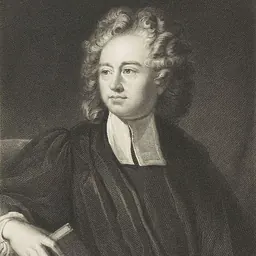

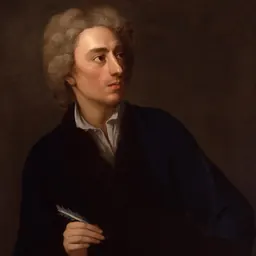
Related people
Same field, nearest in time




Contemporaries
People whose lives overlapped Ludolph Küster's



Frequently asked questions
Who was Ludolph Küster?
German scholar (1670-1716)
When was Ludolph Küster born?
Ludolph Küster was born on 1 February 1670 in Blomberg.
When did Ludolph Küster die?
Ludolph Küster died on 12 October 1716 in Paris.
What was Ludolph Küster's occupation?
Ludolph Küster was a hellenist, classical philologist and philologist.
What nationality was Ludolph Küster?
Ludolph Küster was German.
Sources & further reading
Cite this page
APA: Biography.guide. (2026). Ludolph Küster. https://biography.guide/ludolph-kuster/
MLA: "Ludolph Küster." Biography.guide, https://biography.guide/ludolph-kuster/.
Chicago: "Ludolph Küster." Biography.guide. https://biography.guide/ludolph-kuster/.
Data last updated: 2026-09-20 · Spot an error? Report a correction.
Page generated 2026-09-27 05:12 UTC