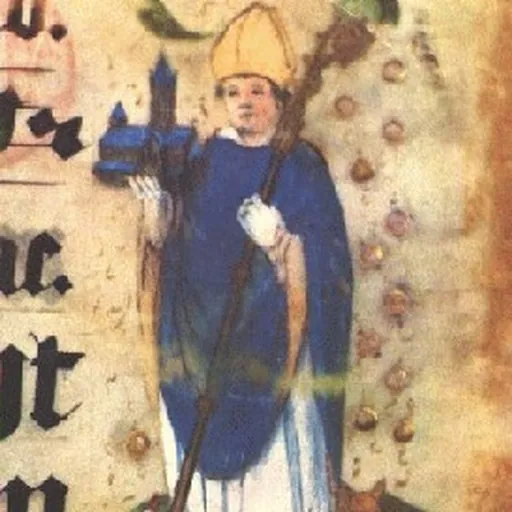
About Ludger
Lived 742 – 809 (aged 66–67). Ludger was a catholic priest, writer, catholic bishop, missionary and bishop.
Ludger (; also Lüdiger or Liudger) ( – 26 March 809) was a missionary among the Frisians and Saxons, founder of Werden Abbey and the first Bishop of Münster in Westphalia. He has been called the "Apostle of Saxony".
Early life to ordination Ludger's parents, Thiadgrim and Liafburg, were wealthy Christian Frisians of noble descent. In 753 Ludger saw the great Apostle of Germany, Boniface, which, together with the subsequent martyrdom of the saint, made a deep impression on him. At his own request he was sent to the Utrecht Cathedral School (Martinsstift), founded by Gregory of Utrecht in 756 or 757, and made good progress. In 767 Gregory, who did not wish to receive episcopal consecration himself, sent Alubert, who had come from England to assist him in his missionary work, to York to be consecrated bishop. Ludger accompanied him to be ordained into the diaconate (as he duly was, by Ethelbert of York) and to study under Alcuin, but after a year he returned to Utrecht. Some time later he was granted an opportunity to continue his studies at York, when he developed a friendship with Alcuin which lasted throughout life.
In 772 friction arose between the Anglo-Saxons and the Frisians, and Ludger - for the sake of his personal safety - left for home, taking with him a number of valuable books. He remained in the Martinsstift until the death of Gregory in 775, in honour of whose memory he wrote the biography Vita Gregorii. The news of Widukind's submission, and the arrival of Charlemagne at Monte Cassino in 787, put an end to Ludger's peaceful retirement. He was appointed missionary to five districts east of the river Lauwers, around the estuaries of the Hunze, the Fivel, and the Ems, which were still occupied almost entirely by pagans. He began his work armed with characteristic energy and faith in God, and had a significant advantage in that he knew the language and habits of the people, and put this knowledge to good use in achieving their conversion.
He worked in many places: the island of Bant, long since sunk beneath the sea, is mentioned as the scene of his apostolic work. He visited Heligoland (Fossitesland), where Willibrord had preached, where he destroyed the remains of paganism and built a Christian church. The well, formerly sacred to the pagan gods, he re-dedicated as his baptismal font. On his return he met the blind bard Bernlef, last of the Frisian skalds, allegedly cured his blindness, and made him a devout Christian. founded (after an abortive attempt to establish a religious house at Wichmond on the Erft) in c. 800 and consecrated in 804, on ground which Ludger himself had acquired, in fulfilment of his desire, formed since his stay at Monte Cassino, to found a Benedictine house.
Later life Alcuin recommended him to Charlemagne, who had Hildebold, Archbishop of Cologne, consecrate Ludger as bishop of Munster on 30 March 805. Ludger's principal concern was to have a good and efficient clergy. To a great extent he educated his students personally, and generally took some of them on his missionary tours. He also founded the monastery of Helmstad, afterwards called Ludger-Clooster, or Ludger's Cloister, in the duchy of Brunswick.
It was said of him that his peaceful methods were far more effective in promoting Christianity than the aggressive tactics of Charlemagne. He was criticised during his life for spending money on alms that should have gone towards the ornamentation of his churches. He suffered thereby, but was able to convince Charlemagne that this was no fault.
Ludger is represented either as a bishop holding a church and a book or as standing between two geese (occasionally described as swans). His feast day is celebrated on 26 March.
Don’t just read it —
keep it.
Full-length biographies made to live with: read them, listen on the way to work, watch them tonight.
- E-book
- Audio
- Video
Instant download · yours to keep · every purchase keeps this site free
Important facts
People in Ludger's life
Named in this biography and alive at the same time



Related people
Same field, nearest in time
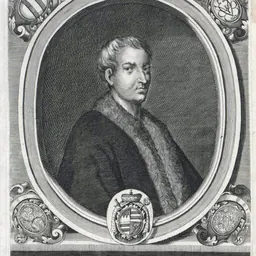

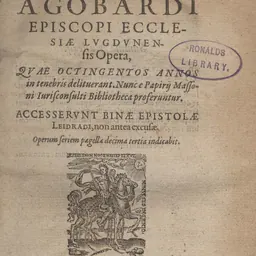
Contemporaries
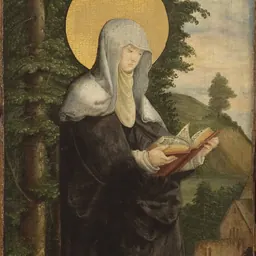
People whose lives overlapped Ludger's



Frequently asked questions
Who was Ludger?
Bishop of Münster in Westfalen
When was Ludger born?
Ludger was born in 742 in Utrecht, Zuilen.
When did Ludger die?
Ludger died on 26 March 809 in Billerbeck.
What was Ludger's occupation?
Ludger was a catholic priest, writer, catholic bishop, missionary and bishop.
What nationality was Ludger?
Ludger's recorded nationality: Francia.
Sources & further reading
Cite this page
APA: Biography.guide. (2026). Ludger. https://biography.guide/ludger/
MLA: "Ludger." Biography.guide, https://biography.guide/ludger/.
Chicago: "Ludger." Biography.guide. https://biography.guide/ludger/.
Data last updated: 2026-09-23 · Spot an error? Report a correction.
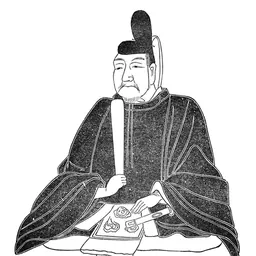
Portrait: Wikimedia Commons · author & licence
Page generated 2026-09-27 05:05 UTC