
Lucius Barker
American political scientist
About Lucius Barker
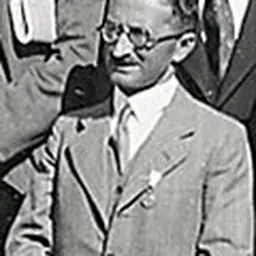
Lived 1928 – 2020 (aged 92). Lucius Barker was an American political scientist, academic and university teacher.
Lucius Jefferson Barker (June 11, 1928 – June 21, 2020) was an American political scientist. He was the Edna Fischel Gellhorn Professor and chair of the political science department at Washington University in St. Louis, and then the William Bennett Munro Professor of Political Science at Stanford University. He was an influential scholar of constitutional law and civil liberties, as well as race and ethnic politics in the United States. He published works on civil liberties in the United States and systemic racism. He was also involved with several presidential campaigns, and he wrote books about the Jesse Jackson 1984 presidential campaign, for which he was a convention delegate.
Early life and education Barker was born in Franklinton, Louisiana on June 11, 1928. Barker left his home state after his undergraduate studies in part due to discriminatory practices within higher education in Louisiana that gave financial incentives to attend graduate school out of state. Additionally, he was the first Black teaching assistant in the College of Arts and Science at the University of Illinois at Urbana Champaign. Taking a systemic approach to political analysis was a staple of Barker's research, and was a natural cornerstone of his leadership of the ASPA. The opening of his presidential address in 1993 called for understanding the advancements and hurdles faced by Black Americans through a systemic perspective, highlighting an area of work he focused on while serving as the head of the ASPA. In it Barker discusses the limits of political participation due to both obstacles for their involvement and a system structured to disproportionately harm them, saying, with greater participation having the reverse effect of favored policies becoming weaker. Barker was the founding editor of the National Review of Black Politics (then the National Political Science Review), a journal of the National Conference of Black Political Scientists.
Research Barker's new perspective on political science was clear in his PhD thesis on the Tideland Oil Controversy and the ensuing court battle. It was significant for arguing that the Supreme Court also played a role as a policymaker, a belief that would undergird his research throughout his career. This was an area of research that Barker explored along with C. Herman Pritchett and Robert Dahl, and would further explore in later publications. This textbook had been published in 9 editions by 2020, and is considered a classic textbook on the structure of the American legal system. In 1980, he published Black Americans and the Political System (published in later editions as African Americans and the American Political System), which the American Political Science Association publication Political Science Now called "a defining book on systemic racism through a political lens." He wrote a book on Jesse Jackson's presidential campaign, called Our time has come: A delegate's diary of Jesse Jackson's 1984 presidential campaign. The book consists of Barker's thoughts about Jackson's campaign. Chronicling the 1984 Democratic Presidential Primary, Barker felt himself morph from an academic observer to an activist delegate.
Personal life Barker married Maude Beavers in 1965. They had two daughters. Maude died in May 2020. Barker died two months later on June 21, 2020, at 92.
Selected works "Third Parties in Litigation: A Systemic View of the Judicial Function", The Journal of Politics (1967) Civil Liberties and the Constitution, with Twiley Barker (1970) African Americans and the American Political System, with Mack H. Jones and Katherine Tate (1980) Our time has come: A delegate's diary of Jesse Jackson's 1984 presidential campaign (1984) Jesse Jackson's 1984 presidential campaign: Challenge and change in American politics, with Ronald W. Walters (1989)
Don’t just read it —
keep it.
Full-length biographies made to live with: read them, listen on the way to work, watch them tonight.
- E-book
- Audio
- Video
Instant download · yours to keep · every purchase keeps this site free
Important facts
People in Lucius Barker's life
Named in this biography and alive at the same time








Related people
Same field, nearest in time






Contemporaries
People whose lives overlapped Lucius Barker's





Frequently asked questions
Who was Lucius Barker?
American political scientist
When was Lucius Barker born?
Lucius Barker was born on 11 June 1928 in Franklinton.
When did Lucius Barker die?
Lucius Barker died on 21 June 2020 in Menlo Park.
What was Lucius Barker's occupation?
Lucius Barker was a political scientist, academic and university teacher.
What nationality was Lucius Barker?
Lucius Barker was American.
Sources & further reading
Cite this page
APA: Biography.guide. (2026). Lucius Barker. https://biography.guide/lucius-barker/
MLA: "Lucius Barker." Biography.guide, https://biography.guide/lucius-barker/.
Chicago: "Lucius Barker." Biography.guide. https://biography.guide/lucius-barker/.
Data last updated: 2026-09-20 · Spot an error? Report a correction.
Page generated 2026-09-27 05:07 UTC