
About Luciano Laurana
Lived 1420 – 1479 (aged 58–59). Luciano Laurana was an architect and engineer.
Luciano Laurana (Lutiano Dellaurana, ) (c. 1420 – 1479) was a Dalmatian architect and engineer from the historic Vrana settlement near the town of Zadar in Dalmatia, (today in Croatia, then part of the Republic of Venice) He considerably influenced the development of Renaissance architecture. His projects were accompanied with notes in the Croatian glagolitic script, as witnessed by the famous Bernardo Baldi. He was a relative of the sculptor Francesco Laurana.
Biography
Laurana was born in Vrana near Zadar in Dalmatia. Later in life, the Italians in Urbino called him Schiavone, from his native land of Schiavonia, the name wherewith the region was called by the Venetians, which was also used as an exonym for the local population. Little is known about his early years. His father Martin was a stonecutter in Zadar, who worked together with the famous sculptor Giorgio da Sebenico on the Šibenik Cathedral (Cathedral of St. James).
Around 1465 he is known to have collaborated in Mantua with Leon Battista Alberti. From 1466 to 1472 he directed the works of the new palace commissioned by Federico III da Montefeltro, duke of Urbino. The exact attribution of the works is still disputed, as it is known that also Francesco di Giorgio had a role in the construction: the innovative façade, however, is traditionally recognized as Laurana's. Laurana improved Italian Renaissance tradition by using a system of columns, pilasters, and arcades to produce elegant facades and spacious rooms. In the arcaded palace courtyard Laurana achieved a rhythmic lightness, amplitude, and sophistication far in advance of contemporary Florentine work.
Later he worked in Naples for the king Ferrante II of Naples. From 1472 he was in Pesaro, where he attended the construction of the Castle (Rocca) until his death, occurred in 1479. The famous anonymous picture La città ideale, housed in the Urbino National Gallery, has been attributed to him.
Nationality
Encyclopædia Britannica describes Luciano Laurana as "one of the main figures in 15th-century Italian architecture". The Architecture Book, The Architectural historian in America, and Enciclopedia Italiana identify Laurana as an "Italian architect".
He is internationally known as an Italian artist, even if he is today considered by Croatians in the overviews of their art, with the name "Lucijan Vranjanin".
Don’t just read it —
keep it.
Full-length biographies made to live with: read them, listen on the way to work, watch them tonight.
- E-book
- Audio
- Video
Instant download · yours to keep · every purchase keeps this site free
Important facts
more
Lutianus quondam Martini de Jadra, Luciano Martini, Laurana da Urbino, Lucianus Laurana, Da Urbino Laurana, Laurana Martini Laurana, Lucijan VranjaninPeople in Luciano Laurana's life
Named in this biography and alive at the same time
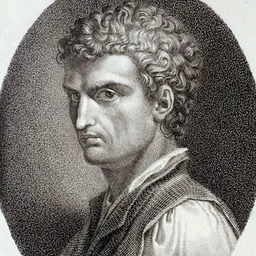
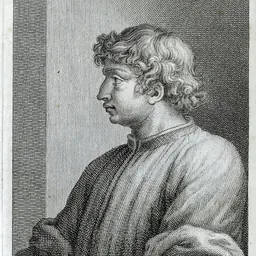
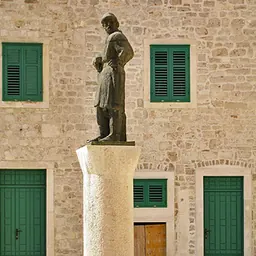

Related people
Same field, nearest in time

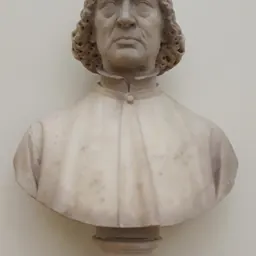

Contemporaries
People whose lives overlapped Luciano Laurana's


Frequently asked questions
Who was Luciano Laurana?
Croatian-Italian architect
When was Luciano Laurana born?
Luciano Laurana was born in 1420 in Dalmatia.
When did Luciano Laurana die?
Luciano Laurana died in 1479 in Pesaro.
What was Luciano Laurana's occupation?
Luciano Laurana was an architect and engineer.
What nationality was Luciano Laurana?
Luciano Laurana's recorded nationality: Dalmatia.
Sources & further reading
Cite this page
APA: Biography.guide. (2026). Luciano Laurana. https://biography.guide/luciano-laurana/
MLA: "Luciano Laurana." Biography.guide, https://biography.guide/luciano-laurana/.
Chicago: "Luciano Laurana." Biography.guide. https://biography.guide/luciano-laurana/.
Data last updated: 2026-09-20 · Spot an error? Report a correction.
Page generated 2026-09-27 05:04 UTC