
About Lucian Pye
Lived 1921 – 2008 (aged 86). Lucian Pye was an American political scientist.
Lucian W. Pye (; October 21, 1921 – September 5, 2008) was an American political scientist, sinologist and comparative politics expert.
Pye focused on the characteristics of specific cultures in forming theories of political development of modernization of Third World nations, rather than seeking universal and overarching theories like most political scientists. As a result, he became regarded as one of the foremost contemporary practitioners and proponents of the concept of political culture and political psychology. Pye was a teacher at the Massachusetts Institute of Technology for 35 years and served on several Asia-related research and policy organizations. He wrote or edited books and served as advisor to Democratic presidential candidates, including John F. Kennedy. Pye died of pneumonia at age 86.
Early life and education Lucian W. Pye was born on October 21, 1921, in Fenzhou, in Shanxi Province in northwest China. His father, Watts O. Pye, a graduate of Carleton College, and his mother, Gertrude Chaney Pye, were Congregational missionaries of the American Board of Commissioners for Foreign Missions. When his father died in 1926, he and his mother stayed in Fenzhou until he moved to Oberlin, Ohio, for high school. Pye lost much of his grasp of the Chinese language upon moving to Ohio, only to take it up again later. Pye graduated in 1943 from Carleton College, where he met Mary Toombs Waddill, of Greenville, South Carolina; they married in 1945, and she would co-write and help edit many of his books and writings over the years.
Pye returned to China at the end of World War II to become an intelligence officer with the U.S. Marines Corps, achieving the rank of second lieutenant. He returned to the United States to attend graduate school through the G.I. Bill at Yale University, Pye's approach was so novel that it often drew opposite reactions and criticism, but he nevertheless came to be considered a peer of the Chinese experts of his generation, like John K. Fairbank of Harvard. He emphasised the "need to create more effective, more adaptive, more complex, and more rationalised organisations" and saw the "heart" of the nation-building "problem" centered on the "interrelationships among personality, culture, and the polity". ARPA counterinsurgency research programs, such as the one done by Simulmatics Corporation, part of Project Agile, relied heavily on Pye's work.
In 1985, Pye and his wife wrote Asian Power and Politics: The Cultural Dimensions of Authority, which discussed commonalities in Asia' disparate political cultures. Critics of the book accused Pye of using flagrant stereotypes; Howard Wriggins, writing in Political Science Quarterly, asked, "Who but Lucian Pye would be bold enough" and Eva and Daniel Ravenal. Separate memorial services were in Belmont, Massachusetts, and at M.I.T. Charles Stewart, head of the M.I.T. political science department, said of Pye upon his death, "Lucian was a giant in the intellectual world that went well beyond our field of political science. For anyone ever called 'hero' or 'scholar' by Lucian, we must now live up to those titles he so cheerfully bestowed upon us." 1958. "The Non-Western Political Process".Journal of Politics 20.3: 468–486. 1962. Politics, Personality, And Nation-Building: Burma'S Search For Identity. Yale University Press. 1965. Political Culture And Political Development (Co-Editor And Co-Author). Studies In Political Development, Vol. 5. Princeton University Press. 1968. The Spirit Of Chinese Politics: A Psychocultural Study Of The Authority Crisis In Political Development. MIT Press. 1971. Warlord Politics: Conflict And Coalition In The Modernization Of Republican China. New York: Praeger. 1972. With Mary W. Pye. China: An Introduction. Boston: Little & Brown. 1976. Mao Tse-Tung: The Man In The Leader. New York: Basic Books. 1981. The Dynamics Of Chinese Politics. Cambridge, Massachusetts: Oelgeschlager, Gunn & Hain. 1982. Chinese Commercial Negotiating Style. Cambridge, Massachusetts: Oelgeschlager, Gunn & Hain. 1985. With Mary W. Pye. Asian Power And Politics: The Cultural Dimensions Of Authority. Belknap Press Of Harvard University Press. 1988. The Mandarin And The Cadre: China's Political Cultures. Ann Arbor: Center For Chinese Studies, University Of Michigan.
Don’t just read it —
keep it.
Full-length biographies made to live with: read them, listen on the way to work, watch them tonight.
- E-book
- Audio
- Video
Instant download · yours to keep · every purchase keeps this site free
Important facts
People in Lucian Pye's life
Named in this biography and alive at the same time

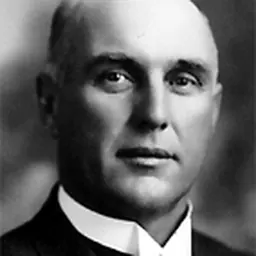
Related people
Same field, nearest in time
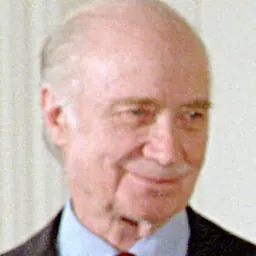

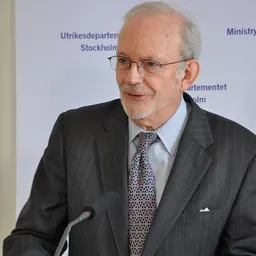
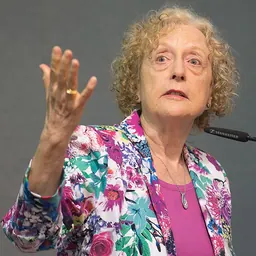


Contemporaries
People whose lives overlapped Lucian Pye's



Frequently asked questions
Who was Lucian Pye?
American sinologist
When was Lucian Pye born?
Lucian Pye was born on 21 October 1921 in Fenzhou.
When did Lucian Pye die?
Lucian Pye died on 5 September 2008 in Boston.
What was Lucian Pye's occupation?
Lucian Pye was a political scientist.
What nationality was Lucian Pye?
Lucian Pye was American.
Sources & further reading
Cite this page
APA: Biography.guide. (2026). Lucian Pye. https://biography.guide/lucian-pye/
MLA: "Lucian Pye." Biography.guide, https://biography.guide/lucian-pye/.
Chicago: "Lucian Pye." Biography.guide. https://biography.guide/lucian-pye/.
Data last updated: 2026-09-20 · Spot an error? Report a correction.
Page generated 2026-09-27 05:04 UTC