
About Luca Penni
Lived 1500 – 1556. Luca Penni was a painter, engraver and designer.
Luca Penni (c.1500/1504–1556) was an Italian painter of the 16th century, best known for his work in France as part of the First School of Fontainebleau. He was nicknamed Le Romain (the Roman).
Life Penni was born in Florence, into a family of weavers. His brothers Gianfrancesco and Bartolommeo were also painters. He seems to have trained under Raphael in Florence and Rome. In the late 1520s, Penni worked with his brother-in-law Perino del Vaga in Genoa, settling into his own style before his stay at Fontainebleau.
Luca Penni, Rosso Fiorentino and Francesco Primaticcio were summoned by Francis I of France to France. They gave his Palace of Fontainebleau a daring, delicate and sophisticated Italian Renaissance style.
After Francis's death, in 1547, Penni moved to rue de la Cerisaie in Paris and continued working with printmakers, continuing his Fontainebleau style in works for new aristocratic and middle-class clients.
Selected works
Battle of the Tupinamba, pen and black ink, brown and beige wash, retints in white gouache on beige wash paper, 29 x 46.5 cm, Musée du Louvre, Paris. Mars assisting Venus in her toilette, pen and brown ink, grey and beige wash, traces of black chalk, retints in white gouache, traces of pen marks, on beige wash paper, 33.4 x 45.5 cm, Musée du Louvre. Lamentation of Christ, oil on wood, 59 x 140 cm, Palais des beaux-arts de Lille. Socrates and Xanthippe oil on oak wood, 77.5x60 cm, The Royal Castle in Warsaw Jesus Bearing the Cross, pen and black ink, beige wash, retints in white gouache, traces of stylus and black chalk, part of an editing line in black chalk along the right side, beige wash paper, Paris, Musée du Louvre, département des Arts graphiques, Aeneas and the golden bough, pen and black ink, brown-beige wash, retints in white (oxidised), squared in black chalk, Paris, Bibliothèque nationale de France, département des Estampes et de la Photographie, réserve, B 5 fol. XLIV. The Trojans washing the frozen body of Misenus and preparing his funeral pyre, pen and brown ink, beige wash, white gouache retints, beige wash paper, squared in black chalk, Paris, Musée du Louvre, département des Arts graphiques, inv. 1404. The Conversion of Saint Paul, pen and brown ink, brown wash, traces of stylus, retints in white gouache, beige washed paper, Paris, Musée du Louvre, département des Arts graphiques, inv. 1402. Male nudes fighting in front of a burning pyre, pen and brown ink, beige and brown wash, retints in white gouache, traces of stylus, beige wash paper, Paris, Musée du Louvre, département des Arts graphiques, inv. 1400. David beheading Goliath, pen and brown ink, beige wash, on preparatory tracing in black chalk, retints in white gouache, on two joined pieces of beige wash paper, Paris, Musée du Louvre, département des Arts graphiques, inv. 8717. The Judgement of Paris, pen and brown ink, brown wash, retints in white gouache, traces of stylus, beige wash paper, Paris, Musée du Louvre, département des Arts graphiques, inv. 1395. Cassandra stopping Deiphobus from killing Paris, victor of the funerary games organised in his memory, two drawings in pen and brown ink, beige wash, retints in white gouache, beige wash paper, Paris, Musée du Louvre, département des Arts graphiques, inv. 1397 and 1398. Battle in the palace of Priam, pen and brown ink, retints in white gouache, traces of stylus, brown wash paper, Paris, Musée du Louvre, département des Arts graphiques, inv. 8794. The Trojan Horse being brought into Troy, pen and brown ink, beige wash, retints in white gouache, traces of stylus, beige wash paper, Paris, Musée du Louvre, département des Arts graphiques, inv. 1399. Pietà, pen and brown ink, beige wash, on beige wash paper, Paris, private collection. Alcinous receiving Ulysses, pen and brown ink, brown wash, retints in white gouache, preparatory tracing in black chalk, beige paper, Paris, École nationale supérieure des beaux-arts, Mas. 1384. Banqueting scene, pen and brown ink, beige wash, beige washed paper, Paris, Musée du Louvre, département des Arts graphiques, inv. 26369. Polyphemus in love with Galatea, pen and brown ink, beige wash, brown wash, preparatory tracings in black chalk, retints in white gouache, on beige washed paper, Paris, Musée du Louvre, département des Arts graphiques, inv. 8758. Mars assisting Venus in her toilette, pen and brown ink, grey and beige wash, traces of black chalk, retints in white gouache, traces of stylus, beige wash paper, Paris, Musée du Louvre, département des Arts graphiques, inv. 1396. Venus embracing Cupid, oil on wood, later transferred to canvas, H. 1,22; L. 0,96 m, Bourges, Musée du Berry, inv. 840-4-1. Jupiter and Semele, pen and brown ink, brown wash, retints in white gouache (partly oxidised), pink ('sanguine' or 'minium') wash paper, Paris, Musée du Louvre, département des Arts graphiques, RF 3939. Venus asking Cupid to strike Pluto, pen and brown ink, beige wash, brown wash, retints in white gouache, beige wash paper, Paris, Musée du Louvre, département des Arts graphiques, inv. 1407. Renown driving a quadriga, in which are seated Victory and Abundance, design for the reverse of a medal issued by Henry II of France, pen and brown ink, brown wash, retints in white gouache, preparatory tracings in black chalk, Paris, École nationale supérieure des beaux-arts, Mas. 900. A queen before a king, holding a skull, pen and brown ink, beige wash, preparatory tracings in stylus and black chalk, Paris, Musée du Louvre, département des Arts graphiques, RF 41214. The Holy Women at the Tomb, pen and brown ink, brown wash, retints in white gouache, on beige wash paper, H. 30,3; L. 45,9 cm, Paris, musée du Louvre, département des Arts graphiques, inv. 1394.
Don’t just read it —
keep it.
Full-length biographies made to live with: read them, listen on the way to work, watch them tonight.
- E-book
- Audio
- Video
Instant download · yours to keep · every purchase keeps this site free
Important facts
more
L. Pennis, Lucca Pennis, L. Peni, L. Penni, Penni, Lucas PenniPeople in Luca Penni's life
Named in this biography and alive at the same time


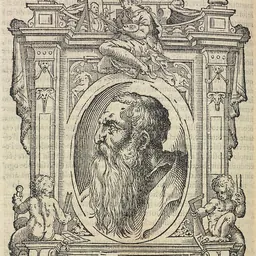

Related people
Same field, nearest in time
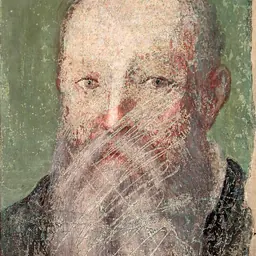

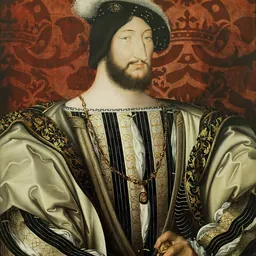
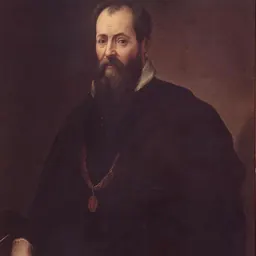


Contemporaries
People whose lives overlapped Luca Penni's

Frequently asked questions
Who was Luca Penni?
Italian painter (1500-1556)
When was Luca Penni born?
Luca Penni was born in 1500 in Florence.
When did Luca Penni die?
Luca Penni died in 1556 in Paris.
What was Luca Penni's occupation?
Luca Penni was a painter, engraver and designer.
Sources & further reading
Cite this page
APA: Biography.guide. (2026). Luca Penni. https://biography.guide/luca-penni/
MLA: "Luca Penni." Biography.guide, https://biography.guide/luca-penni/.
Chicago: "Luca Penni." Biography.guide. https://biography.guide/luca-penni/.
Data last updated: 2026-09-20 · Spot an error? Report a correction.
Page generated 2026-09-27 05:17 UTC