
About Lu Zhi
Lived 754 – 805 (aged 50–51). Lu Zhi was a Chinese poet and politician.
Lu Zhi (; 754–805), courtesy name Jingyu (敬輿), posthumous name Xuan (宣), was a politician of China's Tang dynasty. He served as a personal advisor and later chancellor to Emperor Dezong.
Lu Zhi enjoyed the Emperor Dezong's confidence as a palace academician and imperial confidant, but as chancellor offended Emperor Dezong by repeatedly accusing the high official Pei Yanling of misconduct, and was demoted and died in exile. He left a relatively large body of writing on his advice to Emperor Dezong, which discussed in fair detail the condition of the Tang people at the time and thus is considered valuable, by historians such as Bo Yang, in contributing to historians' understanding of mid-Tang life.
Background Lu Zhi was born in 754, during the reign of Emperor Xuanzong. His family was from Su Prefecture (蘇州, in modern Suzhou, Jiangsu) and claimed ancestry from the royal house of the Warring States period state Qi, through officials of Han dynasty, Eastern Wu, Jin dynasty (266–420), Southern Qi, Liang dynasty, and Chen dynasty – although the family did not record the family line completely. Lu Zhi's biography in the Old Book of Tang gave his father's name as Lu Kan (陸侃) and indicated that Lu Kan had served as a county magistrate, while his biography in the New Book of Tang gave no name for his father, while indicating, in its table of chancellors' family trees, that his grandfather was named Lu Qiwang (陸齊望) and served as the director of the archival bureau, while his father's name was Lu Ba (陸灞) and served as a low-level official at the ministry of civil service affairs. When Lu was set to continue his journey, Zhang wanted to give him a large amount of money as a gift to his mother, but Lu declined, accepting only a gift of tea. Later, Lu was recalled to serve as a secretary at Weinan County (渭南, in modern Weinan), and later was made an imperial censor with the title Jiancha Yushi (監察御史). It was said that Lu had a faithful character, and, thankful that Emperor Dezong valued him for his advice, wanted to repay Emperor Dezong by providing detailed and honest advice; in turn, Emperor Dezong came to trust his advice greatly. soldiers from Jingyuan Circuit (涇原, headquartered in modern Pingliang, Gansu), at the capital Chang'an to await deployment to the wars in the east, were angry that they did not receive rewards they felt they deserved, and they mutinied, forcing Emperor Dezong to flee to Fengtian (奉天, in modern Xianyang, Shaanxi). Lu initially was unable to catch up with Emperor Dezong, but eventually did.
Meanwhile, the Jingyuan soldiers supported Zhu Tao's brother Zhu Ci, himself an important general until Emperor Dezong removed him from his command due to Zhu Tao's rebellion, as their leader, and Zhu Ci soon declared himself the emperor of a new state of Qin. Lu also greatly advocated against a proposed alliance with Tufan on account that Tufan had treacherously attacked Tang on many occasions in the past, and when Tufan forces withdrew from the field after first promising to attack Zhu Ci (who had renamed his state Han) together, Lu, instead of showing distress, wrote a congratulatory submission to Emperor Dezong.
After Zhu Ci's rebellion After Li Sheng recaptured Chang'an in summer 784 and Zhu Ci was killed in flight, Emperor Dezong returned to Chang'an, and Lu Zhi followed him. (On the way back to Chang'an, Emperor Dezong again considered replacing Li Chulin, but again per Lu's opinion did not do so.)
Meanwhile, Emperor Dezong sent messengers to welcome Lu's mother Lady Wei to Chang'an, and treated her with great honors. Later, after Lady Wei died, Lu left governmental service and observed a period of mourning for her at the eastern capital Luoyang, staying at Fengle Temple (豐樂寺) at Mount Song. He refused all gifts sent to him in Lady Wei's honor, except for those from Wei Gao, the military governor of Xichuan Circuit (西川, headquartered in modern Chengdu), because Wei Gao was an old friend. Because it was customary for husband and wife to be buried together, Emperor Dezong also had Lu's father disinterred and his casket escorted to Luoyang, to be buried with Lady Wei. After Lu's mourning period was over, he was recalled to the government to again serve as imperial scholar and also acting deputy minister of defense (兵部侍郎, Bingbu Shilang). He met with Emperor Dezong to thank the emperor, and was said to be so touched that he was prostrate on the ground, crying; Emperor Dezong was also touched by his display of emotions. It was said that the people at the time had great expectations that he would be chancellor, but the main chancellor at that time, Dou Can, was apprehensive of Lu.
Meanwhile, Dou gained a reputation for treachery, and he began to lose Emperor Dezong's favor. In 792, Dou Can's nephew Dou Shen (竇申), fearful that Lu would be further promoted by Emperor Dezong, forged some documents defamatory to Lu with his maternal uncle Li Zezhi (李則之) the Prince of Guo and his ally, the imperial scholar Wu Tongxuan (吳通玄). Emperor Dezong found out about this and exiled Dou Shen, Li Zezhi, and Wu, and soon ordered Wu to commit suicide. Soon thereafter, Dou Can himself was exiled to be the secretary general at Chen Prefecture (郴州, in modern Chenzhou, Hunan), and Lu and Zhao Jing were named chancellors, with the designation Tong Zhongshu Menxia Pingzhangshi (同中書門下平章事); both of them also given the office of Zhongshu Shilang (中書侍郎) as the deputy heads of the legislative bureau.
As chancellor Soon after becoming chancellor, Lu Zhi advocated a system where the various supervising officials be allowed and required to recommend some capable subordinates for promotion. Emperor Dezong initially agreed, but after some time, believing reports that the officials were not recommending the right individuals, he wanted to end the system and return to the old system where the chancellors would select the officials for promotion. Lu opposed this reversion, pointing out that chancellors were formerly supervisorial officials and that it was not logical to believe that being given chancellor posts suddenly qualified them to select officials. Emperor Dezong, however, reverted to the old method anyway. Soon thereafter, when the military governor of Lingnan Circuit (嶺南, headquartered in modern Guangzhou, Guangdong) was complaining about the foreign merchants moving their businesses to Annan Circuit (安南, headquartered in modern Hanoi, Vietnam) and taking the substantial tax revenue away from Lingnan, Emperor Dezong considered agreeing with Lingnan's complaint and investigating the matter. Lu opposed this investigation, pointing out that both Lingnan and Annan were parts of the empire and that it must be that the Lingnan officials offended the foreign merchants by improperly exercising legal authority. It is not known whether Emperor Dezong agreed with Lu. to posts with few authorities; and that he believed that Lu was being overly avoiding entanglement by refusing to accept any gifts. Lu wrote a lengthy response, pointing out, as to discussing the matters with Zhao, that chancellors properly should discuss important matters with each other; that, as to Miao Can's matter, that the law must be observed and where there was no evidence that Miao had carried out wrongdoing, it would be wrong to exile him based on innuendo; and, as to the matter of accepting gifts, that refusing all gifts was the best method to avoid appearance of favoritism.
Exile As soon as Lu Zhi was removed from his chancellor position, Pei Yanling begin attacking him as well as his allies Li Chong (李充), Zhang Pang (張滂), and Li Xian (李銛), accusing them of fostering dissent among the imperial guard ranks. When, subsequently, an imperial guard soldier did complain to Emperor Dezong that he was not receiving adequate supplies from the directory of finances, Emperor Dezong believed Pei's accusations, and in summer 795 demoted Lu, Li Chong, Zhang, and Li Xian all to be prefectural secretaries general – in Lu's case, to be the secretary general of Zhong Prefecture (忠州, in modern Chongqing). Lu was posthumously honored and given the posthumous name Xuan (宣, meaning "responsible").
Notes and references
Old Book of Tang, vol. 139. New Book of Tang, vol. 157. Zizhi Tongjian, vols. 228, 229, 230, 231, 232, 233, 234, 235, 236.
Don’t just read it —
keep it.
Full-length biographies made to live with: read them, listen on the way to work, watch them tonight.
- E-book
- Audio
- Video
Instant download · yours to keep · every purchase keeps this site free
Important facts
People in Lu Zhi's life
Named in this biography and alive at the same time





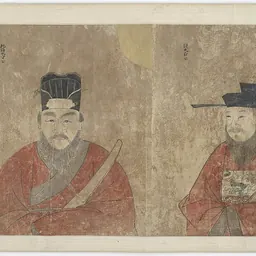
Related people
Same field, nearest in time

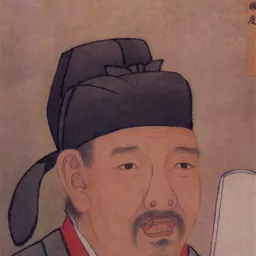


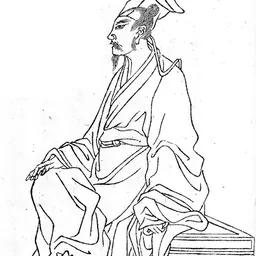
Contemporaries
People whose lives overlapped Lu Zhi's
Frequently asked questions
Who was Lu Zhi?
Chinese chancellor
When was Lu Zhi born?
Lu Zhi was born in 754 in Suzhou.
When did Lu Zhi die?
Lu Zhi died in 805.
What was Lu Zhi's occupation?
Lu Zhi was a poet and politician.
What nationality was Lu Zhi?
Lu Zhi was Chinese.
Sources & further reading
· DBpedia: Lu Zhi (Tang dynasty)
Cite this page
APA: Biography.guide. (2026). Lu Zhi. https://biography.guide/lu-zhi-poet/
MLA: "Lu Zhi." Biography.guide, https://biography.guide/lu-zhi-poet/.
Chicago: "Lu Zhi." Biography.guide. https://biography.guide/lu-zhi-poet/.
Data last updated: 2026-09-27 · Spot an error? Report a correction.
Page generated 2026-09-27 05:17 UTC