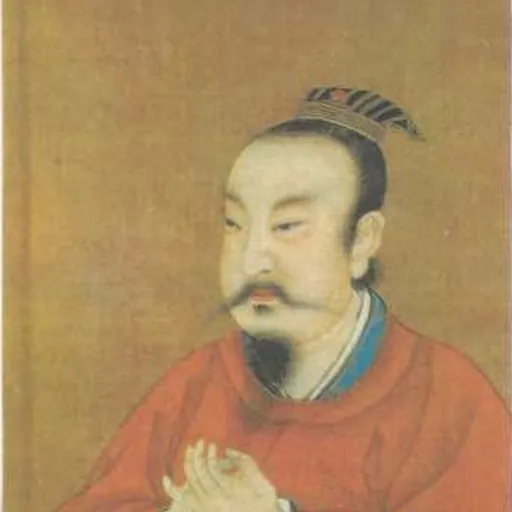
About Emperor Dezong of Tang
Lived 742 – 805 (aged 62). Emperor Dezong of Tang was a Chinese poet.
Background Li Kuo was born in 742, during the reign of his great-grandfather Emperor Xuanzong. His father was Li Chu the Prince of Guangping—the oldest son of Emperor Xuanzong's son and crown prince Li Heng, and he was Li Chu's oldest son. His mother was a consort of Li Chu's, Consort Shen. He was born at the eastern palace—i.e., the Crown Prince's palace—at the Tang capital Chang'an. Later that year, he was created the Prince of Fengjie and given the honorific title of Tejin . During the Anshi Rebellion, which erupted in 755, Emperor Xuanzong fled to Chengdu, while Li Heng and his sons, including Li Chu, fled to Lingwu. Li Kuo's exact locations during this time were not stated in historical records, although presumably he accompanied his father, because while his mother Consort Shen was captured by the rebel Yan forces along with many palace women, he was not. While Li Heng was at Lingwu, he was declared emperor (as Emperor Suzong), an act that Emperor Xuanzong later recognized.
After Chang'an was recaptured from Yan forces in 756, Li Chu was made crown prince, and in 762, after Emperor Suzong's death, he became emperor (as Emperor Daizong). Emperor Daizong gave Li Kuo the title of supreme commander of the armed forces and created him the Prince of Lu, a title soon changed to Prince of Yong. He and his staff were sent to rendezvous with Tang and allied Huige forces at Shan Prefecture (陝州, in modern Sanmenxia, Henan), to prepare an attack to recapture the eastern capital Luoyang, which was then serving as the Yan capital under Yan's fourth and final emperor Shi Chaoyi. When Li Kuo met Huige's Dengli Khan Yaoluoge Yidijian , he treated Yaoluoge Yidijian as an equal, drawing Yaoluoge Yidijian's anger.. Yaoluoge Yidijian had Li Kuo's Yao Ziang , Wei Ju , Wei Shaohua , and Li Jin arrested and whipped severely, such that Wei Ju and Wei Shaohua died that night. Yaoluoge Yidijian did not harm Li Kuo, but sent him back to the Tang camp. After Luoyang was recaptured and Shi Chaoyi committed suicide in flight in 763, Li Kuo was given the chancellor title of Shangshu Ling , and his portrait, along with those of eight generals (including Guo Ziyi), were added to the Portraits at Lingyan Pavilion. Subsequently, during a Tibet incursion in 763 in which Emperor Daizong was forced to flee Chang'an and Tibet forces briefly captured Chang'an, Li Kuo was named the titular supreme commander of forces in the Guanzhong region (i.e., the Chang'an region), but the general Guo Ziyi, as deputy supreme commander, was actually in command.
As crown prince In 764, Li Kuo was made crown prince. Emperor Daizong then tried to transfer his title of Shangshu Ling to Guo Ziyi, but Guo declined on the basis that only Li Kuo had held the title recently, and previously the title had been held by Emperor Taizong. Meanwhile, in 765, a Buddhist nun named Guangcheng claimed to be Li Kuo's mother Consort Shen, but after further interrogation, it was discovered that she had only been Li Kuo's wet nurse, and Emperor Daizong had her whipped to death.
Early attempts to destroy warlord power (early Jianzhong era) After Emperor Dezong took the throne, within the span of less than a year, he carried out several actions to set out his policy differences with his father: The chancellor Chang Gun, whom Emperor Dezong suspected of being overly powerful, was exiled, replaced with Cui Youfu; subsequently, at Cui's recommendation, Yang Yan was also made chancellor. Guo Ziyi, who had much military authority, was effectively forced into retirement (albeit with many honorific titles), with his commands divided between Li Huaiguang, Chang Qianguang , and Hun Jian .
Emperor Dezong reacted by commissioning Li Xilie the military governor of Huaixi Circuit (淮西, headquartered in modern Zhumadian, Henan) to command the army against Shannan East; Ma Sui, Li Baozhen, and Li Sheng to attack Weibo; and Zhu Tao the acting military governor of Lulong Circuit (盧龍, headquartered in modern Beijing) to attack Chengde. Ma, Li Baozhen, and Li Sheng quickly defeated Tian's forces, which were attacking Li Baozhen's Zhaoyi Circuit (昭義, headquartered in modern Changzhi, Shanxi) and forced him to flee back to his capital Wei Prefecture , which Ma, Li Baozhen, Li Sheng, and Li Qiu put under siege. Li Xilie quickly defeated Liang, causing Liang to commit suicide. Zhu was able to persuade Li Weiyue's officer Zhang Xiaozhong to turn against him and attack Li Weiyue with Zhu, and under pressure, another officer of Li Weiyue's, Wang Wujun, killed Li Weiyue and surrendered to imperial forces. Li Na, meanwhile, was trapped at Pu Prefecture (濮州, in modern Heze, Shandong). By spring 782, it appeared that Emperor Dezong would be soon successful in his aim to wipe out warlord power and reunify the realm under imperial authority.
Rebellions of Zhu Ci, Li Huaiguang, and Li Xilie
On November 2, 783, soldiers from Jingyuan Circuit, at Chang'an to be deployed to the battlefield to the east, rebelled when they became angry that they were not only not given rewards that they believed they deserved, but were being fed a vegetarian diet, mutinied. They attacked the palace, and Emperor Dezong fled with his family to Xianyang (咸陽, in modern Xianyang, Shaanxi), and then to Fengtian (奉天, in modern Xianyang). The soldiers supported Zhu Tao's brother Zhu Ci—who had previously been a major general and who had been the military governor of Jingyuan Circuit at one point but who was removed from his command due to Zhu Tao's rebellion—as their leader. Zhu Ci soon declared himself emperor of a new state of Qin. Many Tang officials surrendered to Zhu and served in his administration, although many fled to Fengtian to join Emperor Dezong.
However, in the aftermaths of Li's saving him, Emperor Dezong offended Li by refusing to meet him, but instead ordering him to rendezvous with several other generals—Li Sheng (who had also marched toward Fengtian), Li Jianhui , and Yang Huiyuan —to recapture Chang'an. (This was at Lu Qi's suggestion, as Lu knew that Li Huaiguang despised him and, if he were allowed to meet the emperor, would surely accuse him and his associates Zhao Zan and Bai Zhizhen of crimes.) Li Huaiguang became disaffected, but submitted petitions demanding the dismissals of Lu and his associates. As a result, Lu, Bai, and Zhao were exiled.
Meanwhile, though, Li Huaiguang, disaffected from Emperor Dezong, was in secret negotiations with Zhu Ci (who had changed his state's name to Han by this point) to enter an alliance with Zhu. Zhu promised to honor Li Huaiguang as an elder brother and divide the Guanzhong region with him, with each ruling a state as its emperor. On March 20, Li Huaiguang declared his rebellion and alliance with Zhu. Emperor Dezong fled from Fengtian to Liang Prefecture (梁州, in modern Hanzhong, Shaanxi). Several key officers under Li Huaiguang—including Han Yougui , Dai Xiuyan , Luo Yuanguang , and Shang Kegu —however, refused to follow Li Huaiguang and instead accepted commands from Li Sheng, whom Emperor Dezong made the commander of Tang forces in the region. With Li Huaiguang weakened, Zhu no longer treated him with respect but instead as a subordinate. In anger and fear, Li Huaiguang withdrew from the region and headed back to his base at Hezhong (河中, in modern Yuncheng, Shaanxi). On June 20, with Li Sheng having entered the city, Zhu Ci fled toward Tibet. He was soon killed in flight by his own soldiers, ending his state of Han. On August 3, Emperor Dezong returned to Chang'an.
Meanwhile, Li Xilie's continued attempts to expand were being repeatedly rebuffed by Tang generals. the day set for the treaty signing, Shang ambushed Hun at the meeting site, intending to capture him, but Hun escaped with emergency aid from Luo Yuanguang and Han Yougui. As Ma was responsible for arranging the peace treaty with Shang, Emperor Dezong recalled him to Chang'an as well and stripped him of his command of Hedong Circuit (河東, in modern Taiyuan, Shanxi). With Huige (which was soon renamed Huigu) fighting with Tibet, and with Tibet's major vassal Nanzhao distancing itself from Tibet's campaigns against Tang, Tibet attacks on Tang began to weaken, such that Tang generals were beginning to have successes against Tibet. Lu Zhi became the main chancellor, and for some time, made ambitious proposals to reform the civil service system and logistics system, and reassert authority over regional governors—whom, by this point, Emperor Dezong was so apprehensive about such that he was not daring to impose governors unless he had explicit agreements from the key military officers of the circuits. (For example, after the death of Liu Xuanzuo the military governor of Xuanwu Circuit (宣武, headquartered in modern Kaifeng, Henan) in 792, Emperor Dezong was initially intending to commission his granduncle Wu Cou to replace Liu, but after Xuanwu soldiers mutinied and supported Liu Xuanzuo's son Liu Shining , Emperor Dezong did not dare to confront the Xuanwu army and instead agreed to commission Liu Shining.) Lu, however, was soon in conflict with Emperor Dezong's favorite official Pei Yanling—who was able to garner Emperor Dezong's favor by making Emperor Dezong believe that he was locating long-lost revenue resources for the imperial treasury. By 794, Lu had lost the power struggle with Pei and lost his chancellorship, and in 795 was exiled.
By this time, Emperor Dezong's oldest son Li Song the Crown Prince had become close to the junior officials Wang Pi and Wang Shuwen, and Wang Pi and Wang Shuwen and their associates were planning To carry out a number of reforms when Li Song would eventually be emperor. The officials who associated with them included Wei Zhiyi and such junior officials as Lu Chun , Lü Wen , Li Jingjian , Han Ye , Han Tai , Chen Jian , Liu Zongyuan, and Liu Yuxi. They essentially formed a shadow government. He believed in various ideas from Church of the East Christianity and Buddhism about the afterlife and Tian.
Don’t just read it —
keep it.
Full-length biographies made to live with: read them, listen on the way to work, watch them tonight.
- E-book
- Audio
- Video
Instant download · yours to keep · every purchase keeps this site free
Important facts
Family & relationships
People in Emperor Dezong of Tang's life
Named in this biography and alive at the same time


Related people
Same field, nearest in time
Contemporaries
People whose lives overlapped Emperor Dezong of Tang's

Frequently asked questions
Who was Emperor Dezong of Tang?
emperor of the Tang Dynasty
When was Emperor Dezong of Tang born?
Emperor Dezong of Tang was born on 27 May 742 in Chang'an.
When did Emperor Dezong of Tang die?
Emperor Dezong of Tang died on 25 February 805 in Chang'an.
What was Emperor Dezong of Tang's occupation?
Emperor Dezong of Tang was a poet.
What nationality was Emperor Dezong of Tang?
Emperor Dezong of Tang was Chinese.
Sources & further reading
· Wikipedia: Emperor Dezong of Tang
· DBpedia: Emperor Dezong of Tang
Cite this page
APA: Biography.guide. (2026). Emperor Dezong of Tang. https://biography.guide/emperor-dezong-of-tang/
MLA: "Emperor Dezong of Tang." Biography.guide, https://biography.guide/emperor-dezong-of-tang/.
Chicago: "Emperor Dezong of Tang." Biography.guide. https://biography.guide/emperor-dezong-of-tang/.
Data last updated: 2026-09-30 · Spot an error? Report a correction.
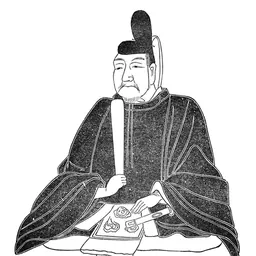
Portrait: Wikimedia Commons · author & licence
Page generated 2026-10-04 14:28 UTC