
About Lowell Blair Nesbitt
Lived 1933 – 1993 (aged 59). Lowell Blair Nesbitt was an American painter, draftsperson, sculptor and jewelry designer.
Lowell Blair Nesbitt (October 4, 1933 – July 8, 1993) was an American painter, draughtsman, printmaker, stained glass artist, and sculptor. He served as the official artist for NASA during the Apollo 9 and Apollo 13 space missions. In 1976, the United States Navy commissioned him to create a monumental mural for the administration building on Treasure Island in San Francisco, described at the time as the largest mural in the United States. In 1980, the United States Postal Service issued four postage stamps depicting his paintings.
Early life and education Lowell Blair Nesbitt was born in Towson, Maryland, to Frank E. Nesbitt and Mildred C. Nesbitt (née Carback). He spent his early years in the Stoneleigh Historic District of Towson, where his family home was located at 708 Stoneleigh Road.
Homes and studios Lowell Nesbitt was widely known for creating highly distinctive homes and studios that functioned as extensions of his artistic practice. Both his New York City studio building and his later country residence in Carmel, New York, were extensively documented in the New York Times and Architectural Digest reflecting his interest in large scale space, architecture, horticulture, and experimental living environments.
New York City studio building
In the mid 1970s, Nesbitt undertook a major renovation of an 1858 cast iron building in the Meatpacking District of Manhattan’s West Village, converting a former police stable and earlier slaughterhouse into a combined studio, residence, and exhibition space. The building had previously housed coach making operations, and its industrial history remained evident in features such as cattle ramps between floors. The decision drew widespread criticism from artists, curators, and museum professionals and led to an organized boycott that disrupted the Corcoran’s exhibition schedule and public standing.
Nesbitt’s involvement was reported prominently in September 1989, when he withdrew the Corcoran from his estate plans in protest of the cancellation. According to The Washington Post, Nesbitt had intended to leave the museum property, artworks, and intellectual property rights valued at more than one million dollars (approximately $2.5 million USD in 2025), a bequest he rescinded following the Corcoran’s actions. Nesbitt stated that his decision was not based on personal allegiance to Mapplethorpe but on what he viewed as a fundamental breach of the museum’s responsibility to defend artistic freedom. Subsequent reporting noted that Nesbitt’s withdrawal of the bequest was among several tangible consequences of the controversy, which also included resignations, canceled exhibitions, and sustained protests.
Contemporary newspaper coverage situated the Corcoran controversy within a broader national climate of escalating scrutiny of contemporary art. The Mapplethorpe exhibition became a focal point in debates over the National Endowment for the Arts, as members of Congress sought to impose restrictions on funding for work deemed obscene, raising concerns about political interference in cultural institutions.
The implications of the controversy extended beyond Washington. In 1990, the Contemporary Arts Center in Cincinnati and its director were indicted on obscenity charges for exhibiting Mapplethorpe’s photographs, a trial that ended in acquittal and was widely interpreted as a significant affirmation of artistic freedom for museums and curators nationwide. The case reinforced the Mapplethorpe exhibition’s role as a defining episode in late twentieth century debates over freedom of expression in the visual arts.
Within Nesbitt’s biography, the Mapplethorpe scandal stands out as a rare instance of direct public advocacy. By using a planned bequest as leverage, he aligned himself with artists and institutions resisting censorship and underscored the ethical and financial stakes involved when museums yield to external political pressure.
Solo exhibitions His solo exhibitions were held in the following galleries (partial listing)— Baltimore Museum of Art, Baltimore, MD, 1958 Corcoran Gallery of Art: Washington D.C., 1964 Baltimore Museum of Art, Baltimore, MD, 1969 The Corcoran Gallery of Art, Washington, D.C., 1973 Museo de Bellas Artes, San Juan, PR, 1974 The Corcoran Gallery of Art, Washington, D.C., 1975 Memorial Art Gallery, University of Rochester, NY, 1975 Hayden, Massachusetts Institute of Technology, Cambridge, MA, 1976 Navy and Marine Corps Museum, Treasure Island, San Francisco, CA, 1976 Edwin A. Ulrich Museum of Art, Wichita KS, 1977 Kent State University, Kent, OH, 1978 Selby Botanical Gardens, Museum of Botany and the Arts, Sarasota, FL, 1979 Marion Koogler Mcnay Art Institute, San Antonio, TX, 1980 The Aldrich Museum of Contemporary Art, Ridgefield, CT, 1980 Butler Institute of American Art, Youngstown, OH, 1982 Atlantic Center for the Art, New Smyrna Beach, FL, 1983 Burpee Art Museum, Rockford, IL, 1983 Morris Museum of Arts and Sciences, Morristown, NJ, 1983 Oklahoma Art Center, Oklahoma City, OK, 1983 Washington and Lee University, Lexington, VA, 1983 Institute of Contemporary Art, University of Penn., 1983 Oklahoma Art Center, Oklahoma City, OK, 1984 Tyler Gallery, Tyler School of Art, Temple University, Philadelphia, PA, 1986 Tyler Gallery, Tyler School of Art, Temple University, Philadelphia, PA, 1989 Center for Cultural Arts, Gadsden, AL, 1989
Selected books and catalogues Flowers Facades and IBM Machines, Howard Wise Gallery, New York, New York, September/October 1965. Text by Henry Martin. Art 1965, New York Worlds Fair, New York, New York, 1965. Text by Brian O’Doherty, statement by artist. Interior Spaces, Howard Wise Gallery, New York, New York, 1966. Text by Bill Wilson. The Big Drawing, Graham Gallery, New York, New York, April/May 1969. Text by Barbara Kulicke. Aspects of New Realism, Milwaukee Art Center, June/August 1969. Contemporary Arts Museum, Houston, September/October 1969; Akron Art Institute, November/December 1969. Text by John Lloyd Taylor. The New Painting, Praeger, New York 1969. Text by Kultermann, Udo. Lowell Nesbitt, Pyramid Gallery, Washington D.C. Lowell Nesbitt, Gallery Ostergren, Malmo, Sweden, January/February 1972. Text by Anders Bergh. Lowell Nesbitt, Gallery Fabian Carlson, Goteborg, Sweden, March/April 1972. Text by Anders Bergh. Lowell Nesbitt, Gimpel and Hanover Gallery, Zurich, Switzerland, May/June 1972. Text by Udo Kultermann. Lowell Nesbitt, Gallery Aronovitsch, Stockholm, Sweden, November 1972. Text by Anders Bergh. Radical Realism, Praeger, New York, 1972. Text by Udo Kultermann. Hyperrealiste Americain, Galerie Des Quatre Movements, Paris, France 1972. Botanical Art and Illustration 1972-1973, The Hunt Institute for Botanical Documentation, Carnegie Mellon University, Pittsburgh, Pennsylvania 1972. The Flowers Series 1964-1973, The Corcoran Gallery [Museum] of Art, Washington D.C., April/May 1973. Text by Henry T. Hopkins. Introduction by Roy Slade. Hyperrealisme, Paris, France, 1973. Text by Isy Brachot. Le Fleurs du Mal, Walton Galleries, San Francisco, California, June 1974. Text by John Pereault. Lowell Nesbitt, Museo de Bellas Artes de Puerto Rico, October 1974. Text by Roy Slade. Painting and Sculpture Today 1974, Contemporary Art Society of the Indianapolis Museum of Art, Indiana 1974. Imagist Realism, Art Museum of the Palm Beach and the Norton Museum of Art, Palm Beach, Florida, December 1974/January 1975. Text by Richard Martin. Tokyo International Biennale, "New Image in Painting," Tokyo, Japan 1974. The Present Situation of American Art. Text by John Perrault. Super Realism: A Critical Anthology, E.P. Dutton & Company, New York 1975. Text by Gregory Babcock. Lowell Nesbitt: An Autobiography, ACG, New York, New York, January 1976. Text by Andrew Crispo. American 1976: Bicentennial Exhibition, United States Department of the Interior, Washington D.C. 1976. Artists Cookbook, Museum of Modern Art, New York, New York, December 1977. Modedr med Kunstnere I Weekendavisen, Denmark 1977. Lowell Nesbitt: Still Lifes, Andrew Crispo Gallery, New York, New York, March 1978. Text by Andrew Crispo. Lowell Nesbitt, Art Contact, Miami, Florida 1978. Sneakers, Workman Publishing Company, New York, New York 1978. Text by Samuel Americus Walker. Lowell Nesbitt Flowers, 1964–1979, Andrew Crispo Gallery, New York, New York 1979. Text by Andrew Crispo. The Bicycle, Museum Boymans-van Beuningen, Rotterdam, Belgium 1977. Lowell Nesbitt: A Selection of Paintings and Drawings Since 1963. The Aldrich Museum of Contemporary Art, Ridgefield, Connecticut 1980. Text by Noel Frackman. Nesbitt’s Nesbitt’s, Marion Koogler Mcnay Art Institute, San Antonio, Texas 1980. New York Gallery Showcase, Oklahoma Art Center, Oklahoma City, 1981. Lowell Nesbitt, General Electric Gallery, General Electric Corporate Headquarters, Fairfield, Connecticut. Lowell Nesbitt - Works 1964-1971. Onnasch Gallery, Berlin, Germany 1982. Lowell Nesbitt, Butler Institute of American Art, Youngstown, Ohio 1982. Lowell Nesbitt: An American Realist 1962-1983, Oklahoma Art Center, Oklahoma City 1983. Text by Noel Frackman. Reflections: New Conceptions of Nature, Hillwood Art Gallery, May/July 1984. Art Collection of the American Embassy Vienna, Austria 1984. Art Collection of the American Embassy Brussels, Belgium 1985. American Realism: 20th Century Drawings and Watercolor, San Francisco Museum of Modern Art, November/September 1987.
References and sources
Lowell Nesbitt Repository, Archives of American Art, Smithsonian Institution, Washington, D.C. "Lowell Nesbitt, a Realist Painter Of Flowers, Is Found Dead at 59," New York Times, Roberta Smith, July 10, 1993 “Corcoran Head Talks About Her Quitting,” New York Times, Susan F. Rasky, December 20, 1989 “Artists Divided On Corcoran Apology,” New York Times, Barbara Gamarekian, September 20, 1989 “'Tragedy of Errors' Engulfs the Corcoran,” New York Times, Barbara Gamarekian, September 18, 1989 , “Style; On the Day After, Some Eves to Remember,” New York Times, Enid Nemy, January 1, 1983 “Art; Earth Sculpture Inspired by Indian Ceremonies,” New York Times, John Caldwell, November 22, 1981 “ART A 'Disturbing' Show of Works by Nesbitt,” New York Times, John Caldwell, November 16, 198-0 “The Kennedys (Well, Some of Them) Boost a Benefit,” New York Times, Anne-Marie Schiro, June 8, 1978 “Home Beat; Tale of a Quilt Nesbitt at Bloomie's,” New York Times, Jane Geniesse, June 1, 1978 “Art: Lowell Nesbitt Tends His Garden,” New York Times, Vivien Raynor, March 24, 1978 “The Art World Turns to Original Prints as Tax Shelters; Other Uses Involved 'Form of Deferral' Little Cash Down Flood Called Possible Opinions Vary,” New York Times, Grace Glueck, February 5, 1978 “Studio in a Stable; Studio in a Stable: A Pool and a Trapeze,” New York Times, Joan Kron, May 19, 1977 “Drawings by Nesbitt, a Retrospective,” New York Times, Hilton Kramer, November 6, 1971 “Lowell Nesbitt's Photographic Approach; Artist Pays Homage to Jack Mitchell,” New York Times, Hilton Kramer, March 14, 1970 “Ian Hornak, 58, Whose Paintings Were Known for Hyper-Real Look,” New York Times, Ken Johnson, December 30, 2002 Ian Hornak Repository, Archives of American Art, Smithsonian Institution, Washington, D.C. , “Lowell Nesbitt,” Washington Post, July 10, 1993 “Corcoran Cut From Painter's Will; Lowell Nesbitt's Mapplethorpe Protest,” Washington Post, Judd Tully, September 6, 1989 “Into the Depths: Exploring the Grottoes and Flora of Lowell Nesbitt,” Washington Post, Meryle Secrest, March 22, 1975 “Lowell Nesbitt's Flowers At the Corcoran Ball,” Washington Post, April 8, 1973 “Ex-D.C. Artist Specializes in Photo-Like Studio Paintings,” Washington Post, Paul Richard Washington, October 1, 1967 , "Lowell Nesbitt (1933-1993): A Comprehensive Retrospective," Absolute Arts, September, 12th, 2003
Don’t just read it —
keep it.
Full-length biographies made to live with: read them, listen on the way to work, watch them tonight.
- E-book
- Audio
- Video
Instant download · yours to keep · every purchase keeps this site free
Important facts
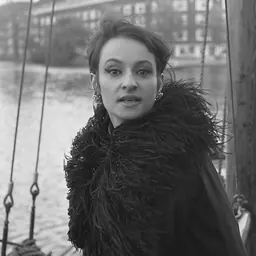
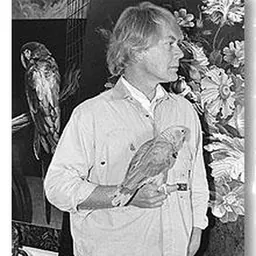
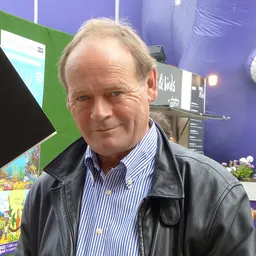
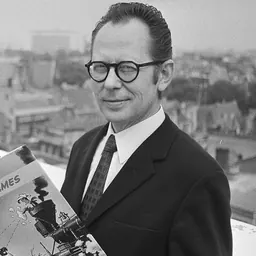
People in Lowell Blair Nesbitt's life
Named in this biography and alive at the same time




Related people
Same field, nearest in time
Contemporaries
People whose lives overlapped Lowell Blair Nesbitt's




Frequently asked questions
Who was Lowell Blair Nesbitt?
American artist (1933-1993)
When was Lowell Blair Nesbitt born?
Lowell Blair Nesbitt was born on 4 October 1933 in Baltimore.
When did Lowell Blair Nesbitt die?
Lowell Blair Nesbitt died on 8 July 1993 in New York, New York City.
What was Lowell Blair Nesbitt's occupation?
Lowell Blair Nesbitt was a painter, draftsperson, sculptor and jewelry designer.
What nationality was Lowell Blair Nesbitt?
Lowell Blair Nesbitt was American.
Sources & further reading
· Wikipedia: Lowell Blair Nesbitt
· DBpedia: Lowell Blair Nesbitt
Cite this page
APA: Biography.guide. (2026). Lowell Blair Nesbitt. https://biography.guide/lowell-blair-nesbitt/
MLA: "Lowell Blair Nesbitt." Biography.guide, https://biography.guide/lowell-blair-nesbitt/.
Chicago: "Lowell Blair Nesbitt." Biography.guide. https://biography.guide/lowell-blair-nesbitt/.
Data last updated: 2026-09-20 · Spot an error? Report a correction.
Page generated 2026-09-27 05:20 UTC