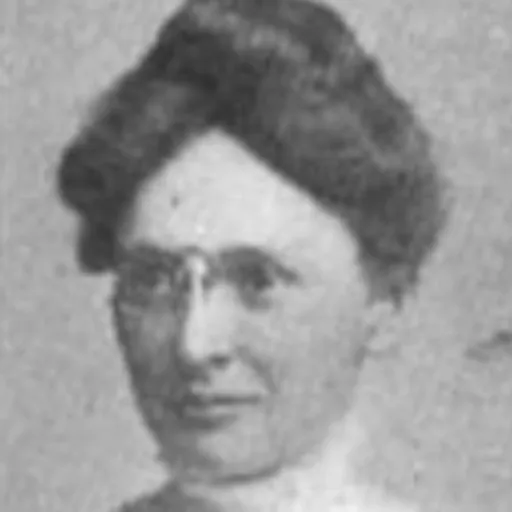
About Louise Pound
Lived 1872 – 1958 (aged 85). Louise Pound was an American historian, linguist and philologist.
Louise Pound (June 30, 1872 – June 28, 1958) was an American folklorist, linguist, and college professor at the University of Nebraska. In 1955, Pound was the first woman elected president of the Modern Language Association, and in the same year, she was the first woman inducted into the Nebraska Sports Hall of Fame.
Early life and education Pound was born in Lincoln, Nebraska, to Stephen Bosworth Pound and Laura Pound. Alongside her older brother, noted legal professor Roscoe Pound, and her younger sister, Olivia Pound, Pound was instructed by her mother in various disciplines including the natural sciences, ancient and modern languages, and literature.
Pound studied at a preparatory school, the Latin School, in the School of Fine Arts, transitioning in 1888 to the University of Nebraska (B.B. 1892 and M.A., 1895). Pound was an active student throughout the university. Along with her siblings and her colleague Willa Cather, she was a member of the University Union Literary Society at the University of Nebraska. in which letters were regularly exchanged for over half a century; Krohn notes that "since the letters that Louise wrote to Ani aren't available, the essence of their friendship remains a mystery", but observes that their correspondence was characteristic of intimate relationships between women of the time, which were "of great emotional strength and complexity... intimacy, love, and erotic passion", even if the exact nature of their friendship, "ardent on Ani's part, almost an infatuation", meant that "that passion was not always fulfilled". Nevertheless, Ani was Pound's "closest companion" and "most intimate and enduring friend". They began their relationship as classmates who both loved the game of tennis leading to their intense and emotional companionship. Both Pound and Königsberger shared similar interests such as athletics and the outdoors. The two would spend time together; Königsberger bringing Pound on hikes and climbs while Pound teaching Königsberger "the net game" in tennis.
Pound, focusing on her professional life in teaching and scholarship, did not continue her intimate relationship with Königsberger, who later married a physician, Max Phister, who practised at Hong Kong before the Second World War and later at Beidaihe on the coast in North China. Both German, the couple were strongly anti-Nazi.
Work Louise Pound was one of the pioneers of the linguistic study of American English. The majority of her research and publications occurred pre-World War II, a time when many linguistic scholars were primarily interested in investigating British and colonial English. Pound, however, sought to examine language trends in contemporary American English, most notably in word coinage and semantics, the historical origins of American pronunciations, and mutual influences of American literature, folklore, culture, and language. In addition, through investigating the etymology of trade names and word coinage, Pound ascertained that American commercial terminology had become mercurial and boundless. Such a shift in brand names was, to Pound, a clear break with the past conservatism and monotony of commercial language and demonstrated that Americans were claiming their own place with the inventiveness of language. Pound also delineated multiple instances where American English deviated from standard norms in the pluralization of Latin and Greek loan words. Examples of such divergences are the use of Latin plural words as American singular words such as curricula, data, alumni, and syllabi; the creation of double plurals such as insignias and stimulis; and the creation of -s plurals from Latin singulars such as antennas, vertebras, and emporiums . Pound focused much of her linguistic research upon the etymology of American slang words (e.g., "darn") as well as tracing the historical evolution of the idiosyncrasies of American pronunciation, as in the secondary nasal /n/ in Midwestern and New England English. It is no surprise that Pound, who defied American linguistic norms by studying contemporary American English, would write prolifically about Whitman's unorthodox language use. In writing about Whitman's influences upon his work, Pound identifies specific non-British influences and nuances to Whitman's writing such as Italian opera music; a predilection for French words and expressions involving nouns, slang, social words, and military terms; and unconventional renderings of classic bird poetry which use birds as symbols of fear, loss, and fatality as opposed to the conventional joyful and aesthetic birds metaphorically portrayed.
H.L. Mencken described Louise Pound as "putting the study of American English on its legs." One of Pound's most notable studies was her historical anthology on ballads which challenged scholastic assumptions about ballads as being primitive. Pound outlined the historical poetic nature of ballads and claiming them to be communal representations of contemporary culture which continue to evolve into perpetuity in American southwest and indigenous cultures. Throughout her life, Pound composed many anthologies on the poetic and historical influences upon American ballads.
Professional memberships and honors Pound was a member of many professional societies. In 1905 Pound was a champion of the Order of the Black Masque, senior women's honor society, which became a chapter of Mortar Board National College Senior Honor Society in 1920. Pound became a member of Mortar Board in that year.
She was president of the American Folklore Society (1928).
She was the first woman to serve as president of the Modern Language Association (1954–55), having previously served as its vice president (1916) and on the executive council (1925–26).
She was director (1915–19) and treasurer (1917) of the National Council of Teachers of English.
She was a Foundation Member of the Linguistic Society of America (LSA) in 1925. She also was the first woman to have an article published in the society's journal, Language (Pound 1927). And she was the first woman elected vice president of the LSA, in 1939.
In 1925, with Kemp Malone and Arthur Garfield Kennedy, she founded the journal American Speech "to present information about English in America in a form appealing to general readers". American Speech is currently published on behalf of the American Dialect Society. Pound was first woman president of the society from 1938 to 1941.
Pound was the Nebraska director (1906–1908) and later national vice president of the American Association of University Women from the 1930s to 1944.
A posthumous scholarship was developed from the estates of Roscoe and Olivia Pound in Louise Pound's name. The fellowship, handled by the AAUW, awards yearly stipends to international women students.
Personal life Pound continued a correspondence with Ani Königsberger, her "most intimate and enduring friend", for fifty eight years.
Pound and Cather residence halls at the University of Nebraska were named after Louise Pound and Willa Cather, with whom Pound maintained a close friendship. Some scholars argue that Louise Pound and Willa Cather's friendship was romantic. Willa Cather biographers Phyllis C. Robinson and Sharon O'Brien argue that Pound was Cather's object of desire, O'Brien citing in her Willa Cather: The Emerging Voice (1987) Cather's 1892 and 1893 letters to Pound. The 1892 letter expresses Cather's impression of Pound, Cather's feelings of strangeness around her, an anxiety of the "customary goodbye formality," and a noted disagreement with the perceived unnaturalness in "feminine friendships." James Woodress, author of Willa Cather: A Literary Life (1987), argues that no evidence exists that Pound responded to Cather's affection. Similarly, Marie Krohn, in Louise Pound: The 19th Century Iconoclast who Forever Changed America's views about Women, Academics and Sports (2008), notes that "Cather biographers always mention the Cather/ Pound relationship as an important chapter of Cather's life. Whether or not the friendship occupied an equally noteworthy place in Louise Pound's life is questionable", and observed that "as a woman who enjoyed freedom of movement and independence of thought, Louise would have felt emotionally suffocated by Cather's advances", which was a factor in the ending of their friendship by 1894.
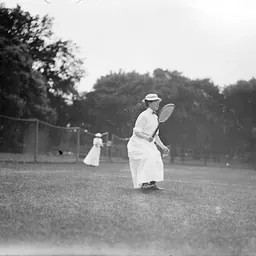
Pound also maintained a distinct rivalry with Mabel Lee, a faculty member of the University of Nebraska physical education department. At 18 years old, Louise competed and won the Women's Western Tennis Championship in 1897. Pound was not only the first and only female in school history to earn a men's varsity letter, she was also rated the top player in the country while working on her doctorate at Heidelberg University. Very few times did Pound's tennis skills fall short. However, at the Ladies' Western Tennis Championship held in Chicago, Illinois, she was defeated playing a three-time U.S. Open singles champion, Juliette Atkinson.
Pound continued her tennis journey by playing doubles with Carrie Neely, at the age of 43, and winning the 1915 Central Western and Western doubles championships. In 1926, at 54 years old, Pound won the Lincoln city championship, being the first women's state golf champion. She was buried at Wyuka Cemetery.
Don’t just read it —
keep it.
Full-length biographies made to live with: read them, listen on the way to work, watch them tonight.
- E-book
- Audio
- Video
Instant download · yours to keep · every purchase keeps this site free
Important facts
People in Louise Pound's life
Named in this biography and alive at the same time




Related people
Same field, nearest in time
Contemporaries
People whose lives overlapped Louise Pound's


Frequently asked questions
Who was Louise Pound?
American folklorist
When was Louise Pound born?
Louise Pound was born on 30 June 1872 in Lincoln.
When did Louise Pound die?
Louise Pound died on 27 June 1958 in Lincoln.
What was Louise Pound's occupation?
Louise Pound was a historian, linguist and philologist.
What nationality was Louise Pound?
Louise Pound was American.
Sources & further reading
Cite this page
APA: Biography.guide. (2026). Louise Pound. https://biography.guide/louise-pound/
MLA: "Louise Pound." Biography.guide, https://biography.guide/louise-pound/.
Chicago: "Louise Pound." Biography.guide. https://biography.guide/louise-pound/.
Data last updated: 2026-09-22 · Spot an error? Report a correction.
Portrait: Wikimedia Commons · author & licence
Page generated 2026-09-27 05:03 UTC