
About Louise-Marie Danhaive
Lived 1923 – 1978 (aged 55). Louise-Marie Danhaive was a Belgian playwright, journalist, novelist and poet.
Louise-Marie Danhaive (1923–1978) was a Belgian novelist, playwright, poet, and journalist. She was very present and active in the cultural life of Namur, having stayed in the region for most of her life.
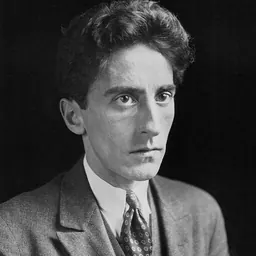
Early life Louise-Marie Danhaive was born on February 13, 1923, in Saint-Servais, Namur. Her father, Fernand Danhaive, was a historian. She suffered from asthma as a child, and consequently did not attend most of preschool and some of her first years of primary education. Despite this, her passion for writing, in particular poetry, developed from a young age. Her interest in writing increased after the 1935 death of her father, which sharply affected her. In 1938 she published her first collection of prose, Heures Brèves (Brief Hours). This work was lauded by such contemporaries as François Bovesse, Maurice Carême, and Georges Duhamel. She went on to meet Duhamel, as well as Jean Cocteau, three years later in Paris.
Second World War From 1941 to 1944, Danhaive was part of the Belgian Resistance, specifically the Belgian National Movement (MNB). She also offered her services to the clandestine resistance press. She also wrote the unpublished novel Kerimore during this period.
In addition to poetry and novels, Danhaive also wrote several plays throughout her life, including the following major works:
Il ne tient qu'à un fil (It's hanging on by a thread, 1951), a three-act comedy, premiered at the APIAW. Sangre (1963), delivering a poignant critique of the situation in Spain during the Asturian miners' strike of 1962. Pâques sans rameaux (Easter without twigs, 1964), a play about the tragedy of Thalidomide, the profits for which went to disabled people; unpublished, performed January 30, 1964. Social themes interested her, such as in Comme un seul homme (Like Only One Man, 1961), a fictionalized account of the Belgian general strike of 1960–1961.
Her dramatic writing also extended to radio plays, notably:
Le Semeur de rêves (The Dream Sower, 1946), written for the Swiss Broadcasting Corporation for the Feast of the Ascension. Symphonie de l'Aube éternelle (Symphony of the Eternal Dawn, 1946), for the Swiss Broadcasting Corporation at Lausanne. Les Porteurs de Croix (The Cross-Bearers, 1946), for Radio Namur. La Légende des Dames de Marche (The Legend of the Dames de Marche, 1950), a medieval play, inspired by the legend of Marche-les-Dames, broadcast on Radio Namur. Algone ou le visage de la folie (Algone or the Face of Folly, 1954)
Journalism Danhaive began her journalism career in 1946 at Indépendance, though she left after a year to work at La Meuse, where she became editing secretary after two years. In 1954, she left La Meuse to return to Indépendance, where she worked until 1965. Meanwhile, from 1952 to 1958, she was a correspondent for the weekly newspaper Pourquoi pas?. She got many responses, which led to many collaborative artistic exhibitions.
Theatre Studies Centre of Louvain Beginning in 1970, she took courses at the Theatre studies centre (Centre d'Études théâtrales) at UCLouvain. Her professors noticed her curiosity and assiduity. One of them, Raymond Pouilliart, remarked about Danhaive, "I have rarely encountered a student whose studies, freely chosen, satisfied them so much and awoke in them such an intellectual joy, such a fever. Age has not dampened her capacity for enthusiasm."
She received her diploma in 1974, her thesis a memoir about symbolist poet Saint-Pol-Roux.
In 1971, during her studies, Danhaive's sister Ann-Marie died. This loss affected her profoundly, and her literary output was diminished in the years following. La Cassure is an unpublished novel that she wrote in memory of her sister in 1973.
Death In 1977, Danhaive was hospitalized following a myocardial infarction. Despite her doctors strongly advising she rest, she never stopped writing. In 1978, she compiled Par delà la mort, which was published posthumously.
Danhaive died on June 1, 1978, surrounded by her closest friends.
The documents she produced over the course of her life are preserved by family friend Marie-Louise Damoiseau. Upon Damoiseau's death, Danhaive's archives are willed to the Centre de Ressources historiques namuroises (CeRHiN, Historical Resource Centre of Namur).
Don’t just read it —
keep it.
Full-length biographies made to live with: read them, listen on the way to work, watch them tonight.
- E-book
- Audio
- Video
Instant download · yours to keep · every purchase keeps this site free
Important facts
People in Louise-Marie Danhaive's life
Named in this biography and alive at the same time


Related people
Same field, nearest in time


Contemporaries
People whose lives overlapped Louise-Marie Danhaive's
Frequently asked questions
Who was Louise-Marie Danhaive?
Belgian playwright (1923-1978)
When was Louise-Marie Danhaive born?
Louise-Marie Danhaive was born on 13 February 1923 in Saint-Servais.
When did Louise-Marie Danhaive die?
Louise-Marie Danhaive died on 1 June 1978 in Namur.
What was Louise-Marie Danhaive's occupation?
Louise-Marie Danhaive was a playwright, journalist, novelist and poet.
What nationality was Louise-Marie Danhaive?
Louise-Marie Danhaive was Belgian.
Sources & further reading
· Wikipedia: Louise-Marie Danhaive
· DBpedia: Louise-Marie Danhaive
Cite this page
APA: Biography.guide. (2026). Louise-Marie Danhaive. https://biography.guide/louise-marie-danhaive/
MLA: "Louise-Marie Danhaive." Biography.guide, https://biography.guide/louise-marie-danhaive/.
Chicago: "Louise-Marie Danhaive." Biography.guide. https://biography.guide/louise-marie-danhaive/.
Data last updated: 2026-09-20 · Spot an error? Report a correction.
Page generated 2026-09-27 05:15 UTC