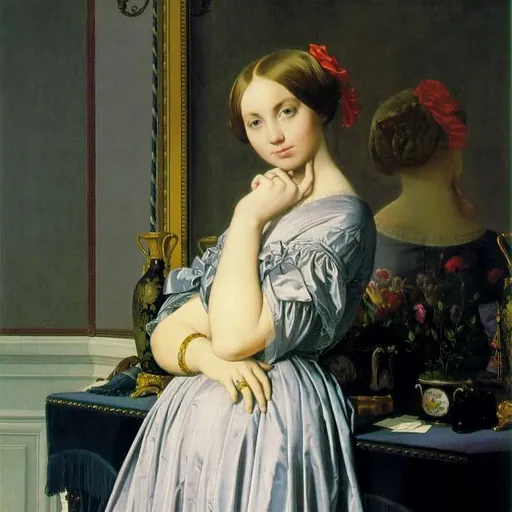
Louise de Broglie, comtesse d'Haussonville
Swiss-French writer
About Louise de Broglie, comtesse d'Haussonville
Lived 1818 – 1882 (aged 63). Louise de Broglie, comtesse d'Haussonville was a French writer, historian, biographer and louise de Broglie.
Louise de Broglie, Countess d'Haussonville (25 May 1818 – 21 April 1882) was a French essayist and biographer, and a member of the House of Broglie, a distinguished French family. A granddaughter of the novelist Germaine de Staël, she was considered independent, liberal, and outspoken. Her 1845 portrait by Jean-Auguste-Dominique Ingres, which took three years to complete, has been exhibited in the Frick Collection in New York City since the 1930s.
Early life and family Titled from birth (as was the custom in her father's aristocratic family) as Louise Albertine, Princess de Broglie, she was the daughter of statesman and diplomat Victor de Broglie, 3rd Duke de Broglie and Albertine, Baroness Staël von Holstein. She was the oldest of three children to survive to adulthood; her brother Albert would inherit the de Broglie ducal title and achieve political and literary renown, while her youngest brother Auguste, the future Abbé de Broglie, would pursue an ecclesiastical career. Through her mother, Louise was the granddaughter of famed saloniste and novelist Germaine de Staël, better known as Madame de Staël. Although de Staël died a year before her birth, Louise was born in her grandmother's Château de Coppet in Switzerland, a residence made famous through de Staël's writings and cultural notoriety. She would inherit the Coppet estate in 1878, and be buried there; the property, which has been open to the public since 1924–1925, is still owned by the Countess d'Haussonville's descendants.
Marguerite Gérard, Mme de Staël et sa fille, c. 1805 (Château de Coppet Collection). Louise de Broglie's mother and grandmother, painted 13 years before her birth Germaine de Staël was the daughter of the Swiss banker and politician Jacques Necker, who had been Louis XVI's director-general of finance, and his wife Suzanne Curchod, the poor but well-educated daughter of a Swiss pastor (Curchod had previously been engaged to historian Edward Gibbon). Louise's maternal grandfather was said to be Erik Magnus Staël von Holstein, Swedish Ambassador to France, but as de Staël also maintained a longstanding romantic relationship and intellectual collaboration with liberal political activist and writer Benjamin Constant, who believed he fathered Albertine (Louise's mother), it is possible that Constant was her biological grandfather.
Louise wrote an unpublished autobiography recounting a highly cultured education and upbringing. From an early age, she was enthusiastic about literature and music, opera in particular—Ingres would later include opera glasses in her portrait. she married the future French National Assembly member and historian Joseph d'Haussonville (1809–1884). "I was destined to beguile, to attract, to seduce, and in the final reckoning to cause suffering in all those who sought their happiness in me", Louise wrote ; an 1861 biography of Marie Adélaïde of Savoy (Souvenirs d'une demoiselle d'honneur de Mme la duchesse de Bourgogne), and an 1870 biography of Marguerite of Valois (Marguerite de Valois, reine de Navarre). In 1872 and 1874, she published a two-volume biography of Lord Byron (La Jeunesse de Lord Byron and Les Dernières Années de Lord Byron: Les rives du Lac de Genève, l'Italie, la Grece), which drew from her grandmother Madame de Staël's observations and interactions with the English poet. In 1875, she published a biography and critique of the works of Charles Augustin Sainte-Beuve (C.-A. Sainte-Beuve: sa vie et ses oeuvres).
Portrait by Ingres
In 1838, two years into the marriage, Viscount d'Haussonville sought to have his wife's portrait painted by Franz Xaver Winterhalter, a favorite of European royalty, but Winterhalter was unavailable. They next considered Jean-Auguste-Dominique Ingres; Louise and her husband first met Ingres in Rome in 1840, while he was directing the French Academy in Rome and living at the Villa Medici. They became convinced of his suitability to paint her portrait after viewing his recently completed Antiochus and Stratonice (today in the Condé Museum).
At around the same time, Ingres, by then 60 years old and convinced his reputation would be secured through larger-scale undertakings, From the perspective of both painter and sitter, the process was not easy. Louise would spend months abroad at a time, and her sittings were interrupted by pregnancy. and with dozens of drapery studies, some 60 extant Ingres works are thought to have informed the finished work. ) Edgar Munhall has suggested that both "Antiochus and Stratonice" as well as Ingres's portrait of Louise owe an inspirational debt to the pose of Pudicitia ("modesty" or "sexual valor"), a Roman statue of a goddess on display in the Vatican collection.
Many critics have noted the anatomical impossibility of Louise's pose, her right arm seeming to originate at her left shoulder. to art dealer Georges Wildenstein, from whom it was next acquired by the Frick Collection for $125,000 in 1927. The painting returned to Europe in early 2015 where it was exhibited at the Mauritshuis in The Hague.
Don’t just read it —
keep it.
Full-length biographies made to live with: read them, listen on the way to work, watch them tonight.
- E-book
- Audio
- Video
Instant download · yours to keep · every purchase keeps this site free
Important facts
People in Louise de Broglie, comtesse d'Haussonville's life
Named in this biography and alive at the same time
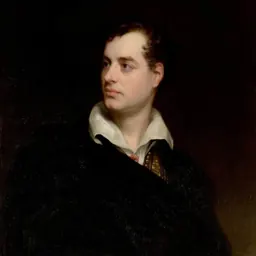
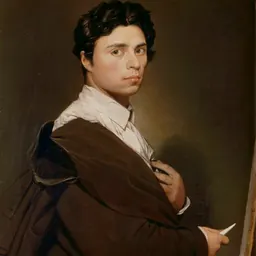
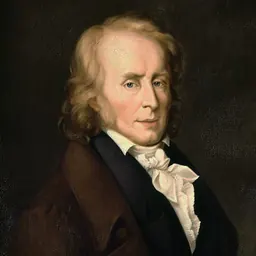
Related people
Same field, nearest in time

Contemporaries
People whose lives overlapped Louise de Broglie, comtesse d'Haussonville's




Frequently asked questions
Who was Louise de Broglie, comtesse d'Haussonville?
Swiss-French writer (1818-1882)
When was Louise de Broglie, comtesse d'Haussonville born?
Louise de Broglie, comtesse d'Haussonville was born on 25 May 1818 in Coppet.
When did Louise de Broglie, comtesse d'Haussonville die?
Louise de Broglie, comtesse d'Haussonville died on 21 April 1882 in Paris.
What was Louise de Broglie, comtesse d'Haussonville's occupation?
Louise de Broglie, comtesse d'Haussonville was a writer, historian, biographer and louise de Broglie.
What nationality was Louise de Broglie, comtesse d'Haussonville?
Louise de Broglie, comtesse d'Haussonville was French.
Sources & further reading
· Wikipedia: Louise de Broglie, comtesse d'Haussonville
· DBpedia: Louise de Broglie, Countess d'Haussonville
Cite this page
APA: Biography.guide. (2026). Louise de Broglie, comtesse d'Haussonville. https://biography.guide/louise-de-broglie-comtesse-d-haussonville/
MLA: "Louise de Broglie, comtesse d'Haussonville." Biography.guide, https://biography.guide/louise-de-broglie-comtesse-d-haussonville/.
Chicago: "Louise de Broglie, comtesse d'Haussonville." Biography.guide. https://biography.guide/louise-de-broglie-comtesse-d-haussonville/.
Data last updated: 2026-09-22 · Spot an error? Report a correction.
Portrait: Wikimedia Commons · author & licence
Page generated 2026-09-27 05:01 UTC