
About Louis Shores
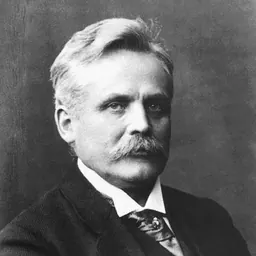
Lived 1904 – 1981 (aged 76–77). Louis Shores was an American librarian.
Louis Shores (September 14, 1904 – June 19, 1981) was a librarian who worked for the promotion of the library as the center of all learning, in both public and academic institutions. Shores was recognized for his integration of audiovisual materials into library collections. He was named one of the “100 of the most important leaders we had in the 20th century” by American Libraries, and the impact of his vision can be seen today in libraries across the country.
Biography
Early life Louis Shores was born Louis Steinberg on September 14, 1904, in Buffalo, New York. Shores was the third of five children of Paul and Ernestine (Lutenberg) Steinberg. Both immigrants, Paul was painter specializing in portraits, while Ernestine supported the household as a seamstress. He also moved from his public library job to a position in the university's library.
Louis changed his last name from Steinberg to Shores in 1926, as his older brother had done when he left their childhood home in 1920.
Upon earning his master's degree, Shores could not find a teaching position. Turning his attention to a different career he enrolled at the School of Library Service at Columbia University in 1927.
With his Masters in Library Service, in 1928 Shores took a position at the Fisk University in Nashville, Tennessee. During his year in Chicago he met and married Geraldine Urist. He then returned to his position at Fisk University.
Shores would later earn a PhD in 1933—not in Library Science, but in Education—from the George Peabody College for Teachers, with his dissertation (later to become a published book), “Origins of the American College Library, 1630-1800.”
Career Shores left Fisk to start a new library program at Peabody in 1933. His duties to the US Army kept him absent from Peabody until 1946, at which point disagreements about salary and work load caused the end of his association with the college.
In 1946 Shores accepted two positions: to be the first Dean of the Library School at Florida State University and an editorial advisor for the encyclopedia company, P.F. Collier & Son. He would maintain these two jobs for the rest of his career.
Shores contributed one of the most-used reference books of his time, Basic Reference Books. First released in 1939, the only thing that prevented it from becoming a true milestone in his life and the history of library science was his lackluster updating of the text. The last edition was completed in 1954 with the updated title, Basic Reference Sources.
Shores and Wayne Shirley were instrumental in founding the Library History Round Table of the American Library Association in 1947. In 1961 Shores founded the Library History Seminars. Shores' essay, "The Importance of Library History" outlined the reasons it is foundational to the education of librarians.
One of the highlights of Shores' career was the American Library Association accreditation of his Library School at FSU in 1953. Shores received the Beta Phi Mu Award for distinguished service to library education in 1967.
In 1967 Shores was forced to retire due to health issues. He continued to take on as much work as he could, as an editor and speaker, when his health allowed. Upon his retirement, FSU gave Shores the honor of dean emeritus until his death in 1981.
Philosophy
Shores believed that libraries were places of lifelong learning and that that learning should begin early. He extolled the importance of introducing children to books and reading in infancy and encouraging learning through the use of the libraries.
In it, Shores outlined several different formats: Print (i.e. book or journal), Graphic (globe or photograph), Projection (film or slide), Transmission (radio or tape recording), Resource (person or object), Program (computer or machine) and Extrasensory (telepathy or clairvoyance). Shores talked about how all of these things were integral to learning and that the majority of them should be found in the library.
Shores also came to believe in the importance of media beyond books. He thought the stocking of films, slides, audio recordings and maps essential for a well-rounded library collection. However, Shores did not like the presence of audiovisual departments in school; he felt the library should house all the learning materials and that every librarian should be a media specialist. He even dreamed of a library where movies and books on a given subject would be shelved together.
In 1947, Shores put his philosophy to work when setting up the library at FSU. He called the library the “Materials Center” to be more inclusive of all the kinds of resources therein, including 16mm films, filmstrips, discs, tapes, slides and transparencies among others.
The Materials Center used color-coding to indicate the format of a resource in the card catalog and had the equipment necessary to use audiovisual materials, including one of the earliest “listening posts” where you could listen to recordings over headphones. It was an influential idea, but took time to take effect; it was not until the mid-1960s that librarians and media-specialist became one and the same at many schools.
Works A selection of some of Shore's written works.
1928. How to use your library : a series of articles on libraries for high school and college students. Pittsburgh, Pa.: Scholastic Pub. Co.
1935. 1936. Bibliographies and summaries in education to July 1935; a catalog of more than 4000 annotated bibliographies and summaries listed under author and subject in one alphabet. Written with Monroe, W. S. New York: The H. W. Wilson company. 1937. Know your encyclopedia; a unit of library instruction based on Compton's pictured encyclopedia. Chicago: F.E. Compton & Co. 1939. Basic reference books; an introduction to the evaluation, study, and use of reference materials with special emphasis on some 300 titles. Chicago, Ill.: American library association. 1947. Highways in the sky: the story of the AACS. New York: Barnes & Noble. 1953. Challenges to librarianship. Tallahassee, FL: Florida State University. 1953. A profession of faith. Geneseo, N.Y.: State University Teachers College. 1954. Basic reference sources; an introduction to materials and methods. Chicago: American Library Assn. 1954. Basic reference sources: an introduction to materials and methods. Chicago: American Library Association. Repring 1973. Littleton, CO: Libraries Unlimited. 1960. Instructional materials: an introduction for teachers. New York: Ronald.
1965. Mark Hopkin’s log and other essays. Selected by John D. Marshall. Hamdem, CT: Shoe String. 1972. Library Education. Littleton, CO: Libraries Unlimited. 1972. Looking forward to 1999. Tallahassee, FL: South Pass Press. 1973. Audiovisual librarianship: the crusade for media unity (1946-1969). Littleton, CO: Libraries Unlimited. 1975. 1977.
Don’t just read it —
keep it.
Full-length biographies made to live with: read them, listen on the way to work, watch them tonight.
- E-book
- Audio
- Video
Instant download · yours to keep · every purchase keeps this site free
Important facts
People in Louis Shores's life
Named in this biography and alive at the same time

Related people
Same field, nearest in time


Contemporaries
People whose lives overlapped Louis Shores's





Frequently asked questions
Who was Louis Shores?
American librarian
When was Louis Shores born?
Louis Shores was born on 14 September 1904 in Buffalo.
When did Louis Shores die?
Louis Shores died in 1981.
What was Louis Shores's occupation?
Louis Shores was a librarian.
What nationality was Louis Shores?
Louis Shores was American.
Sources & further reading
Cite this page
APA: Biography.guide. (2026). Louis Shores. https://biography.guide/louis-shores/
MLA: "Louis Shores." Biography.guide, https://biography.guide/louis-shores/.
Chicago: "Louis Shores." Biography.guide. https://biography.guide/louis-shores/.
Data last updated: 2026-09-20 · Spot an error? Report a correction.
Page generated 2026-09-27 04:58 UTC