
About Louis Harold Gray
Lived 1905 – 1965 (aged 59). Louis Harold Gray was a British physicist, botanist and radiologist, known for Bragg–Gray cavity theory and Gray (unit).
Louis Harold Gray FRS (10 November 1905 – 9 July 1965) was an English physicist who worked mainly on the effects of radiation on biological systems. He was one of the earliest contributors of the field of radiobiology. Amongst many other achievements, he defined a unit of radiation dosage (absorbed dose) which was later named after him as an SI unit, the gray.
Early life Gray was born as an only child on 10 November 1905 to parents Harry and Amy Gray. His father worked at a post office.
Career 1933 – Hospital physicist at Mount Vernon Hospital, London 1936 – Developed the Bragg–Gray equation, the basis for the cavity ionization method of measuring gamma-ray energy absorption by materials 1937 – Built an early neutron generator at Mount Vernon Hospital 1938 – Studied biological effects of neutrons using the generator 1940 – Developed concept of RBE (Relative Biological Effectiveness) of doses of neutrons 1952 – Initiated research into cells in hypoxic tumors and hyperbaric oxygen 1953 – Oliver Scott established the British Empire Cancer Campaign Research Unit in Radiobiology at Mount Vernon Hospital with Hal Gray as director which in 1970 became the Cancer Research Campaign's Gray Laboratory and then (in 2001) the Gray Cancer Institute. 1953–1960 – Under Gray's direction, Jack W. Boag developed pulse radiolysis 1962 – Ed Hart, of Argonne National Laboratory, and Jack Boag discovered the hydrated electron using pulse radiolysis at the Gray Laboratory – this discovery initiated a new direction of research that is still very active today and is vital for understanding the effects of radiation on biological tissue, for instance in cancer treatment.
Don’t just read it —
keep it.
Full-length biographies made to live with: read them, listen on the way to work, watch them tonight.
- E-book
- Audio
- Video
Instant download · yours to keep · every purchase keeps this site free
Important facts
People in Louis Harold Gray's life
Named in this biography and alive at the same time
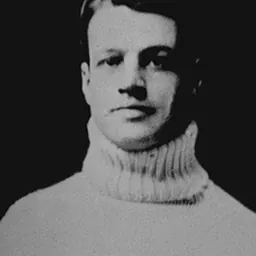

Related people
Same field, nearest in time


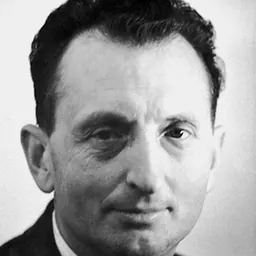

Contemporaries
People whose lives overlapped Louis Harold Gray's




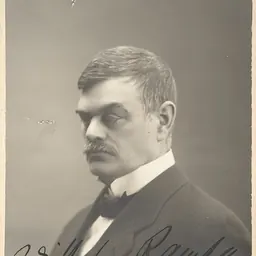

Frequently asked questions
Who was Louis Harold Gray?
British physicist (1905-1965)
When was Louis Harold Gray born?
Louis Harold Gray was born on 10 November 1905 in London Borough of Richmond upon Thames.
When did Louis Harold Gray die?
Louis Harold Gray died on 9 July 1965 in Northwood.
What was Louis Harold Gray's occupation?
Louis Harold Gray was a physicist, botanist and radiologist.
What was Louis Harold Gray known for?
Louis Harold Gray was known for Bragg–Gray cavity theory and Gray (unit).
What nationality was Louis Harold Gray?
Louis Harold Gray was British.
Sources & further reading
· Wikipedia: Louis Harold Gray
Cite this page
APA: Biography.guide. (2026). Louis Harold Gray. https://biography.guide/louis-harold-gray/
MLA: "Louis Harold Gray." Biography.guide, https://biography.guide/louis-harold-gray/.
Chicago: "Louis Harold Gray." Biography.guide. https://biography.guide/louis-harold-gray/.
Data last updated: 2026-09-20 · Spot an error? Report a correction.
Page generated 2026-09-27 05:07 UTC