
Louis Germain Lévy
Rabbi, founder of the Union libérale israélite de France and French philosopher
About Louis Germain Lévy
Lived 1870 – 1946 (aged 76). Louis Germain Lévy was a French rabbi, philosopher, essayist, journalist, military chaplain and historian.
Louis Germain Lévy (February 10, 1870 – December 15, 1946) was a French rabbi and the founder of Union Libérale Israélite de France, the first Liberal synagogue in France.
Biography
Family Louis Germain Lévy was born in Paris on February 10, 1870, the son of Isaac Lévy, a merchant trader and Rosalie Lévy née Weill. He married Alice Jacob June 23, 1919, in Paris' Paris' 1st arrondissement.
Education Lévy studied at École Halphen on rue Lafayette, the oldest Jewish school in France. He later attended the Talmud Torah of the Séminaire israélite de France
Great Synagogue of Paris In 1895, Chief Rabbi of France Zadoc Kahn, concerned with the community abandoning religious practice, organized Sunday conferences at the Grand Synagogue of Paris for young people, with a liturgical component.
The Union libérale israélite (ULI) in August 1900, proposed creating:
Dijon On July 22, 1901, Levy became Rabbi in Dijon and a military chaplain.
Founder of French Liberal Judaism In February 1904, Louis Germain Lévy published a brochure entitled Une religion rationnelle et laïque [sic]. La religion du xxe siècle (A Rational and Secular Religion. The Religion of the 20th century). Inspired by Auguste Comte, Ernest Renan and Catholic modernism, he noted: Judaism, eminently, needs to adapt itself to contemporary thought; stripped of obsolete practices, institutions, and customs, of all dogmatic residue" to become a religion of the 20th century. The Orthodox faithful at the Grand Synagogue pressured the new Chief Rabbi Alfred Lévy, who eventually gave in. The Liberals were told to leave.
The new community rented a building at 24 rue Copernic, and transformed the old painter's studio into a space able to welcome around 200 people.
Lévy became the rabbi and began living at the address. Marguerite Brandon-Salvador offered a harmonium.
The inaugural service was celebrated on December 1, 1907. Pastor Jules-Émile Roberty, who was present that night, noted the lack of knowledge among the congregation of the prayers, rituals and of Hebrew, especially when Lévy pronounced, in French, King Solomon's prayer for the dedication of the Temple in Jerusalem. The congregants, moved and astonished by the prayer, believed it to be a text written for the occasion. Levy wanted to build "a Temple of the universal union with God", reconciling science and practice, tradition and modernity. Active in the global religious reform and ecumenism, he established the rites of the Union libérale israélite de France.
Shabbat services on Friday night at 6 pm and Saturday morning at 10:30 am were maintained. The Sunday services, accompanied by a sermon, were also attended by liberals from other religions, freemasons, esotericists, and theosophists.
One service, the first Sunday of the month, was devoted to the education of men. Until their bar mitzvah, they were given classes on Thursdays in Hebrew, Jewish history, Jewish literature and "Jewish doctrines". Reform after reform, suppression after suppression, ULI began accepting converts to Judaism without a circumcision, a scandalous policy.
An independent community
On June 18, 1924, ULI had become a part of the Paris community, as a cultural association not administratively affiliated with the Consistory.
Shabbat services were newly celebrated, in Hebrew, on Saturday morning. Interfaith marriages were abolished, the Sunday morning service (without a Torah reading and with prayers in French) were maintained, and congregants covered their head if they wished, with the exception of the officiants; mixing of the sexes was optional.
In June 1926, Levy developed a "religious initiation ceremony" for youth. Young people would sit in the front row, the rabbi would read the Amidah, followed by a public profession of faith. Each young person would come to the Bimah and recited a passage, passed in front of the Torah and then received the blessing from the Rabbi. The ceremony, meticulously regulated by Aimé Pallière, also included choirs, organs, and a prayer to France. He approved of an idea of a "World Union of Progressive Jews" on October 12, 1925, and spoke at its opening ceremony on April 3, 1930. Proselytizing by the liberal movement was aimed at Jewish immigrants from Russia and Poland as well as pioneers in Palestine.:
Arnold Schoenberg
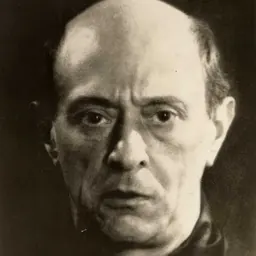
André Neher relates a story in his work Ils ont refait leur âme:Lévy explained that a Jew who converts to another religion remains Jewish, so it is not necessary for a ceremony to mark a return to Judaism.
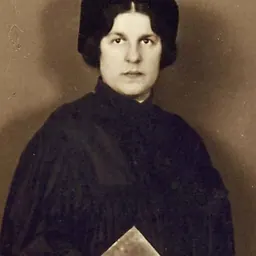
Regina Jonas On December 27, 1935, Regina Jonas was ordained by Rabbis Max Dienemann from the Association of Liberal Rabbis of Germany and Lévy in Offenbach-sur-le-Main.
World War II In May 1940, a non-mobilized Rabbinical corps took refuge in Lyon. Lévy moved there with his wife, was charged by Chief Rabbi Maurice Liber with writing reports for the Central Consistory. Additionally, professor Georges Vajda at the Séminaire israélite de France was living in the first floor of his apartment.
At the beginning of May 1945, Chief Rabbi of Paris Julien Weill suggested that the consistory absorb the ULI, arguing that the measure would have no difficulty with the merger as long as the language of worship remained French.
Lévy reached out to the WUPJ and Lily Montagu, to share the difficulties and his discouragement: As far as I am concerned, I hold a service on Friday nights by myself, with no Chazzan and without music. Unfortunately, I do not have a Committee. As I wrote to you previously, President André Baur was killed in captivity, many of our members – and the most influential ones – have died. Our former treasurer is in the army. He gave all his papers to the deceased president, so I have not received a salary or pension since June 1940... I receive many visits, often young men returning from deportation, or who are passing through Paris, but are still mobilized. I visit congregants who I can reach. I also see quite a few people who need help., He was buried in Montparnasse Cemetery.
André Zaoui succeeded him as the Rabbi for the Union Libérale Israélite de France.
Don’t just read it —
keep it.
Full-length biographies made to live with: read them, listen on the way to work, watch them tonight.
- E-book
- Audio
- Video
Instant download · yours to keep · every purchase keeps this site free
Important facts
People in Louis Germain Lévy's life
Named in this biography and alive at the same time


Related people
Same field, nearest in time

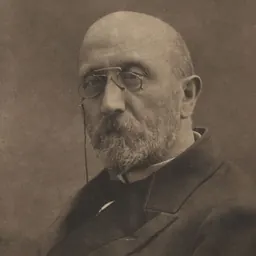

Contemporaries
People whose lives overlapped Louis Germain Lévy's

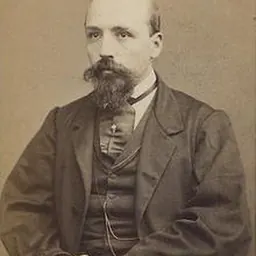
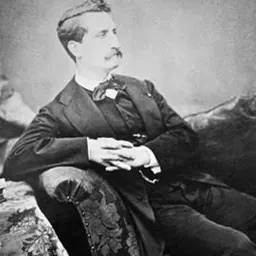


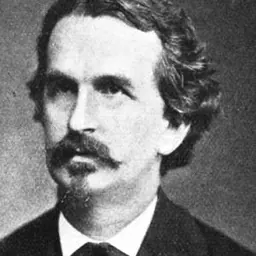
Frequently asked questions
Who was Louis Germain Lévy?
rabbi, founder of the Union libérale israélite de France and French philosopher
When was Louis Germain Lévy born?
Louis Germain Lévy was born on 10 February 1870 in 10ᵗʰ arrondissement of Paris.
When did Louis Germain Lévy die?
Louis Germain Lévy died on 15 December 1946 in 16th arrondissement of Paris.
What was Louis Germain Lévy's occupation?
Louis Germain Lévy was a rabbi, philosopher, essayist, journalist, military chaplain and historian.
What nationality was Louis Germain Lévy?
Louis Germain Lévy was French.
Sources & further reading
· Wikipedia: Louis Germain Lévy
Cite this page
APA: Biography.guide. (2026). Louis Germain Lévy. https://biography.guide/louis-germain-levy/
MLA: "Louis Germain Lévy." Biography.guide, https://biography.guide/louis-germain-levy/.
Chicago: "Louis Germain Lévy." Biography.guide. https://biography.guide/louis-germain-levy/.
Data last updated: 2026-09-20 · Spot an error? Report a correction.
Page generated 2026-09-27 05:26 UTC