
Louis-François Richer Laflèche
Canadian missionary
About Louis-François Richer Laflèche
Lived 1818 – 1898 (aged 79). Louis-François Richer Laflèche was a Canadian catholic priest, essayist and catholic bishop.
Louis-François Laflèche (September 4, 1818 – July 14, 1898) was a Catholic bishop of the diocese of Trois-Rivières, in the province of Quebec, Canada.
Early life and career
Laflèche was born on September 4, 1818, in the village of Sainte-Anne-de-la-Pérade to Louis-Modeste Richer dit Laflèche and Marie-Anne Richer dit Laflèche (née Joubin dit Boisvert). His family held the secondary surname of Laflèche because their ancestor, Jean Richer, was from an area in France called La Flèche, near Anjou. His grandmother from his mother's side was a Métis. In 1846, Oblate priest Alexandre-Antonin Taché and Laflèche founded the mission of Saint-Jean-Baptiste at Île-à-la-Crosse. The mission served as a base for Taché's extensive missionary travels to Green Lake, Reindeer Lake, Portage La Loche, and Fort Chipewyan. In 1849, Provencher recalled to Laflèche to Saint Boniface, intending to make him his coadjutor. Laflèche declined the position, arguing ill-health. Provencher then chose Taché. While the now auxiliary Bishop Taché continued his missionary work, Laflèche served as vicar general of the diocese and administrator during Bishop Provencher's absences.
In 1851 he accompanied the Métis buffalo hunters of the parish of St. François Xavier located 25 km west of St. Boniface. The hunting party was made up of 67 Métis men, a number of women who came to prepare the meat, some small children and 200 carts. In North Dakota they encountered a band of Sioux. Lafleche, dressed in his black cassock, white surplice, and stole, directed with the camp commander, Jean Baptiste Falcon, a defence against about 2,000 Sioux combatants, at the Battle of Grand Coteau (North Dakota). After a siege of two days (July 13 and 14), the Sioux withdrew, convinced that the Great Spirit protected the Métis.
When he returned to Canada in 1856, he taught mathematics, astronomy, and philosophy at the Nicolet Seminary College. He was appointed president of the college in 1859.
Diocese of Trois-Rivières
In 1866, Bishop Thomas Cook of Trois-Rivières selected Laflèche to be his coadjutor. The following year, he was elevated to be head of the diocese of Anthedon. In 1869, he blessed the new church of Sainte-Anne-de-la-Pérade. While attending First Vatican Council in 1870, he was appointed Bishop of Trois-Rivières. He used his power and influence to interfere in the affairs of the Province of New Brunswick in an attempt to quash the passage of the Common Schools Act of 1871 that resulted in the separation of church and state in the New Brunswick education system.
Laflèche authored five volumes of pastoral letters and two works concerning religion in the family and a discussion of the encyclical Humanum genus. In 1885, Leo XIII split his diocese, and he was forced to comply with this action and step down from his post. Following this, he became involved in the Manitoba Schools Question from 1890 to 1896, asking the help of Joseph-Adolphe Chapleau and Wilfrid Laurier. His concern was voiced in the encyclical Affari Vos of 1897.
Influence on politics
As bishop of Trois-Rivières, Laflèche gave weekly sermons at the cathedral, often touching upon subjects dealing with political and religious questions of his day. In 1876, he led the ultramontanist movement in Quebec, with the help of Bishop Ignace Bourget. He therefore had many disagreements with Bishop Elzéar-Alexandre Taschereau, who was a liberal.
Laflèche used his religious authority to help the Conservative Party of Quebec. He is associated with the phrase ("Hell is red and heaven is blue"). Blue is the color of the Conservatives and red, that of the Liberals. Laflèche's influence was especially strong in the 1890 provincial election. All the Conservative candidates were elected in the Mauricie area even though most of them were overwhelmingly defeated across the province.
Death
He died on July 12, 1898, at 79 years of age. He had been a priest for 54 years and a bishop for 31 years.
Honor
The following sites and landmarks were named to honor Laflèche:
In the Mauricie, Quebec area: Avenue Laflèche, located in Shawinigan, Mauricie; Laflèche College and Rue Laflèche, in Trois-Rivières; Rue Laflèche, in La Tuque; Rue Laflèche, in Louiseville; Rue Laflèche, in Saint-Paulin; In the Greater Quebec City area: Rue Laflèche, in Beauport, Greater Quebec City Area; Rue Laflèche, in L'Ancienne-Lorette; Rue Monseigneur-Laflèche, in Sainte-Foy; Elsewhere in Quebec: Rue Laflèche, in Montreal; Rue Monseigneur-Laflèche, in Boucherville, Montérégie.
Also, the former federal electoral district of Saint-Maurice—Laflèche and the village of Lafleche, Saskatchewan were named in his honour.
Don’t just read it —
keep it.
Full-length biographies made to live with: read them, listen on the way to work, watch them tonight.
- E-book
- Audio
- Video
Instant download · yours to keep · every purchase keeps this site free
Important facts
People in Louis-François Richer Laflèche's life
Named in this biography and alive at the same time
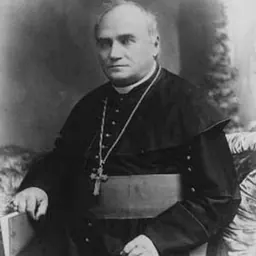
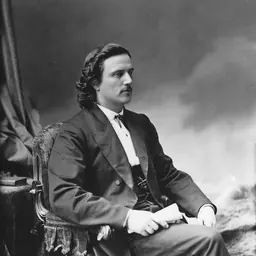
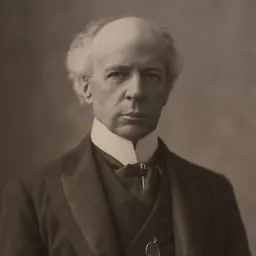

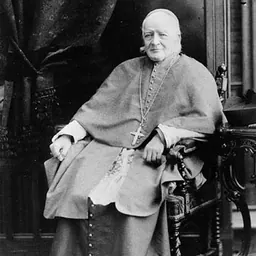

Related people
Same field, nearest in time


Contemporaries
People whose lives overlapped Louis-François Richer Laflèche's



Frequently asked questions
Who was Louis-François Richer Laflèche?
Canadian missionary (1818–1898)
When was Louis-François Richer Laflèche born?
Louis-François Richer Laflèche was born on 4 September 1818 in Sainte-Anne-de-la-Pérade.
When did Louis-François Richer Laflèche die?
Louis-François Richer Laflèche died on 14 July 1898 in Trois-Rivières.
What was Louis-François Richer Laflèche's occupation?
Louis-François Richer Laflèche was a catholic priest, essayist and catholic bishop.
What nationality was Louis-François Richer Laflèche?
Louis-François Richer Laflèche was Canadian.
Sources & further reading
· Wikipedia: Louis-François Richer Laflèche
· DBpedia: Louis-François Richer Laflèche
Cite this page
APA: Biography.guide. (2026). Louis-François Richer Laflèche. https://biography.guide/louis-francois-richer-lafleche/
MLA: "Louis-François Richer Laflèche." Biography.guide, https://biography.guide/louis-francois-richer-lafleche/.
Chicago: "Louis-François Richer Laflèche." Biography.guide. https://biography.guide/louis-francois-richer-lafleche/.
Data last updated: 2026-09-20 · Spot an error? Report a correction.
Page generated 2026-09-27 05:17 UTC