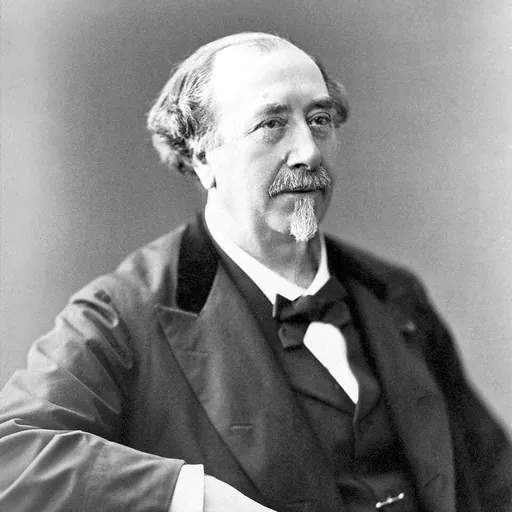
About Louis Figuier
Lived 1819 – 1894 (aged 75). Louis Figuier was a French writer, physician writer, journalist, chemist, physician and pharmacist.
Louis Figuier (; 15 February 1819 in Montpellier – 8 November 1894 in 9th arrondissement of Paris) was a French scientist and writer. He was the nephew of Pierre-Oscar Figuier and professor of chemistry at the École de pharmacie of Montpellier. Louis Figuier was married to French writer Louise Juliette Bouscaren.
Career
Figuier became Doctor of Medicine (1841), agrégé of pharmacology, chemistry (1844–1853) and physics and gained his PhD in (1850). Figuier was appointed professor at the École de Pharmacie of Paris after leaving Montpellier. In his research he found himself opposed to Claude Bernard; as a result of this conflict, he abandoned his research to devote himself to popular science. He edited and published a yearbook from 1857 to 1894 – L'Année scientifique et industrielle (or Exposé annuel des travaux) – in which he compiled an inventory of the scientific discoveries of the year (it was continued after his death until 1914). He was the author of numerous successful works: Les Grandes inventions anciennes et modernes (1861), Le Savant du foyer (1862), La Terre avant le déluge (1863) illustrated by Édouard Riou, La Terre et les mers (1864), Les Merveilles de la science (1867–1891).
He wrote extensively on the subject of photography, including it in his study on the marvels of nineteenth-century science, and also writing a self-standing book on the subject.
Influenced by Charles Lyell's Geological Evidences of the Antiquity of Man of 1863, the 1867 second edition of La Terre avant le déluge abandoned the Garden of Eden shown in the first edition, and included dramatic illustrations of savage men and women wearing animal skins and wielding stone axes.
Main works
La Terre avant le déluge, 1863, 2nd. edition 1867 English translation, World Before the Deluge, 1865 Swedish translation by Carl Hartman, Jorden före syndafloden, 1868, based on the 5th French edition Vies des savants illustres de l'antiquité (Lives of the Illustrious Scholars of Antiquity), 1866 Vies des savants illustres du Moyen âge (Lives of the Illustrious Scholars of the Middle Ages), 1867 The Vegetable World, 1867
The Ocean World, 1868 The Insect World, 1868 Reptiles and Birds, 1869 Vies des savants illustres du XVIIe siècle (Lives of the Illustrious Scholars of the 17th century), 1869 Vies des savants illustres du XVIIIe siècle (Lives of the Illustrious Scholars of the 18th century), 1870 Primitive Man, 1871 The human race, 1872 La Photographie, 1889 , , , and . and .
Footnotes
Don’t just read it —
keep it.
Full-length biographies made to live with: read them, listen on the way to work, watch them tonight.
- E-book
- Audio
- Video
Instant download · yours to keep · every purchase keeps this site free
Important facts
People in Louis Figuier's life
Named in this biography and alive at the same time

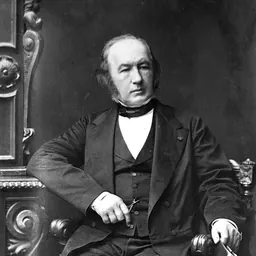

Related people
Same field, nearest in time

Contemporaries
People whose lives overlapped Louis Figuier's



Frequently asked questions
Who was Louis Figuier?
French scientist and writer (1819-1894)
When was Louis Figuier born?
Louis Figuier was born on 15 February 1819 in Montpellier.
When did Louis Figuier die?
Louis Figuier died on 8 November 1894 in 9th arrondissement of Paris.
What was Louis Figuier's occupation?
Louis Figuier was a writer, physician writer, journalist, chemist, physician and pharmacist.
What nationality was Louis Figuier?
Louis Figuier was French.
Sources & further reading
Cite this page
APA: Biography.guide. (2026). Louis Figuier. https://biography.guide/louis-figuier/
MLA: "Louis Figuier." Biography.guide, https://biography.guide/louis-figuier/.
Chicago: "Louis Figuier." Biography.guide. https://biography.guide/louis-figuier/.
Data last updated: 2026-09-22 · Spot an error? Report a correction.
Portrait: Wikimedia Commons · author & licence
Page generated 2026-09-27 05:03 UTC