
About Louis Brassin
Lived 1836 – 1884 (aged 47). Louis Brassin was a Belgian composer, pianist, musicologist, music educator, university teacher and violinist.
Louis Brassin (24 June 184017 May 1884) was a Belgian pianist, composer and music educator. He is best known now for his piano transcription of the Magic Fire Music from Wagner's Die Walküre.
Career Louis Brassin was born in Aix-la-Chapelle in 1840. His father was a baritone named de Brassine, whose career took him and his family abroad. Louis gave his first concert at the age of six, in Hamburg. At age seven he entered the Leipzig Conservatory as a pupil of Ignaz Moscheles. In 1852 he went on concert tours with his two brothers. In 1857 he adopted the surname Brassin. In 1866-67 he taught at the Stern Conservatory in Berlin, succeeding Hans von Bülow, then resumed concertising. He was piano professor at the Brussels Conservatoire 1868-78, and played an important role in the musical life of the country. Among his pupils there were Edgar Tinel, Arthur De Greef, Franz Rummel and Alfred Wotquenne. In 1878 he took over the piano class of Theodor Leschetizky at the Saint Petersburg Conservatory, where his pupils included Vasily Safonov, Wassily Sapellnikoff and Genary Korganov.
He died in Saint Petersburg in 1884, aged 43.
Transcriptions Brassin's piano transcription of the Magic Fire Music from Wagner's Die Walküre was long a concert favourite, and has been recorded many times. His other Wagner transcriptions from the Ring Cycle were: Valhalla, Siegmund's Love Song, Ride of the Valkyries (Die Walküre), and Forest Murmurs (Siegfried). Pianists who have recorded these pieces include Josef Hofmann, Ignaz Friedman, Isador Goodman, Michael Ponti, Jean-Yves Thibaudet and Severin von Eckardstein.
He also transcribed: J. S. Bach's Toccata and Fugue in D minor, BWV 565 the Soldiers' Chorus from Gounod's Faust 3 pieces after Domenico Scarlatti.
Original works Brassin wrote two piano concertos and two German operettas (Der Thronfolger, The Heir to the Throne and Der Missionär, The Missionary), as well as many smaller, now largely forgotten piano pieces.
Première grande polonaise Deuxième grande polonaise, Op. 18 3eme Grande Polonaise Feuillet d'album (Album Leaf) Étude de concert Impressions d'Automne (Herbst-Eindrücke) Trois etudes Menuet, Gavotte et Gigue Polka de la Princesse Sérénade Rêverie pastoral Rêverie Second Galop de Concert fantastique Les Adieux, morceau caractéristiques Grandes Etudes de Concert. Op. 12 [No. 1-6] Mazurka de Salon, Op. 14 Au clair de la lune, Nocturne, Op. 17
Don’t just read it —
keep it.
Full-length biographies made to live with: read them, listen on the way to work, watch them tonight.
- E-book
- Audio
- Video
Instant download · yours to keep · every purchase keeps this site free
Important facts
People in Louis Brassin's life
Named in this biography and alive at the same time




Related people
Same field, nearest in time

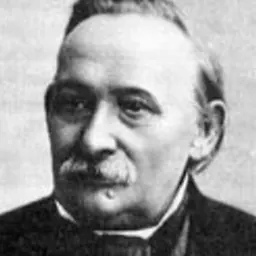
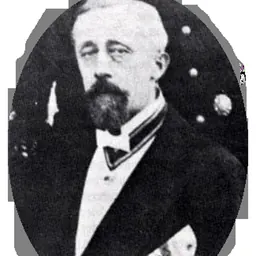

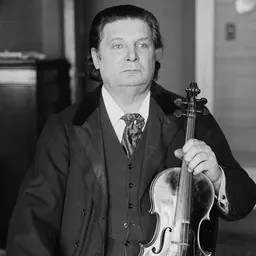
Contemporaries
People whose lives overlapped Louis Brassin's

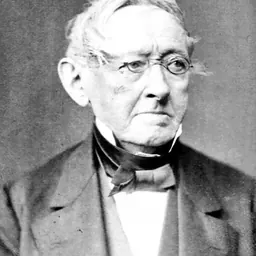


Frequently asked questions
Who was Louis Brassin?
Belgian musician (1836-1884)
When was Louis Brassin born?
Louis Brassin was born on 24 June 1836 in Aachen.
When did Louis Brassin die?
Louis Brassin died on 5 May 1884 in Saint Petersburg.
What was Louis Brassin's occupation?
Louis Brassin was a composer, pianist, musicologist, music educator, university teacher and violinist.
What nationality was Louis Brassin?
Louis Brassin was Belgian.
Sources & further reading
Cite this page
APA: Biography.guide. (2026). Louis Brassin. https://biography.guide/louis-brassin/
MLA: "Louis Brassin." Biography.guide, https://biography.guide/louis-brassin/.
Chicago: "Louis Brassin." Biography.guide. https://biography.guide/louis-brassin/.
Data last updated: 2026-09-25 · Spot an error? Report a correction.
Page generated 2026-09-27 05:08 UTC