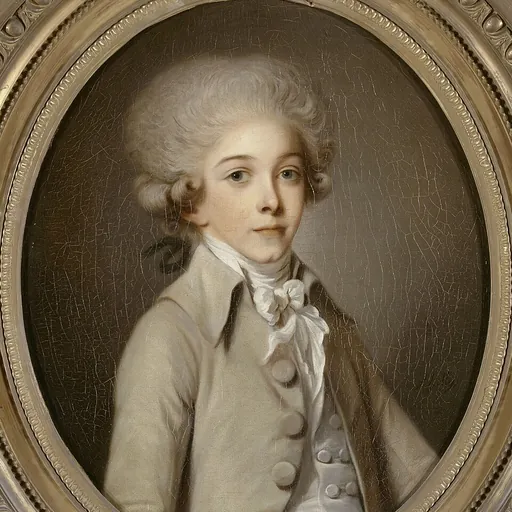
Louis Antoine, Duke of Enghien
Son of Louis Henri, Prince of Condé
About Louis Antoine, Duke of Enghien
Lived 1772 – 1804 (aged 31). Louis Antoine, Duke of Enghien was a French politician, military personnel and soldier.
Louis Antoine de Bourbon, Duke of Enghien (duc d'Enghien pronounced ) (Louis Antoine Henri; 2 August 1772 – 21 March 1804) was a member of the House of Bourbon of France. More famous for his death than his life, he was executed by order of Napoleon Bonaparte, who brought charges against him of aiding Britain and plotting against Napoleon.
Biography Prince Louis Antoine as a young boy by L. L. Schilly (fourth quarter of the 18th century)
The Duke of Enghien was the only son of Louis Henri de Bourbon and Bathilde d'Orléans. As a member of the reigning House of Bourbon, he was a prince du sang. He was born at the Château de Chantilly, the country residence of the Princes of Condé – a title he was born to inherit. He was given the title duc d'Enghien from birth, his father already being the Duke of Bourbon and the heir of the Prince of Condé, the Duke of Bourbon being the Heir apparent of Condé.
His mother's full name was Louise Marie Thérèse Bathilde d'Orléans; she was the only surviving daughter of Louis Philippe d'Orléans (grandson of the Regent Philippe d'Orléans) and Louise Henriette de Bourbon. His uncle was the future Philippe Égalité and he was thus a first cousin of the future Louis-Philippe I, King of the French. He was also doubly descended from Louis XIV through his legitimated daughters, Mademoiselle de Blois and Mademoiselle de Nantes.
He was an only child, his parents separating in 1778 after his father's romantic involvement with one Marguerite Catherine Michelot, a Paris Opera singer, was discovered; it was his mother who was blamed for her husband's infidelity. Michelot was the mother of Enghien's two illegitimate sisters.
He was educated privately by the Abbé Millot, and in military matters by Commodore de Vinieux. He early on showed the warlike spirit of the House of Condé, and began his military career in 1788. At the outbreak of the French Revolution, he emigrated with his father and grandfather a few days after the Storming of the Bastille, and in exile he would seek to raise forces for the invasion of France and restoration of the monarchy to its pre-revolutionary status.
In 1792, at the outbreak of French Revolutionary Wars, he held a command in the corps of émigrés organized and commanded by his grandfather, the Prince of Condé. This Army of Condé shared in the Duke of Brunswick's unsuccessful invasion of France.
After this, the young duke continued to serve under his father and grandfather in the Condé army, and, on several occasions, distinguished himself by his bravery and ardour in the vanguard. On the dissolution of that force after the peace of Lunéville (February 1801), he privately married Princess Charlotte de Rohan, niece of the Cardinal de Rohan, and took up his residence at Ettenheim in Baden, near the Rhine. The news ran that the duke was in company with Charles François Dumouriez and had made secret journeys into France. This was false; there is no evidence that the duke had dealings with either Cadoudal or Pichegru. However, the duke had previously been condemned in absentia for having fought against the French Republic in the Armée des Émigrés. Napoleon gave orders for the seizure of the duke.
French dragoons crossed the Rhine secretly, surrounded his house and brought him to Strasbourg (15 March 1804), and thence to the Château de Vincennes, near Paris, where a military commission of French colonels presided over by General Pierre-Augustin Hulin was hastily convened to try him. The duke was charged chiefly with bearing arms against France in the late war, and with intending to take part in the new coalition then proposed against France. His last words were "I must die then at the hands of Frenchmen!"
In 1816, his remains were exhumed and placed in the Holy Chapel of the Château de Vincennes.
Impact of death
Royalty across Europe were shocked and dismayed at the duke's death. Tsar Alexander I of Russia was especially alarmed, and decided to curb Napoleon's power.
Enghien was the last descendant of the House of Condé; his grandfather and father survived him, but died without producing further heirs. It is now known that Joséphine and Madame de Rémusat had begged Bonaparte to spare the duke, but nothing would bend his will. Whether Talleyrand, Fouché or Savary bore responsibility for the seizure of the duke is debatable, as at times Napoleon was known to claim Talleyrand conceived the idea, while at other times he took full responsibility himself. On his way to St. Helena and at Longwood, Napoleon asserted that, in the same circumstances, he would do the same again; he inserted a similar declaration in his will, stating that "t was necessary for the safety, interest, and the honour of the French people when the Comte d'Artois, by his own confession, was supporting sixty assassins at Paris."
The execution shocked the aristocracy of Europe, who still remembered the bloodletting of the Revolution. Either Antoine Boulay, comte de la Meurthe (deputy from Meurthe in the Corps législatif) or Napoleon's chief of police, Fouché, said about his execution "C'est pire qu'un crime, c'est une faute", a statement often rendered in English as "It was worse than a crime; it was a blunder." The statement is also sometimes attributed to Talleyrand. In the 1844 essay, "Experience", Emerson misattributes the line to Napoleon himself.
In contrast, in France the execution appeared to quiet domestic resistance to Napoleon, who soon set up a military dictatorship by crowning himself Emperor of the French. Cadoudal, dismayed at the news of Napoleon's proclamation, reputedly exclaimed, "We wanted to make a king, but we made an emperor".
Cultural references
Tolstoy The killing of d'Enghien is discussed in the opening book of Leo Tolstoy's War and Peace. The vicomte de Mortemart, a French émigré who supposedly knew the duke personally, is the focus of attention of the Russian aristocrats gathered at Anna Pavlovna Sherer's home:
The group about Mortemart immediately began discussing the murder of the duc d'Enghien. "After the murder of the Duc, even the most partial ceased to regard [Buonaparte] as a hero. If to some people he ever was a hero, after the murder of the duc there was one martyr more in heaven and one hero less on earth." The vicomte said that the duc d'Enghien had perished by his own magnanimity, and that there were particular reasons for Buonaparte's hatred of him.(...)
It was an anecdote, then current, to the effect that the duc d'Enghien had gone secretly to Paris to visit Mademoiselle George; that at her house he came upon Bonaparte, who also enjoyed the famous actress' favors, and that in his presence Napoleon happened to fall into one of the fainting fits to which he was subject, and was thus at the Duc's mercy. The latter spared him, and this magnanimity Bonaparte subsequently repaid by death. The story was very pretty and interesting, especially at the point where the rivals suddenly recognized one another; and the ladies looked agitated.
The actress Marguerite-Joséphine Wiemer, known as "Mademoiselle George", was indeed Napoleon's mistress, but there is no evidence that Enghien had anything to do with her, or that the story preserved to posterity by Tolstoy's masterpiece was anything more than one of the pieces of gossip and conspiracy theories current around Europe at the time.
Dumas
Enghien's death is referenced in The Knight of Sainte-Hermine by Alexandre Dumas. For example:
he dominant sentiment in Bonaparte's mind at that moment was neither fear nor vengeance, but rather the desire for all of France to realise that Bourbon blood, so sacred to Royalist partisans, was no more sacred to him than the blood of any other citizen in the Republic.
"Well, then", asked Cambacérès, "what have you decided?"
"It's simple", said Bonaparte. "We shall kidnap the Duc d'Enghien and be done with it." His death was also briefly mentioned in The Count of Monte Cristo:
'There wasn't any trouble over treaties when it was a question of shooting the poor Duc d'Enghien' "
Film La mort du duc d'Enghien en 1804 (1909) was a one-reel silent film directed by Albert Capellani.
The execution of Enghien is shown in the director's cut of Ridley Scott's Napoleon (2023), where he is portrayed by Ed Eales White. The scene deviates from history by showing him executed by firing squad in the woods, immediately and without trial.
Ancestry
References and notes
Schroeder, Paul W. The Transformation of European Politics 1763-1848 (1996), pp 248–51
Don’t just read it —
keep it.
Full-length biographies made to live with: read them, listen on the way to work, watch them tonight.
- E-book
- Audio
- Video
Instant download · yours to keep · every purchase keeps this site free
Important facts
Family & relationships
People in Louis Antoine, Duke of Enghien's life
Named in this biography and alive at the same time
Related people
Same field, nearest in time
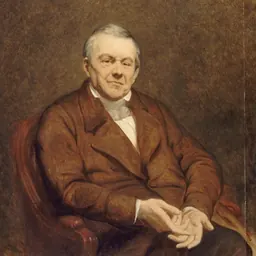
Contemporaries
People whose lives overlapped Louis Antoine, Duke of Enghien's

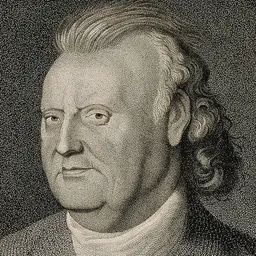
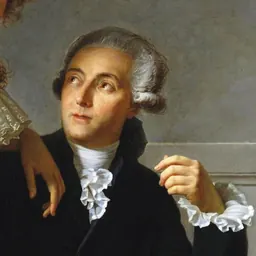

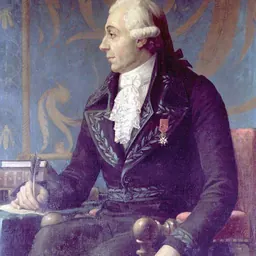
Frequently asked questions
Who was Louis Antoine, Duke of Enghien?
son of Louis Henri, Prince of Condé (1772–1804)
When was Louis Antoine, Duke of Enghien born?
Louis Antoine, Duke of Enghien was born on 2 August 1772 in Château de Chantilly.
When did Louis Antoine, Duke of Enghien die?
Louis Antoine, Duke of Enghien died on 21 March 1804 in Château de Vincennes.
What was Louis Antoine, Duke of Enghien's occupation?
Louis Antoine, Duke of Enghien was a politician, military personnel and soldier.
What nationality was Louis Antoine, Duke of Enghien?
Louis Antoine, Duke of Enghien was French.
Sources & further reading
· Wikipedia: Louis Antoine, Duke of Enghien
· DBpedia: Louis Antoine, Duke of Enghien
Cite this page
APA: Biography.guide. (2026). Louis Antoine, Duke of Enghien. https://biography.guide/louis-antoine-duke-of-enghien/
MLA: "Louis Antoine, Duke of Enghien." Biography.guide, https://biography.guide/louis-antoine-duke-of-enghien/.
Chicago: "Louis Antoine, Duke of Enghien." Biography.guide. https://biography.guide/louis-antoine-duke-of-enghien/.
Data last updated: 2026-09-29 · Spot an error? Report a correction.
Portrait: Wikimedia Commons · author & licence
Page generated 2026-10-04 14:12 UTC