
Lou Rymkus
American football player and coach
About Lou Rymkus
Lived 1919 – 1998 (aged 78). Lou Rymkus was an American american football player and american football coach.
Louis Joseph "the Battler" Rymkus (November 6, 1919 – October 31, 1998) was an American professional football player and coach in the All-America Football Conference (AAFC), National Football League (NFL) and American Football League (AFL). Playing as a tackle for the Cleveland Browns in the AAFC and NFL in the late 1940s and early 1950s, Rymkus provided pass protection for quarterback Otto Graham as the team won five league championships. Following his playing career, Rymkus took a number of assistant coaching jobs before serving as the first head coach of the AFL's Houston Oilers in 1960. The team won the league's first championship, but Rymkus was fired by Oilers owner Bud Adams after a slow start in 1961.
Rymkus was born in Royalton, Illinois and grew up in Chicago. He was a star lineman in high school and won a football scholarship to attend the University of Notre Dame. At Notre Dame, he played on a 1941 team that went undefeated under head coach Frank Leahy. Rymkus was drafted by the NFL's Washington Redskins in 1943 and played one season for the team before joining the U.S. Marines during World War II. Following two years in the service, he signed with the Browns, where he spent the remainder of his playing career. Paul Brown, the Browns' first coach, called Rymkus "the best pass protector I've ever seen". His blocking was used by coaches to demonstrate proper form.
After Rymkus's brief stint coaching the Oilers, he held numerous football jobs, including as the coach of a high school team in Louisiana and an assistant with the Detroit Lions. Rymkus was a finalist for induction into the Pro Football Hall of Fame in 1988 but was not elected. In 2005, he was named to the Professional Football Researchers Association Hall of Very Good in the association's third HOVG class.
He died of a stroke in Houston, Texas, where he lived for most of his later life.
Early life Rymkus was born in Royalton, Illinois, the son of a Lithuanian immigrant coal miner who owned a small grocery store. After his father was shot and killed outside the grocery store, Rymkus and his family moved to the Back of the Yards neighborhood on Chicago's South Side. He blocked a kick and scored a touchdown in a game at Chicago's Soldier Field in 1936 against rival Austin High, a play he later said was the most memorable of his high school career. He was known in college as a tough and durable tackle. In a 1941 game against Georgia Tech, Rymkus was elbowed in his upper lip. He left the game to get 14 stitches and returned to play in the 20–0 Notre Dame victory. Notre Dame went undefeated that season, coach Frank Leahy's first year at the school.
The Browns won the NFL championship in 1950, the team's first year in the league. Cleveland advanced to the championship the following year, but lost 24–17 to the Los Angeles Rams. Slowed by injuries to his elbow and knees, the 32-year-old Rymkus retired after the 1951 season, never having missed a game or a practice during his six years with the team. A year later, he headed north to work as an assistant under former Rams head coach Bob Snyder with the Calgary Stampeders of the Canadian Football League. He worked under Sid Gillman with the Rams for two seasons, and was seen as a potential head coach. The new American Football League's (AFL) Los Angeles Chargers considered him for the top spot in 1959; Leahy, Rymkus's former Notre Dame coach, served as the team's general manager. The Chargers selected Gillman instead, and Rymkus in January 1960 took the head coaching position of the AFL's Houston Oilers. Oilers owner Bud Adams signed him to a three-year contract paying $15,500 per year ($ in dollars). The Oilers had lost to the Chargers in a November 13 game dubbed the "Sawdust Game" because sawdust was spread over the muddy and wet field in Los Angeles, but they entered the championship a six-and-a-half point favorite. Before the game, Rymkus was named the AFL's coach of the year. To commemorate the victory, Rymkus ordered thousands of drinking glasses emblazoned with a picture of his face and gave them to friends.
The celebratory mood continued into the next preseason, when Adams sent the team for two weeks of training camp in Hawaii. Rymkus was upset by the distractions caused by the decision. "We found it hard to think football around the palm trees", he said. "A preseason camp has to be hard, and you have to work hard. You can't do it in a place like Hawaii." Adams said the decision was "based on the conclusion the material on hand has not been used to its fullest potential". Under Lemm, the Oilers regrouped to win their second consecutive title.
Rymkus left football after his firing and accepted a regional public relations position with the Los Angeles-based Global Marine Exploration Company. After more than three years out of the sport, he returned to coaching and the Oilers when former Redskins teammate Hugh Taylor hired him as the team's offensive line coach. Rymkus stayed with the team for the 1965 season, resigning in January 1966. Despite his short tenure with the Oilers, Rymkus was popular in Houston; over 250 people attended a dinner in his honor following his resignation.
Three weeks later, Rymkus and Baugh, who had worked with him on the Oilers' staff, were named assistant coaches for the Detroit Lions. When Harry Gilmer was fired as Lions' head coach after the 1966 NFL season, however, Rymkus was once again out of work. He got a job as an assistant for the Akron Vulcans of the Continental Football League and was appointed the team's head coach and general manager in 1967. Rymkus stayed in the position until the team folded later that year due to financial difficulties; the team's owner, Frank Hurn, ran out of money and stopped paying the Vulcans' bills.
Rymkus next took a steep pay cut to serve as head coach of Many High School in Many, Louisiana.
In 1969, Rymkus left Many – he said he "couldn't afford it" – and began working as general manager of the Executive Health Club in Houston. Later that year, he raised money to organize a West Texas Rufneks team in the Continental Football League. After the Rufneks lost an exhibition game 31–0 to the visiting Omaha Mustangs, the board of directors of Professional Sports Inc. voted unanimously to remove him as head coach. Ted Dawson, who had been head coach and general manager of the Rufneks when the team was part of the Texas Football League in 1968, retook the position and completed the season in a tie with the Western Conference champion San Antonio Toros.
In early 1970, Rymkus applied for a job as the Browns' offensive line coach but did not get the position. Later that year, he returned to the NFL as an offensive line coach for the Baltimore Colts under Don McCafferty. After just three regular-season games, however, he was replaced by George Young and transferred to the team's scouting department. He went on to take a number of jobs outside of football, including selling cars in Houston, where he spent his remaining years. In 1988, he was among 15 finalists for induction into the Pro Football Hall of Fame but did not make the cut (among those finalists, Rymkus and Lee Roy Jordan are the only ones who did not eventually become elected into the Hall) He died of a stroke in a Houston hospice on October 31, 1998. He and his wife Betty had two children, twin boys named Pat and Mike.
Don’t just read it —
keep it.
Full-length biographies made to live with: read them, listen on the way to work, watch them tonight.
- E-book
- Audio
- Video
Instant download · yours to keep · every purchase keeps this site free
Important facts
People in Lou Rymkus's life
Named in this biography and alive at the same time

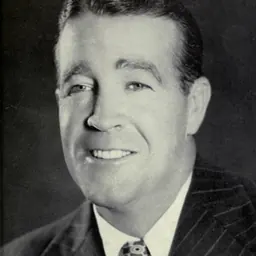
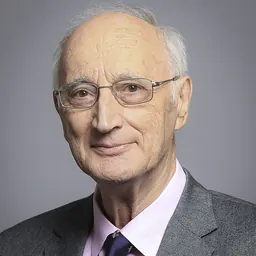

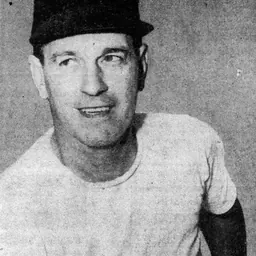
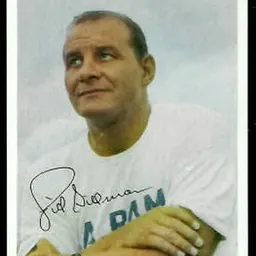
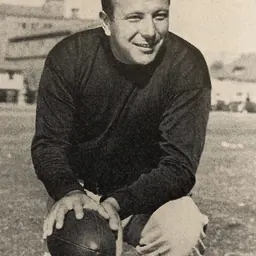

Related people
Same field, nearest in time

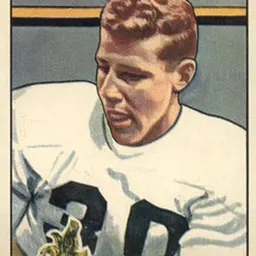



Contemporaries
People whose lives overlapped Lou Rymkus's



Frequently asked questions
Who was Lou Rymkus?
American football player and coach (1919-1998)
When was Lou Rymkus born?
Lou Rymkus was born on 6 November 1919 in Royalton.
When did Lou Rymkus die?
Lou Rymkus died on 31 October 1998 in Houston.
What was Lou Rymkus's occupation?
Lou Rymkus was an american football player and american football coach.
What nationality was Lou Rymkus?
Lou Rymkus was American.
Sources & further reading
Cite this page
APA: Biography.guide. (2026). Lou Rymkus. https://biography.guide/lou-rymkus/
MLA: "Lou Rymkus." Biography.guide, https://biography.guide/lou-rymkus/.
Chicago: "Lou Rymkus." Biography.guide. https://biography.guide/lou-rymkus/.
Data last updated: 2026-09-20 · Spot an error? Report a correction.
Page generated 2026-09-27 05:20 UTC