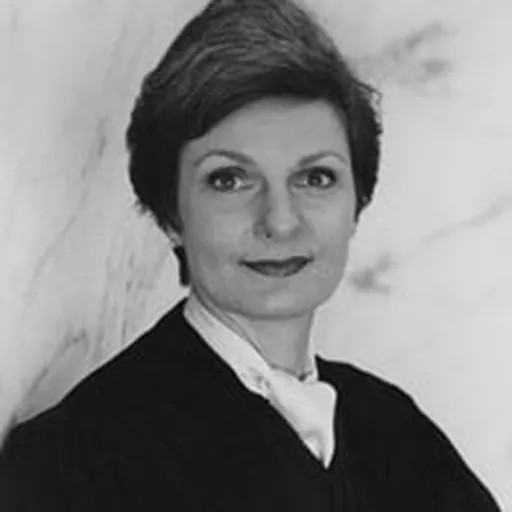
About Loretta Preska
Born 1949. Loretta Preska is an American lawyer and judge.
Loretta A. Preska (born 1949) is an American lawyer who serves as a senior United States district judge of the United States District Court for the Southern District of New York. Born in Albany, Preska received law degrees from Fordham University School of Law and New York University School of Law. She practiced law in New York City from 1973 to 1992 at the law firms of Cahill Gordon & Reindel and Hertzog, Calamari & Gleason (now Winston & Strawn). President George H. W. Bush appointed her to the district bench in 1992. She served as chief judge of the court for a seven-year term from 2009 to 2016, and took senior status in 2017. President George W. Bush nominated Preska to the U.S. Court of Appeals for the Second Circuit in 2008, but the Senate did not act on the nomination.
Early life and education Preska was born in Albany, New York, in 1949, She is of Lithuanian descent. She grew up in the Albany suburb of Delmar, where she was active in the Girl Scouts and graduated from Bethlehem Central High School. and her LL.M from New York University School of Law (1978). from 1982 until her appointment to the federal bench. but also represented several officers of EF Hutton in grand jury proceedings in connection with a case in which the company entered criminal guilty pleas. Preska was confirmed by the United States Senate on August 11, 1992, by unanimous consent. As chief judge, Preska pressed for more adequate funding for the federal judiciary, which suffered from the effects of the Great Recession
She took senior status on March 1, 2017.
On September 9, 2008, Bush nominated Preska to a judgeship on the U.S. Court of Appeals for the Second Circuit to replace Judge Chester J. Straub, who retired. The American Bar Association's Standing Committee on the Federal Judiciary unanimously rated Preska "well qualified" for the circuit judgeship, the committee's highest rating. The Senate did not act on the nomination, and it expired in January 2009 at the end of the 110th Congress, upon the sine die adjournment of the Senate. and served on the advisory board of the Federalist Society. In National Basketball Association v. Motorola, Inc. (1997), Preska ruled in favor of the NBA, granting a permanent injunction blocking Motorola Inc. and a statistics company from transmitting real-time basketball scores and other statistics through its "SportsTrax" pager service. Preska ruled that the service was a commercial misappropriation rather than mere media coverage, but dismissed the NBA's copyright and Lanham Act false-advertising claims. On appeal, the Second Circuit vacated the injunction, finding that the service was neither an unlawful misappropriation nor a Lanham Act violation.
Preska presided over the case of Mastercard International Inc. v. Fédération Internationale de Football Association (2006), brought by MasterCard against FIFA after the soccer association awarded sponsorship deals for the next two World Cups to MasterCard's rival Visa. Preska ruled in December 2006 that FIFA had violated its previous 16-year sponsorship contract with MasterCard, which included a clause granting MasterCard a right of first refusal.
Defamation litigation In 1998, Preska presided over a defamation suit brought by Richard Jewell against the New York Post. Jewell, who was wrongly suspected of being the Centennial Olympic Park bomber, alleged that several articles, headlines, photographs, and editorial cartoons in the newspaper had libeled him. Preska dismissed claims based on a photograph and an editorial cartoon, but allowed the remainder of the claims to proceed. The Post subsequently settled the case for an undisclosed sum.
In 2019, Preska disqualified the law firm of Boies Schiller Flexner LLP from representing Virginia Giuffre in her lawsuit against professor emeritus Alan Dershowitz, but denied Dershowitz's motion to dismiss the suit, in which Giuffre alleged that Dershowitz falsely claimed that she fabricated her sexual-abuse accusations against Jeffrey Epstein, and thus defamed her. In 2020, Preska denied a motion by British socialite Ghislaine Maxwell, an Epstein associate charged with recruiting girls abused by Epstein, to block the public release of her 2016 deposition testimony in a civil case. Preska stayed her ruling pending Maxwell's appeal to the Second Circuit.
Labor litigation Preska presided over long-running litigation between Local 100 of the Hotel Employees and Restaurant Employees Union and New York's Metropolitan Opera. In June 2000, Preska found the union to be in contempt, determining that the union had defamed the Met and engaged in harassment of Met board members. In November 2002, however, the Second Circuit held that Lincoln Center could permissibly block the union from holding a rally in Lincoln Plaza, holding that the location was not a "public forum" and that Lincoln Center management had a consistent policy of limiting "expression in the plaza to events having an artistic or performance-related component."
In 2015, Preska approved a settlement agreement between the federal government and the International Brotherhood of Teamsters, terminating the consent decree that had been in place for 25 years. The consent decree required certain reforms to combat organized crime influence and corruption within the union, and had been entered into in 1989 to settle a civil racketeering suit brought against the Teamsters by the government. Under the settlement, a five-year transition away from federal monitoring of the union began.
Other litigation In Bloomberg L.P. v. Board of Governors of the Federal Reserve System (2009), Preska presided over a Freedom of Information Act suit brought by Bloomberg L.P. against the Federal Reserve System, seeking to compel the Fed to provide documents revealing the identity of recipients of bailouts from the Troubled Asset Relief Program during the 2008 financial crisis, along with the types and amounts of collateral provided. Preska sided with Bloomberg News reporters, concluding that the Fed's claims that disclosure would cause an "imminent competitive harm" to borrowers were merely conjecture. The Second Circuit affirmed this ruling.
In a 2014 case, Microsoft challenged a federal search warrant for a customer's email records, on the ground that the data was stored on servers in a data center in Ireland and could not be produced to the U.S. authorities without an Irish warrant. The magistrate judge denied Microsoft's motion to quash the warrant, and following a hearing, Preska upheld the magistrate judge's ruling in a decision from the bench, holding that "It is a question of control, not a question of the location of that information." In 2016, the Second Circuit reversed on appeal, determining that the Stored Communications Act of 1986 did not apply extraterritorially. The case went to the Supreme Court, but was dismissed as moot due to Congress's enactment of the CLOUD Act in 2018, which created a process for U.S. investigators to access data stored overseas.
In Consumer Financial Protection Bureau v. RD Legal Funding, LLC (2018), Preska overturned the entirety of Title X of the Dodd-Frank Wall Street Reform and Consumer Protection Act, which created the Consumer Financial Protection Bureau. Preska ruled that the law establishing the CFPB's structure was unconstitutional because it established that the agency's single director could be removed by the president only for cause. Preska disagreed with the en banc decision of the U.S. Court of Appeals for the District of Columbia Circuit that upheld the constitutionality of the CFPB's structure, and sided with the dissenter in that case, then-Judge Brett Kavanaugh, who believed that the protections for the CFPB director violated the Constitution's Take Care Clause. Preska's ruling affirmed earlier rulings by Judge Michael B. Mukasey.
Preska oversaw the criminal case against Hector Xavier Monsegur ("Sabu"), a computer hacker who assisted Anonymous and others in cyberattacks targeting credit card companies, various governments, and media outlets. Information from Monsegur helped lead the authorities to at least eight co-conspirators, including Jeremy Hammond,
In 2009, Ahmed Khalfan Ghailani, the first detainee brought from the Guantanamo Bay detention camp to stand trial in a U.S. civilian court (as opposed to a Guantanamo military commission), appeared before Preska to plead not guilty. In 2010, Ghailani subsequently was convicted by a jury of conspiracy in the 1998 bombing of U.S. embassies in Kenya and Tanzania, and in 2011 was sentenced to life in prison. Ghailani's trial and sentencing were by a different Southern District judge, Lewis A. Kaplan. In 2019, Preska sentenced Patrick Ho, a former Hong Kong ophthalmologist and government official, to three years in prison for conspiring to bribe African government officials (specifically, the presidents of Chad and Uganda) to secure oil rights for CEFC China, an energy company.
In 2017, Preska sentenced former Rikers Island guard Brian Coll to 30 years in prison for beating inmate Ronald Spear to death in 2012.
Preska oversaw the proceedings against Chuck Person, a former NBA player and assistant coach of the Auburn Tigers men's basketball team, who was implicated in a college basketball corruption scandal. Preska denied Person's motion to dismiss the charges. In 2019, after he pleaded guilty to conspiracy to commit bribery, Preska sentenced him to two years of probation and 200 hours of community service. She found that "no purpose would be served" by sending the remorseful Person to prison; rejected prosecutors' argument that Person was motivated by "insatiable greed"; and cited Person's long record of charitable giving.
Steven Donziger
In a 2021 bench trial, Preska found attorney Steven Donziger guilty of six counts of criminal contempt; in a 245-page opinion, Preska said that Donziger had "repeatedly and willfully" defied court orders. He faces a maximum six-month jail sentence. Preska wrote that she did not question the sincerity of Donziger's longrunning legal battle against Chevron on behalf of Ecuadorians over pollution in Ecuador's rainforest, but that Donziger was not entitled to "take the law into his own hands."
Personal life In 1983, Preska married Thomas J. Kavaler, with whom she attended law school. Kavaler was the editor-in-chief of the Fordham Law Review and is a partner at Cahill Gordon & Reindel. They live in Garrison, New York. The couple had two children.
Don’t just read it —
keep it.
Full-length biographies made to live with: read them, listen on the way to work, watch them tonight.
- E-book
- Audio
- Video
Instant download · yours to keep · every purchase keeps this site free
Important facts
People in Loretta Preska's life
Named in this biography and alive at the same time






Related people
Same field, nearest in time
Contemporaries
People whose lives overlapped Loretta Preska's



Frequently asked questions
Who is Loretta Preska?
American judge
When was Loretta Preska born?
Loretta Preska was born on 7 January 1949 in Albany.
What is Loretta Preska's occupation?
Loretta Preska is a lawyer and judge.
What nationality is Loretta Preska?
Loretta Preska is American.
Sources & further reading
Cite this page
APA: Biography.guide. (2026). Loretta Preska. https://biography.guide/loretta-preska/
MLA: "Loretta Preska." Biography.guide, https://biography.guide/loretta-preska/.
Chicago: "Loretta Preska." Biography.guide. https://biography.guide/loretta-preska/.
Data last updated: 2026-09-23 · Spot an error? Report a correction.
Portrait: Wikimedia Commons · author & licence
Page generated 2026-09-27 05:06 UTC