
Logan Fontenelle
Omaha chief
About Logan Fontenelle
Lived 1825 – 1855 (aged 30). Logan Fontenelle was a traditional leader or chief.
Logan Fontenelle (May 6, 1825 – July 16, 1855), also known as Shon-ga-ska (White Horse), was a trader of Omaha and French ancestry, who served for years as an interpreter to the US Indian agent at the Bellevue Agency in Nebraska. He was especially important during the United States negotiations with Omaha leaders in 1853–1854 about ceding land to the United States prior to settlement on a reservation. His mother was a daughter of Big Elk, the principal chief, and his father was a respected French-American fur trader.
European Americans thought Fontenelle was a chief but, because of his white father, he was not considered part of the tribe. As the Omaha had a patrilineal system, only if he had been formally adopted by a man of the tribe could he have advanced to be a chief. He was the oldest son of four born to Me-um-bane, a daughter of the Omaha principal chief Big Elk (1770–1846/1853), and her husband Lucien Fontenelle, a French-American fur trader from New Orleans. Their other children were Albert (1827–1859), Tecumseh (Felix) (1829–1858) (named after the Shawnee chief), Henry (born 1831), and Susan (1833–1897). The senior Fontenelle sent his sons to St. Louis, Missouri, for European-American schooling. His daughter Susan was educated at home with her mother and family, received extended training in the local mission schools, and married Louis Neals.
In 1828, Lucien Fontenelle purchased the former Pilcher's Post, becoming the agent at what became known as Fontenelle's Post. He represented the American Fur Company on the Missouri River in what developed as Bellevue, Sarpy County, Nebraska. In 1832, with the fur trade declining sharply, Fontenelle sold the post to the US government.
It used the complex for the headquarters of the regional Indian agency, called the Upper Missouri Indian Agency or Bellevue Agency. This agency administered relations with the Omaha and other regional tribes. In the following decades, the Indian agent had the lead for negotiating with regional tribes for land cessions to the United States in order to allow sale to American settlers.
Return to Nebraska After his father died in 1840, the 15-year-old Logan Fontenelle returned from St. Louis to Nebraska, where he began to work as an interpreter for the US Indian Agent at the Bellevue Agency. He also worked as a trader. Several years later, in August 1846 he acted as an interpreter for Big Elk when he signed an illegal treaty with Brigham Young to allow the Mormon pioneers to create a settlement on Omaha territorial lands. (The United States wanted to be a party to all treaties related to Native American territory.) Not having guns, the tribal leaders were seeking aid from the Mormons for protection from the Sioux, who had been raiding them. They likely thought it a bad deal in the end, as the Mormons consumed many of their local resources and did little to protect them.
In the spring of 1843 Logan took Gixpeaha ("New Moon,") a woman of the Omaha, as his wife. He had a house built near his father's for him and Gixpeaha. They had three daughters: Emily, born mid-winter 1845; Marie, born December 21, 1848; and Susan, born February 8, 1850. Sometime in 1846 while staying at Logan's home, Father Christian Hoecken baptized Gixpeaha and baby Emily, then "solemnized their marriage." During Christmas of 1850 Father Hoecken, back in Bellevue on a missionary errand, baptized Marie and Susan.
Fontenelle allied with the future Omaha chief Joseph La Flesche (1822–1888), a Métis fur trader who had been adopted as a son of the principal Omaha chief Big Elk. About 1848, the Omaha removed to the Bellevue Agency. By that time designated by Big Elk as his successor, LaFlesche brought his family to settle with the tribe.
About this time, LaFlesche and Fontenelle established a ferry across the Platte River near the present-day site of Columbus, Nebraska, to accommodate the increasing migrant traffic. Later, they started another ferry across the Elkhorn River near Fremont, Nebraska. After making a profit, they sold the ferries to English immigrants.
In the summer of 1854 a group of town site promoters from Quincy, Illinois, arranged for Fontenelle to select a location for their new colony. He took them to a location overlooking the Elkhorn River about forty miles northwest of Bellevue. The men asked Fontenelle the price for twenty square miles of land for their township and his reply was a hundred dollars; however, he lowered the price when the promoters decided to name the town and a nearby creek in honor of him. This town was incorporated March 14, 1855; unfortunately "the good people of Quincey were innocent of correct French pronunciation [Font-nel, ] uttered the name as a three-syllable word, and came down heavily on the second syllable." The creek was called Logan.
Treaty negotiations The US Indian Agent James M. Gatewood had been under pressure by the government to gain a land cession from the Omaha. In turn, they wanted protection by the US government against the Sioux, who made frequent raids on them, and economic means to ensure their future. In January 1854, 60 Omaha leaders met in council to discuss the treaty; they were reluctant to delegate so important a matter even to their gente chiefs. Together, the large group of men negotiated a treaty with the US Indian Agent Gatewood. Fontenelle acted as the interpreter. The treaty included provision for payments of tribal debts to the traders Fontenelle, Louis Saunsouci, and Peter Sarpy. Fontenelle may have signed in place of one of the other chiefs because he was literate in English.
Death In 1855 a band of Brulé Sioux killed and scalped Fontenelle and five of his party, who were part of the Omaha summer buffalo hunt, along Beaver Creek in the present-day Olson Nature Preserve in Boone County, Nebraska. John Bigelk, nephew of Big Elk, described the Sioux attack: "They killed the white man, the interpreter, who was with us."
An eyewitness account of the funeral reports that "a procession...moved slowly along, led by Louis San-so-see [sic], who was driving a team with a wagon, in which, wrapped in blankets and buffalo robes was [Logan Fontenelle]. On either side the Indian chiefs and braves, mounted on ponies, with the squaws and relatives of the deceased, expressed their grief in mournful outcries. His remains were taken to [his] house...a coffin was made which proved to small without unfolding the blankets...he had been dead so long it was a disagreeable task. After putting him in the coffin his [squaws] who witnessed the scene, uttered the most piteous cries, cutting their ankles until the blood ran in streams. An old Indian woman...standing between the house and the grave, lifted her arms to heaven and shrieked her maledictions upon the heads of the murderers. Col. Sarpy, Stephen Decatur, Mrs. Sloan, and an Otoe half-breed, and others stood over the grave when his body was lowered. While Decatur was reading the...funeral service of the Episcopal church, he was interrupted by Mrs. Sloan, who stood by his side and in a loud voice told him 'that a man of his character ought to be ashamed of himself to make a mockery of the Christian religion by reading the solemn service of the church."Decatur had read the funeral service due to the absence of clergy. He proceeded until the end. "After the whites, headed by Col. Sarpy, had paid their last respects, the Indians filed around the grave and made a few demonstrations of sorrow."
Chiefdom dispute
Some historians contend that Fontenelle was made a chief of the Omaha in 1853 after the death of Big Elk. This assertion is contradicted by Big Elk having designated Joseph LaFlesche as his successor. In addition, contemporary accounts say that Fontenelle was respected, but only the whites thought he was a chief. They were the only ones to commemorate him with honors after his death. Boughter suggests that Gatewood may have represented him to the BIA officials as a chief, or the Omaha did to increase his stature. He may also have been recognized as an honorable chief because of "charitable acts" and gifts to the tribe.
Legacy Fontenelle is honored in the names of several places, and with a monument: Fontenelle Forest in Bellevue Fontanelle in Washington County, Nebraska Fontanelle in Adair County, Iowa Logan Creek (Omaha "Taspóⁿhi báte wachʰíshka") a stream flowing through Cedar, Dixon, Thurston, Cuming, Burt, and Dodge counties in Nebraska. Fontenelle Boulevard in Omaha was originally intended to take drivers to the town of Fontanelle, Nebraska. Early 1900s, Hotel Fontenelle, a grand hotel in Omaha. Logan Fontenelle Housing Project, Omaha The Fontenelle Elementary School, Omaha, and the Logan Fontenelle Middle School, Bellevue. A monument was erected to Logan Fontenelle in Petersburg, Nebraska, near the site of his death. Fontenelle Park at the intersection of Fontenelle Boulevard and Ames Avenue in North Omaha.
Don’t just read it —
keep it.
Full-length biographies made to live with: read them, listen on the way to work, watch them tonight.
- E-book
- Audio
- Video
Instant download · yours to keep · every purchase keeps this site free
Important facts
People in Logan Fontenelle's life
Named in this biography and alive at the same time
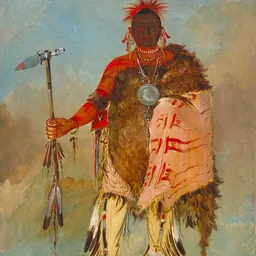

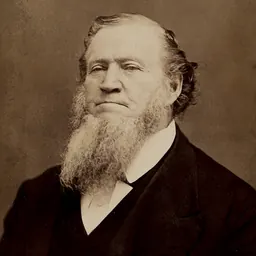


Related people
Same field, nearest in time

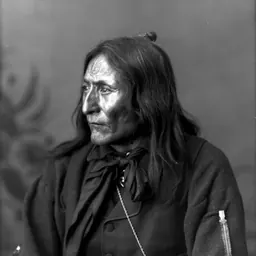
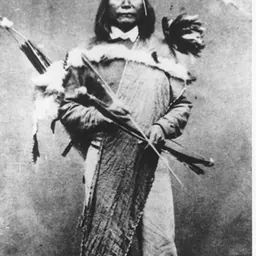


Contemporaries
People whose lives overlapped Logan Fontenelle's



Frequently asked questions
Who was Logan Fontenelle?
Omaha chief (1825-1855)
When was Logan Fontenelle born?
Logan Fontenelle was born on 16 July 1825 in Nebraska, Fort Atkinson.
When did Logan Fontenelle die?
Logan Fontenelle died on 16 July 1855 in Boone County.
What was Logan Fontenelle's occupation?
Logan Fontenelle was a traditional leader or chief.
Sources & further reading
Cite this page
APA: Biography.guide. (2026). Logan Fontenelle. https://biography.guide/logan-fontenelle/
MLA: "Logan Fontenelle." Biography.guide, https://biography.guide/logan-fontenelle/.
Chicago: "Logan Fontenelle." Biography.guide. https://biography.guide/logan-fontenelle/.
Data last updated: 2026-09-20 · Spot an error? Report a correction.
Page generated 2026-09-27 05:32 UTC