
About Lloyd Richards
Lived 1919 – 2006 (aged 87). Lloyd Richards was an American actor, theatre director and film director.
Lloyd George Richards (June 29, 1919 – June 29, 2006) was a Canadian-American theatre director, and actor. While head of the National Playwrights Conference, he helped cultivate many of the most famous theater writers of the 20th century. He was also the dean of the Yale School of Drama from 1979 to 1991 (later Professor Emeritus), and was the first Black director on Broadway.
Among Richards' accomplishments are his staging the original production of Lorraine Hansberry's A Raisin in the Sun, debuting on Broadway to standing ovations, and in 1984 he introduced August Wilson to Broadway in Ma Rainey's Black Bottom.
Early life and education Richards was born in Toronto, Ontario on June 29, 1919. His name came from the then-current UK Prime Minister David Lloyd George, as his parents—Jamaicans who moved to Canada—were British subjects at the time.
His family moved to Detroit, Michigan in 1923 after seeing an advertisement for employment at Ford's auto-manufacturing plant. His father Albert Richards, a Jamaican carpenter turned auto-industry worker, died of diphtheria when Richards was nine years old. due to what he said was the "inadequate treatment of a doctor." To help make ends meet in the Great Depression, Richards and his brother Allan shined shoes and worked in a barbershop. Richards did not participate in plays in high school—which he explained in an interview by citing the largely white student body—but did some theater with the local Nacirema Club.
Richards originally enrolled to study at Detroit's Wayne University on the pre-law track, though he transitioned to studying acting and radio production. At Wayne, he worked as a janitor and part-time elevator operator to help fund his education.
After graduating in 1944, while working at a local radio station and performing with the Actors Company—a local community theater troupe, mainly of Wayne alumni—and the Paul Robeson Art Guild. Though he was the only black member of the Actors Company in an era of de jure racial segregation, he did not view himself as a political artist at the time, recalling in 2001 that: "It was not theater about making a statement, other than the statement that was in the play, you know. And we were not a theater that was about that. We were doing great plays and that we all loved. And we just did them, you know, and we didn't raise the question ourselves. Nobody seemed to raise it, at least in my earshot, and I was an important member of the company."
Move to New York In 1948, Richards moved from Detroit to New York City. With Lipton's help, Richards auditioned for a couple Broadway productions and for the Actors Studio, but received rejections.
Acting tenure Richards acted in low-paying off-Broadway productions while working odd jobs and receiving benefits provisioned by the GI Bill. Richards began working at the Paramount Pictures executive dining room as a waiter. He continued working there until A Raisin in the Sun, leading studio head Adolph Zukor to exclaim that "our waiter walked out of here and directed a Broadway play!"
Richards debuted as an actor on Broadway in 1950 in the one-act play Freight, which ran for 5 performances.
In 1957, Richards made his second appearance on Broadway in Molly Kazan's The Egghead. Richards played a duplicitous communist student who Karl Malden's liberal professor vehemently defends from charges of communism. Brooks Atkinson reviewed his performance favorably, writing that "Mr. Richards plays the villain with enough skill, intelligence, and bravado to win the admiration of the audience in the end." A then-unknown James Earl Jones debuted on Broadway as Richards's understudy.
Paul Mann Actors Workshop While performing in one off-Broadway play under director Paul Mann, Mann invited him to assist him with his acting school. Through the workshop, he met his wife, the dancer Barbara Davenport, and Sidney Poitier. Richards became good friends with Poitier at the time as too relatively poor actors trying to break through on Broadway. One anecdote Richards shared told of how the two men shared a hot dog at one point, as neither wanted to spare the money on their own. At one point in this fallow period, Poitier promised him an opportunity as director, should Poitier earn a starring role. Richards also taught Moscow Art Theatre acting technique alongside Morris Carnovsky.
According to writer Samuel G. Freedman, the technique Mann and Richards used took a middle ground between the sociological techniques of Stella Adler and the psychiatric techniques of Lee Strasberg. After the Chicago tryout in February 1959, Chicago Tribune Claudia "Acidy" Cassidy gave the play a mostly positive review and wrote that Richards's direction was "so right that [the play's] false spots are probably on their way out this morning."
The play debuted on March 11, 1959 at the Ethel Barrymore Theatre and ran for 530 performances. As it was the first Broadway show directed by a black person and written by a black woman, featuring a story about contemporary black characters, there was some doubt that it would be accepted by largely white, largely upper class audiences. On its opening night, the play receiving standing ovation from audiences, with Poitier calling from the stage for Hansberry and Richards to be given their own ovations.
The Broadway production received positive reviews. Brooks Atkinson wrote that Richards's direction brought about "explosions in the performance. But the explosions never give an impression of being arbitrary." Kenneth Tynan praised the play, concluding that Richards specifically had "done a sensible, sensitive, and impeccable job."
Richards also directed the European premiere in July 1959, which originated at the Bristol Hippodrome before transferring to the Adelphi Theatre on London's West End. British critics gave the production mixed reviews.
Richards did not direct Hansberry's future plays, though they maintained a friendly relationship until her death in 1963. In 1959, James Baldwin corresponded with Hansberry "begging" for her to send along his manuscript for The Amen Corner to Richards for his feedback.
Other directing work In the years after A Raisin in the Sun, Richards directed multiple other productions on Broadway:
The Long Dream (1960, Ketti Frings) The Moon Besieged (1962, Seyril Schochen) I Had a Ball (1964, Jack Lawrence & Stan Freeman) The Yearling musical (1965, Michael Leonard & Herbert Martin) Paul Robeson (1978, Philip Hayes Dean)
Richards was attached to Peter Feibleman's Tiger, Tiger Burning Bright, which premiered on Broadway in 1962 under Joshua Logan's direction. He also directed a version of Arthur Miller's The Crucible—based on its original, non-Broadway script—for Boston University in May 1962. Defining the period before he joined the Eugene O'Neill Theater Center, critic Michael Feingold noted that what Richards "did after the huge success of Raisin was immediately not do another black family play."
Richards also directed a production of James Baldwin's The Amen Corner starring Claudia McNeill to tour in Europe, which ran on Broadway in a separate (but concurrent) production directed by Frank Silvera. The play—produced by Ellis Haizlip and Rudolph Stoiber—premiered at the Vienna Festival in June 1965, with subsequent stagings at the Théâtre des Nations, West End's Savile Theatre, and at venues in Amsterdam, Munich, Jerusalem, and other cities. Baldwin preferred Richards and Haizlip's production and unsuccessfully tried to intercede to stop Silvera's production from advancing to Broadway in its favor. Before they developed the role, the O'Neill featured polarizing talkbacks with press critics and audience that meant playwrights "were often at the mercy of some terribly inept critics in very influential positions," decreasing their "ability to experiment freely." When searching for an alternative, White suggested Bertolt Brecht's work as a dramaturg as a guide. Richards researched and eventually implemented dramaturgs for all productions at the O'Neill—one for every four plays—including prominent critics John Lahr, Edith Oliver, and Michael Feingold. He workshopped the play he wrote about his prison experience, Madmen and Specialists, with Richards, premiering it in August.
Richards's major roles in the annual National Playwrights' Conference including selecting plays from playwright submissions, running the feedback sessions for new plays, and adjudicating disputes. As White described Richards's impact, "what is known as the O'Neill Process should rightfully be known as the Richards Process."
As head of the National Playwrights Conference at the Eugene O'Neill Theater Center, he helped develop the careers of August Wilson, Wendy Wasserstein, Christopher Durang, Lee Blessing and David Henry Hwang.
Yale School of Drama and Yale Repertory Theatre The Yale Repertory Theatre, where Richards served as artistic director from 1979 to 1991. Yale President A. Bartlett Giamatti appointed Richards the dean of Yale School of Drama (which made him artistic director of Yale Repertory Theatre) in 1979 to replace Robert Brustein. Giamatti originally offered the role to White—who was a childhood friend—but he declined it and strongly recommended Richards. Both White and Richards required that he be allowed to continue working as O'Neill artistic director during the summertime National Playwrights Conference.
Richards served as YSD dean and Yale Rep artistic director in New Haven, Connecticut from 1979 to 1991; he became Professor Emeritus at Yale School of Drama after his retirement. Though he continued the Yale Rep's tradition of prestige, Yale Rep chronicler James Magruder described Richards's personality as a break from the pugnacious style of Brustein. While the lanky Brustein enjoyed arguing and was criticized as imperious, "Richards, by contrast, was diminutive, rotund, soft-spoken, and circumspect with his language." For The New York Times, Mel Gussow praised Richards's direction of Wiest and Jones, in what he described as an "uncharacteristic, but formfitting role."
In his second year, Richards instituted the Yale Rep's Winterfest, which would showcase a slate of four new plays each January. The first Winterfest featured three works from O'Neill alumni—OyamO's The Resurrection of Lady Lester, Corinne Jacker's Domestic Issues and Sybille Pearson's Sally and Marsha—as well as Rococo by Harry Kondoleon.
The Winterfest continued throughout Richards's tenure, but his successor Stan Wojewodski Jr. ended the program in 1992. It also provided extensive opportunities for YSD students focused on lighting, costumes, and other crafts who regularly featured in Winterfest productions, unusual for other works at the semi-professional Yale Rep.
Hedda Gabler Henrik Ibsen Starring Dianne Wiest and James Earl Jones
Johnny Bull Kathleen Betsko Starring Suzanne Shepherd A Doll's House Henrik Ibsen Starring Dianne Wiest and Richard Jenkins
A Touch of the Poet Eugene O'Neill Starring George Grizzard Major Barbara George Bernard Shaw 1984 Ma Rainey's Black Bottom August Wilson Starring Theresa Merritt and Charles Dutton 1985 Fences August Wilson Starring James Earl Jones, Courtney B. Vance, and Mary Alice 1986 Joe Turner's Come and Gone August Wilson Starring Charles Dutton, featuring Angela Bassett 1987 The Piano Lesson August Wilson Starring Samuel L. Jackson and Starletta DuPois 1989 Cobb Lee Blessing Starring Chris Cooper and Delroy Lindo 1990 Two Trains Running August Wilson Starring Samuel L. Jackson and Laurence Fishburne 1991 A Moon for the Misbegotten Eugene O'Neill Starring Frances McDormand and David Strathairn Athol Fugard Richards first spoke to the playwright Athol Fugard in 1979 at the request of James Earl Jones, who wanted Richards to invite him to Yale Rep to stage A Lesson from Aloes. Over the course of Richards's Yale Rep tenure, Fugard premiered "Master Harold"...and the Boys—starring Danny Glover, Željko Ivanek, and Zakes Mokae—The Road to Mecca—starring Carmen Matthews, Tom Aldredge, and Marianne Owen—and A Place with the Pigs—starring himself and Suzanne Shepherd. The theater also hosted restaged versions of A Lesson from Aloes, Blood Knot, and Boesman and Lisa.
Fugard described Yale Rep as a "home away from home," defined in part by the " very, very trusting, supportive, understanding relationship with Lloyd." As Fugard often directed his own plays, Richards was his main consistent collaborator at the theater.
Due to Fugard's productivity at Yale Rep, Samuel G. Freedman wrote that the two men had "sealed a creative and personal partnership almost unparalleled in the American theater."
Death and legacy
Richards died of heart failure on his eighty-seventh birthday in New York City. The Broadway League dimmed the lights at all Broadway theaters for one minute at 8 p.m. on June 30, 2006 in Richards's honor. Charles Dutton commented to The New York Times that "Lloyd had only two sons, but he had a lot of children."
Awards and nominations Awards 1987: Drama Desk Award Outstanding New Play - Fences 1987: Tony Award Best Direction of a Play - Fences 1987: Tony Award Best Play - Fences 1987: Golden Plate Award of the American Academy of Achievement 1990: Drama Desk Award Outstanding New Play - The Piano Lesson 1991: Regional Theatre Tony Award - Yale Repertory Theatre 1993: National Medal of Arts 2002: The Dorothy and Lillian Gish Prize
Nominations 1960: Tony Award Best Direction of a Play - A Raisin in the Sun 1981: Tony Award Best Play - A Lesson From Aloes 1987: Drama Desk Award Outstanding Director of a Play - Fences 1988: Drama Desk Award Outstanding Director of a Play - Joe Turner's Come and Gone 1988: Drama Desk Award Outstanding New Play - Joe Turner's Come and Gone 1988: Tony Award Best Direction of a Play - Joe Turner's Come and Gone 1988: Tony Award Best Play - A Walk in the Woods 1988: Tony Award Best Play - Joe Turner's Come and Gone 1989: Drama Desk Award Outstanding Revival - Long Day's Journey Into Night 1989: Tony Award Best Revival - Ah, Wilderness! 1990: Drama Desk Award Outstanding Director of a Play - The Piano Lesson 1990: Tony Award Best Direction of a Play - The Piano Lesson 1990: Tony Award Best Play - The Piano Lesson 1996: Drama Desk Award Outstanding Director of a Play - Seven Guitars 1996: Tony Award Best Direction of a Play - Seven Guitars
Don’t just read it —
keep it.
Full-length biographies made to live with: read them, listen on the way to work, watch them tonight.
- E-book
- Audio
- Video
Instant download · yours to keep · every purchase keeps this site free
Important facts
People in Lloyd Richards's life
Named in this biography and alive at the same time


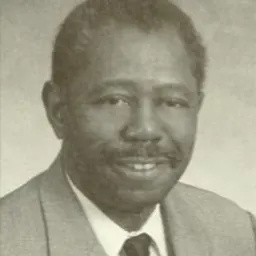
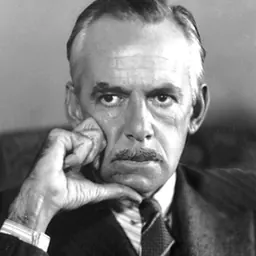

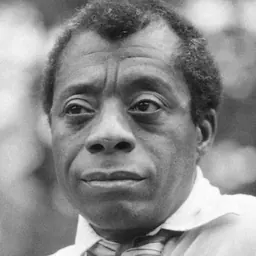
Related people
Same field, nearest in time


Contemporaries
People whose lives overlapped Lloyd Richards's


Frequently asked questions
Who was Lloyd Richards?
theatrical director (1919–2006)
When was Lloyd Richards born?
Lloyd Richards was born on 29 June 1919 in Toronto.
When did Lloyd Richards die?
Lloyd Richards died on 29 June 2006 in New York City.
What was Lloyd Richards's occupation?
Lloyd Richards was an actor, theatre director and film director.
What nationality was Lloyd Richards?
Lloyd Richards was American.
Sources & further reading
Cite this page
APA: Biography.guide. (2026). Lloyd Richards. https://biography.guide/lloyd-richards/
MLA: "Lloyd Richards." Biography.guide, https://biography.guide/lloyd-richards/.
Chicago: "Lloyd Richards." Biography.guide. https://biography.guide/lloyd-richards/.
Data last updated: 2026-09-22 · Spot an error? Report a correction.
Page generated 2026-09-27 05:12 UTC