
About Lloyd Eaton
Lived 1918 – 2007 (aged 88). Lloyd Eaton was an American american football player.
Lloyd W. Eaton (March 23, 1918 – March 14, 2007) was an American football player, coach, and executive. He served as the head coach at Alma College (1949–1955), Northern Michigan University, and the University of Wyoming (1962–1970), compiling a career college football record of 104–53–4. Eaton then worked as the director of player personnel for the Green Bay Packers of the National Football League (NFL). Despite winning five conference championships with two teams, he is perhaps most known for his decision to kick 14 black players off of the Wyoming football team for discussing a protest against discrimination in 1969 that is referred to as the "Black 14" incident.
Early years Growing up in Belle Fourche, South Dakota, Eaton was an outstanding football, track, and boxing athlete at Belle Fourche High School. He graduated from Black Hills State Teachers College where he played end and became captain of the team in his junior year.
Coaching career Eaton remained at Black Hills after graduation, becoming the line coach there for one year. He then coached football at Dupree High School for several years leading up to his service in World War II.
Following the war, he returned to coaching at Bennett County High School in Martin, South Dakota, and then earned a master's degree at the University of Michigan. There he coached the 150-pound football team.
He began doctoral studies at Indiana University Bloomington, then moved on to coach football at Alma College in Michigan. His teams won the 1950 and 1951 Michigan Intercollegiate Athletic Association championship titles, and he compiled a record of 40–20–2. His influence there was felt by player Denny Stolz, who later became a successful coach.
Eaton was a detail-oriented disciplinarian who made a name for himself by introducing new techniques that helped smaller defensive linemen. "[Smaller defensive linemen] became very popular as a result," recalled Paul Roach, Eaton's assistant at Wyoming. "I think this became somewhat of a springboard for him to be elevated as a head football coach, and he certainly had an outstanding career as a head football coach".
Eaton left Alma in 1956 and coached at Northern Michigan University for one year.
Wyoming From 1957 to 1961, Eaton served as defensive line coach at the University of Wyoming, and in 1962, he succeeded Bob Devaney as head coach there. In that role, he became one of the university's most successful coaches, compiling a record of 57–33–2. His greatest success came in the 1966, 1967, and 1968 seasons. In those three years, the team posted back-to-back 10–1 seasons, including a 14-game winning streak from November 5, 1966 to January 1, 1968, then followed this by going 7-3 in the 1968 regular season. His teams won the 1966 Sun Bowl and played in the 1968 Sugar Bowl.
"Black 14" controversy
In 1969, during the "Black 14" incident, Eaton dismissed 14 black Wyoming players from the team for planning to wear black armbands during a game against the BYU Cougars. At a victory against BYU the previous year, players from the Cougars had subjected them to racial epithets. According to Joe Williams, a team co-captain before he was suspended from the team, "We wanted to see if we could wear black armbands in the game, or black socks, or black X's on our helmets. And if he had said no we had already agreed that we would be willing to protest with nothing but our black skins."
The "Black 14" incident spurred the court case Williams v. Eaton, with the issue of free speech against the principle of separation of church and state. Litigation was lengthy for this case and ended on October 31, 1972.
NFL executive and scout In 1972, Eaton became the director of player personnel for the Green Bay Packers of the National Football League (NFL). He was demoted to a scouting position four years later. He later served as the western regional director for the BLESTO player rating service of the NFL, before retiring in the mid-1980s.
Honors Eaton was elected to the Alma Athletic Hall of Fame in 1973 and the Wyoming Coaches Association Hall of Fame in 1984.
Personal life and death Eaton was once married and divorced, living purposefully without a phone. He died at the age of 88, on March 14, 2007 in Nampa, Idaho.
Head coaching record College
Don’t just read it —
keep it.
Full-length biographies made to live with: read them, listen on the way to work, watch them tonight.
- E-book
- Audio
- Video
Instant download · yours to keep · every purchase keeps this site free
Important facts
People in Lloyd Eaton's life
Named in this biography and alive at the same time


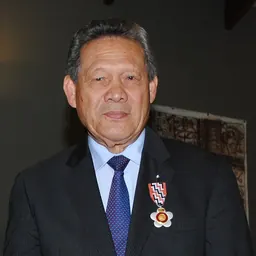

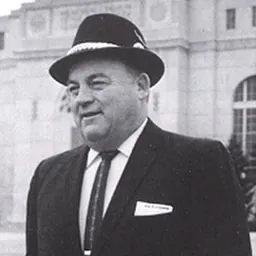

Related people
Same field, nearest in time

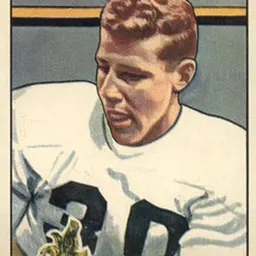



Contemporaries
People whose lives overlapped Lloyd Eaton's

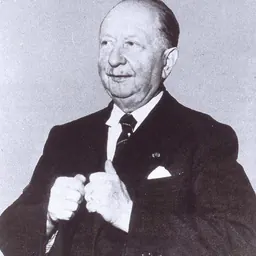

Frequently asked questions
Who was Lloyd Eaton?
American football player, coach, and executive (1918-2007)
When was Lloyd Eaton born?
Lloyd Eaton was born on 23 March 1918 in Nampa.
When did Lloyd Eaton die?
Lloyd Eaton died on 14 March 2007 in Nampa.
What was Lloyd Eaton's occupation?
Lloyd Eaton was an american football player.
What nationality was Lloyd Eaton?
Lloyd Eaton was American.
Sources & further reading
Cite this page
APA: Biography.guide. (2026). Lloyd Eaton. https://biography.guide/lloyd-eaton/
MLA: "Lloyd Eaton." Biography.guide, https://biography.guide/lloyd-eaton/.
Chicago: "Lloyd Eaton." Biography.guide. https://biography.guide/lloyd-eaton/.
Data last updated: 2026-09-20 · Spot an error? Report a correction.
Page generated 2026-09-27 05:22 UTC