
About Liu Yuxi
Lived 772 – 842 (aged 69–70). Liu Yuxi was a Chinese poet, calligrapher, writer, politician, philosopher and essayist.
Liu Yuxi (Wade-Giles: Liu Yü-hsi; ; 772–842) was a Chinese essayist, philosopher, and poet active during the Tang dynasty.
Biography
Family background and education His ancestors were Xiongnu nomadic people. The putative ‘seventh generation’ family head, Liu Liang, was an official of the Northern Wei (386–534), who followed the Emperor Xiaowen (471–499) when he established the capital at Luoyang in 494. Following the government sinification policy, he became Han and registered his surname as Liu. From then on the family was based in Luoyang.
Liu Yuxi's father, Li Xu, was forced to leave Luoyang to avoid the An Lushan rebellion (755–763) and went to Jiaxing (in the north of present-day Zhejiang Province). Liu Yuxi was born and grew up in the south. In his youth he studied with two renowned poets in Kuaiji (now Shaoxing), the Chan (Zen) monks Lingche (靈澈, 746–816) and Jiaoran (皎然, 730–799), and his later works often reflected this Buddhist sensibility.
Early career
NamesChinese:刘禹锡Pinyin:Liú Yǔxī Wade-Giles:Liu Yü-hsi Japanese: りゅう うしゃく Ryū UshakuZì (字):Mèng dé (梦得; Meng-te in Wade-Giles)Hào (號): Shī háo (詩豪; Shih-hao in Wade-Giles)
In 793, Liu passed the jinshi imperial examination. One of the other successful candidates that year was another great poet, Liu Zongyuan, whose career was to be closely connected to that of Liu Yuxi. That same year, Liu Yuxi went on to pass the higher examination (boxue hongceke). In 795, the Ministry of Appointments sent him to be a tutor to the Heir Apparent, a sign that he was destined from a prominent career. However, in 796, his father suddenly died, and he had to return to Yangzhou.
In 800, Liu became a secretary to the important scholar-official Du You who had been made the military governor of Xusihao Circuit, in charge of suppressing an insurrection in Xuzhou, enabling Liu to see army life at first hand. Later he followed Du You to Yangzhou, where he enjoyed the company of the poet Li Yi.
In 802. Liu was transferred to be a registrar (zhubu) in Weinan, Shaanxi. The following year, on the recommendation of an official in the Imperial Censorate called Li Wen, Liu was transferred to the post of investigating censor. At that time, the essayist and poet Han Yu was already also working as an investigating censor, with Liu Zongyuan shortly to join him. These three literary giants of the middle Tang period became friends and were to remain in close contact for the rest of their lives. ) that helped earn him another immediate banishment. Liu was to be sent to be the prefect of Bo (播州, in modern Zunyi, Guizhou), but as this would have been too hard a living place for Liu's mother, Liu Zongyuan offered to go there instead. Finally Pei Du, the deputy chief imperial censor (御史中丞, Yushi Zhongcheng), persuaded the emperor that Liu could be the local governor in Lianzhou in Guangdong, while Liu Zongyuan was sent to Liuzhou in Guangxi. In 821, Liu was again transferred to Kuizhou (on the Yangtze River), then transferred to another post at Hezhou (Guangxi).
In 826, Liu was again recalled, this time to Luoyang, ending the long period of his banishment from the court. noting that the peach trees had all disappeared, since his previous visit 14 years earlier.
English translations Two of Liu's poems were included in one of the first collections of English translations of Chinese literature: Herbert Giles's 1898 Chinese Poetry in English Verse:
秋風引 Summer Dying
何处秋风至? Whence comes the autumn's whistling blast, 萧萧送雁群。 With flocks of wild geese hurrying past? . . . . 朝来入庭樹, Alas, when wintry breezes burst, 孤客最先闻。 The lonely traveller hears them first!
和乐天春词 The Odalisque
新妆宜面下朱楼, A gaily dressed damsel steps forth from her bower, 深锁春光一院愁。 Bewailing the fate that forbids her to roam; 行到中庭数花朵, In the courtyard she counts up the buds on each flower, 蜻蜓飞上玉搔头。 While a dragon-fly flutters and sits on her comb.
A more recent translator, Red Pine (Bill Porter) has translated Ode to the Autumn Wind (秋风引 Qiūfēng yǐn, the same poem as Giles's Summer Dying above), The Peach Blossoms of Hsuantu Temple (玄都觀桃花 Xuándū Guàn Táohuā), and Visiting Hsuantu Temple Again (再遊玄都觀 Zài Yóu Xuándū Guān).
Loushi Ming One of his most famous works is 'Loushi Ming' 陋室銘, "The Scholar's Humble Dwelling", a prose-poem describing living in a simple dwelling, following a life that is refined in culture and learning:
山不在高, Who heeds the hill's bare height until 有仙則名; Some legend grows around the hill? 水不在深, Who cares how deep the stream before 有龍則靈。 Its fame is writ in country lore? 斯是陋室, And so this humble hut of mine 惟吾德馨。 May shelter virtues half divine. 苔痕上階綠, The moss may climb its ruined stair, 草色入簾青。 And grassy stains the curtain wear, 談笑有鴻儒, But scholars at their ease within, 往來無白丁。 For all but Ignorance enters in, 可以調素琴, With simple lute the time beguile, 閱金經。 Or "Golden Classic's" page a while. 無絲竹之亂耳, No discords here their ears assail, 無案牘之勞形。 Nor cares of business to bewail. 南陽諸葛廬, This is the life the Sages led. 西蜀子雲亭。 孔子云:「何陋之有?」 "How were they poor?" Confucius said.
(Translated by James Black.)
Philosophy Li Yuxi was involved in a philosophical debate with his fellow literati, the poets Han Yu and Liu Zongyuan, concerning the duality of heaven (the sky, and by extension the natural world or God) and earth (the world of man). Han Yu, as a Confucian, regarded Heaven as paramount, whereas Liu Zongyuan regarded them as separate spheres. Lu Yuxi's view, expressed in an essay called the Tianlun Shu (Tiānlùn shū 天論書), was that heaven and earth (i.e. nature and man) interacted to some degree. Heaven sometimes predominated over earth, and earth sometimes predominated over heaven.
Don’t just read it —
keep it.
Full-length biographies made to live with: read them, listen on the way to work, watch them tonight.
- E-book
- Audio
- Video
Instant download · yours to keep · every purchase keeps this site free
Important facts
People in Liu Yuxi's life
Named in this biography and alive at the same time

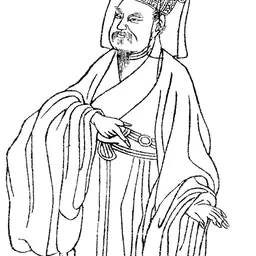

Related people
Same field, nearest in time
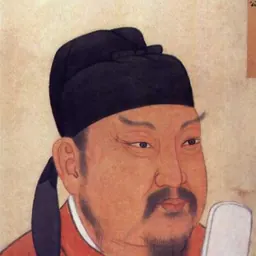
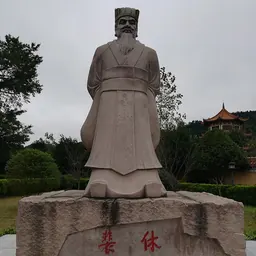
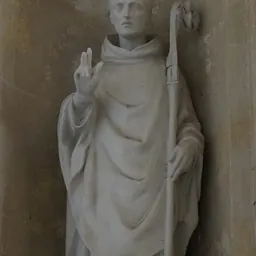
Contemporaries
People whose lives overlapped Liu Yuxi's




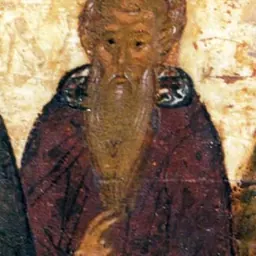
Frequently asked questions
Who was Liu Yuxi?
Chinese writer and philosopher (772-842)
When was Liu Yuxi born?
Liu Yuxi was born in 772 in Jiaxing.
When did Liu Yuxi die?
Liu Yuxi died in 842 in Luoyang.
What was Liu Yuxi's occupation?
Liu Yuxi was a poet, calligrapher, writer, politician, philosopher and essayist.
What nationality was Liu Yuxi?
Liu Yuxi was Chinese.
Sources & further reading
Cite this page
APA: Biography.guide. (2026). Liu Yuxi. https://biography.guide/liu-yuxi/
MLA: "Liu Yuxi." Biography.guide, https://biography.guide/liu-yuxi/.
Chicago: "Liu Yuxi." Biography.guide. https://biography.guide/liu-yuxi/.
Data last updated: 2026-09-26 · Spot an error? Report a correction.
Page generated 2026-09-27 05:16 UTC