
About Liu Hongru
Lived 1930 – 2025 (aged 94–95). Liu Hongru was a Chinese economist.
Liu Hongru (; 1930 – 14 March 2025) was a Chinese government official who played a key role in financial reform in the 1980s and 1990s. From 1979 to 1995, he was successively Vice President of the Agricultural Bank of China, Vice President of the People's Bank of China, Vice Director of the State Commission for Economic Restructuring, and Chairman of the China Securities Regulatory Commission. He has been referred to as "one of the architects of the early financial sector" of China, namely the financial system that was shaped by the early phase of the reform and opening up from the late 1970s to the 1990s. He was also instrumental in establishing the PBC School of Finance, the graduate school of the People's Bank of China at Tsinghua University.
Life and career Liu Hongru was born in 1930. He joined the Chinese Communist Party in 1948.
Liu studied at Moscow State University in 1955–1957, then obtained a doctorate degree in Money and Banking from Moscow Finance College in 1959.
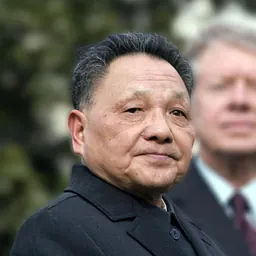
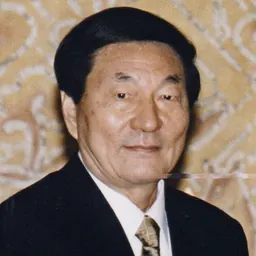
By late 1977, Liu was working in the General Office of the People's Bank of China, which at the time was China's sole financial institution under the Communist monobank system. On 4 October 1979, Deng Xiaoping initiated financial sector reform and coined the slogan "banks must be truly turned into banks" during a nonpublic meeting which became rapidly known among policy elites. The slogan referred to the fact that what were called banks under China's Communist system until then did not properly play the role of financial intermediation associated elsewhere with banking. Liu leveraged that guidance from Deng to work on banking sector modernization. China's Rural Reform was resulting in the sudden development of household deposits, and Liu encouraged the intermediation of these deposits through the banking sector to the (state-controlled) corporate sector as opposed to allocation of funds to enterprises directly by the government under the five-year plans. He championed reform to allow banks to lend to state-owned businesses for investment, and not only for working capital financing as had been the case previously. As Liu put it in a later interview, "Breaking through the scope of working capital loans was a revolutionary change at the time and triggered a great discussion in society about the role of banks." On that occasion, Deng gave Phelan a stock certificate of a Chinese listed company selected by Liu (Flying Happiness Acoustic Company), making him the first foreigner to formally own corporate equity in China. In 1990, in the reactionary period following the Tiananmen Square events, Liu was asked by the State Council to investigate alleged irregularities on China's fledgling stock exchanges, and concluded that the situation did not justify outright termination of trading activity as some officials had advocated. On a plane ride in November 1990, he had an extended conversation with Party leader Jiang Zemin and convinced him to reject a general punitive approach, opening the way to the formal recognition of the Shanghai Stock Exchange and Shenzhen Stock Exchange later in 1990 while stock exchange experiments in other cities were put on hold. In 1992, Deng Xiaoping's southern tour unlocked further explicit recognition of securities markets under the new slogan of socialist market economy; Liu was appointed by Vice Premier Zhu Rongji as the first-ever chairman of the China Securities Regulatory Commission upon its creation in October 1992, He later served in numerous other capacities: Deputy Director of the Economics Committee of the Chinese People's Political Consultative Conference, Vice President of the China Finance and Banking Society, Vice President of the China National Debt Association, President of the Shanghai Institute of Financial and Legal Studies, President of the Chinese Financial Education Development Foundation and Capital Market Research Institute, Professor at Tsinghua University, Professor at the City University of Hong Kong, and non-executive director in a number of listed companies in Hong Kong. The latter included PetroChina from December 1999 to May 2014, Titan Petrochemicals Group Limited from October 2002 to February 2006, Oriental Metals (Holdings) Company Limited, Concepta Investments Limited, and CITIC 21CN from September 2004 to August 2008.
Liu died on 14 March 2025, at the age of 94.
Don’t just read it —
keep it.
Full-length biographies made to live with: read them, listen on the way to work, watch them tonight.
- E-book
- Audio
- Video
Instant download · yours to keep · every purchase keeps this site free
Important facts
People in Liu Hongru's life
Named in this biography and alive at the same time

Related people
Same field, nearest in time



Contemporaries
People whose lives overlapped Liu Hongru's


Frequently asked questions
Who was Liu Hongru?
Chinese financial reformer (1930–2025)
When was Liu Hongru born?
Liu Hongru was born in 1930.
When did Liu Hongru die?
Liu Hongru died on 14 March 2025.
What was Liu Hongru's occupation?
Liu Hongru was an economist.
What nationality was Liu Hongru?
Liu Hongru was Chinese.
Sources & further reading
Cite this page
APA: Biography.guide. (2026). Liu Hongru. https://biography.guide/liu-hongru/
MLA: "Liu Hongru." Biography.guide, https://biography.guide/liu-hongru/.
Chicago: "Liu Hongru." Biography.guide. https://biography.guide/liu-hongru/.
Data last updated: 2026-09-20 · Spot an error? Report a correction.
Page generated 2026-09-27 05:06 UTC