
About Littleton Groom
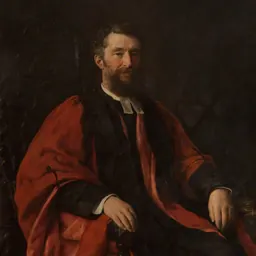
Lived 1867 – 1936 (aged 69). Littleton Groom was an Australian politician, diplomat and judge.
Sir Littleton Ernest Groom KCMG KC (22 April 18676 November 1936) was an Australian politician. He held ministerial office under four prime ministers between 1905 and 1925, and subsequently served as Speaker of the House of Representatives from 1926 to 1929.
Groom was the son of William Henry Groom, who had arrived in Australia as a convict but became a prominent public figure in the Colony of Queensland. He was a lawyer by profession, entering federal parliament at the 1901 Darling Downs by-election following his father's death. Groom was first appointed to cabinet by Alfred Deakin in 1905. Over the following two decades he served as Minister for Home Affairs (1905–1906), Attorney-General (1906–1908), External Affairs (1909–1910), Trade and Customs (1913–1914), Vice-President of the Executive Council (1917–1918), Works and Railways (1918–1921), and Attorney-General (1921–1925).
A political liberal and anti-socialist, Groom was initially affiliated with Deakin's Protectionists, who were later superseded by the Liberals (1909) and Nationalists (1917). He came into conflict with Prime Minister Stanley Bruce during the 1920s, and as speaker in 1929 refused to use his casting vote to save the government on a confidence motion. He was expelled from the Nationalists and lost his seat at the resulting election, but was re-elected in 1931 as an independent. He joined the United Australia Party (UAP) in 1933 and continued as a backbencher until his death in 1936.
Early life Groom was born on 22 April 1867 in Toowoomba, Queensland. He was the third son of Grace (née Littleton) and William Henry Groom. His English-born father had been transported to Australia as a convict in 1846, but became a successful businessman and public official, serving as mayor of Toowoomba and in the Queensland Legislative Assembly and Australian House of Representatives.
Groom attended Toowoomba North State School and Toowoomba Grammar School, where he was school dux and captain of the cricket and football teams. He went on to attend Ormond College at the University of Melbourne, winning scholarships and graduating Bachelor of Arts in 1889 and Bachelor of Laws in 1891. Groom subsequently returned to Queensland and practised as a barrister in Brisbane. He was "a leading figure in the Queensland University Extension Movement" and was also involved with the Brisbane Literary Circle and the Brisbane School of Arts. In 1900 he was appointed a deputy judge on the District Court of Queensland.
Government minister
In July 1905, Deakin replaced Reid as prime minister and appointed Groom as Minister for Home Affairs in the new ministry. His department had a number of responsibilities, including oversight of the Commonwealth Public Service, public works, federal elections, and the siting of the national capital. Although relatively young and inexperienced, he was one of the few Queenslanders considered suitable by Deakin and was also ideologically close to the ALP upon whose support the government depended.
One of Groom's first acts was to introduce the Census and Statistics Act 1905, establishing the Commonwealth Bureau of Census and Statistics as a complement to existing state bureaus of statistics. He correctly anticipated that the states would eventually hand over their offices to federal control, but his attempt to appoint Timothy Coghlan as the inaugural Commonwealth Statistician brought him into conflict with Joseph Carruthers, the premier of New South Wales. Groom also introduced the Meteorology Act 1906 to create the Bureau of Meteorology. Unlike the bureau of statistics, he had secured agreement from the states to cede control before introducing the legislation. His general philosophy was that "wherever the Commonwealth could satisfactorily perform a duty handled by the states it should be allowed to do so".
Groom's Lands Acquisition Act 1906 allowed for compulsory acquisition by the federal government and the granting of mining leases on federal land. In the same year he achieved agreement with the states over the valuation of properties transferred to the Commonwealth under section 69 of the constitution. Groom further clashed with Joseph Carruthers over the location of the capital, which the Watson government's Seat of Government Act 1904 had fixed as Dalgety, New South Wales. Rather than acquiescing, Carruthers instead offered three alternative sites closer to the state capital of Sydney. In December 1905, Groom introduced another bill which would have defined the limits of the capital district. During the second reading speech he accused the New South Wales state government of parochialism and obstructionism, which was poorly received. The bill was allowed to lapse and the issue was not resolved until the Seat of Government Act 1908 established Canberra as the new capital.
In October 1906, Groom became Attorney General until the defeat of the Deakin government in November 1908. Groom passed legislation to defend the Harvester Judgment and successfully introduced legislation providing Commonwealth invalid and old age pensions.
Groom returned to his legal practice in Brisbane for two years. In 1931 election, he sought to take back his old seat. Running again as an independent, he handily defeated his successor, Arthur Morgan. In a reversal of two years earlier, he won an outright majority on the first count. After two years as an independent, he joined the United Australia Party, successor to the Nationalists, in August 1933. From 1932 to 1936 he was chairman of the Bankruptcy Legislation Committee and in earlier years he also acted on various royal commissions and select committees. He died in Canberra of cerebro-vascular disease. Groom was survived by his wife and one of their two daughters.
Other activities
Groom was joint author with Sir John Quick of the Judicial Power of the Commonwealth in 1904 and he was part author of various Queensland legal publications.
A member of the General Synod of the Anglican Church, Groom was knighted in January 1924 for his services to politics. In 1984, his old seat of Darling Downs was renamed the Division of Groom in his honour. He is commemorated by a number of features in Toowoomba, including Groom Park.
Groom's elder brother, Henry Littleton Groom, was a long serving member of the Queensland Legislative Council.
Legacy After his death, Groom bequeathed many of the books from his personal library to the Canberra University College Library (which would become the Australian National University's Chifley Library).
Don’t just read it —
keep it.
Full-length biographies made to live with: read them, listen on the way to work, watch them tonight.
- E-book
- Audio
- Video
Instant download · yours to keep · every purchase keeps this site free
Important facts
People in Littleton Groom's life
Named in this biography and alive at the same time




Related people
Same field, nearest in time




Contemporaries
People whose lives overlapped Littleton Groom's



Frequently asked questions
Who was Littleton Groom?
Australian politician (1867-1936)
When was Littleton Groom born?
Littleton Groom was born on 22 April 1867 in Toowoomba.
When did Littleton Groom die?
Littleton Groom died on 6 November 1936 in Canberra.
What was Littleton Groom's occupation?
Littleton Groom was a politician, diplomat and judge.
What nationality was Littleton Groom?
Littleton Groom was Australian.
Sources & further reading
Cite this page
APA: Biography.guide. (2026). Littleton Groom. https://biography.guide/littleton-groom/
MLA: "Littleton Groom." Biography.guide, https://biography.guide/littleton-groom/.
Chicago: "Littleton Groom." Biography.guide. https://biography.guide/littleton-groom/.
Data last updated: 2026-09-20 · Spot an error? Report a correction.
Page generated 2026-09-27 05:26 UTC