
About Little Tich
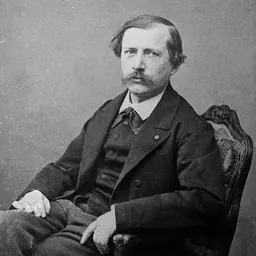
Lived 1867 – 1928 (aged 60). Little Tich was a British comedian.
Harry Relph (21 July 186710 February 1928), professionally known as Little Tich, was a English music hall comedian and dancer during the late 19th and early 20th centuries. He was best known for his acrobatic and comedic "Big-Boot Dance", which he performed in Europe and for which he wore boots with soles long. Aside from his music hall appearances, he was also a popular performer in Christmas pantomimes and appeared in them annually at theatres throughout the English provinces. He repeated this success in London, where he appeared in three pantomimes at the Theatre Royal, Drury Lane, between 1891 and 1893 alongside Dan Leno and Marie Lloyd.
Born in Cudham, Kent, Little Tich began performing aged ten when he developed a dance and tin-whistle act which he showcased at public houses in Sevenoaks. In the early 1880s he formed a blackface act and gained popularity with performances at the nearby Rosherville Pleasure Gardens and Barnard's Music Hall in Chatham. He travelled to London and appeared at the Forester's Music Hall in 1884. Later that year, he adopted the stage name "Little Tich", which he based on his childhood nickname of "Tichborne", acquired through his portly stature and physical likeness to the suspected Tichborne Claimant Arthur Orton. The terms "titchy" or "titch" were later derived from "Little Tich" and are used to describe things that are small.
Little Tich's act further developed during a tour of the United States between 1887 and 1889 where he established the Big-Boot Dance and impressed audiences with his ability to stand on the tips of the shoes and to lean at extraordinary angles. In the 1890s he developed the Serpentine Dance and had a major success with the Christmas pantomime Babes in the Wood in Manchester during the 1889–90 season. In 1891, he was recruited by the impresario Augustus Harris to appear in that year's spectacular Theatre Royal, Drury Lane, Christmas pantomime Humpty Dumpty. He starred in a further two productions at the theatre including Little Bo Peep (1892) and Robinson Crusoe (1893).
Between 1896 and 1902 Little Tich performed in his own musical theatre company, and spent much of his time in Paris, where he became a popular variety artist. For his music hall acts, he created characters based on everyday observations. The characterisations used were "The Gas Inspector", "The Spanish Señora" and "The Waiter"; all three were later recorded onto shellac discs, of which he made twenty in total. He was married three times and fathered two children. In 1927 he suffered a stroke, which was partly triggered by a blow to the head which he had accidentally received during an evening performance at the Alhambra Theatre. He never recovered fully from the injury, and died the following year at his house in Hendon, aged 60.
Biography
Family background and early life
Little Tich was born Harry Relph in Cudham, Kent (now in the London Borough of Bromley). He was the last of eight children His early wealth, which was attributed to a series of successful horse-trading deals, enabled him to purchase his first public house, the Rising Sun in Fawkham. In 1818 he married Sarah Ashenden and they had eight children; she died in 1845. In 1851 he moved to Cudham, bought the Blacksmith's Arms and an adjoining farm, and started a new family with Mary Moorefield, a nurse-maid governess from Dublin.
Little Tich was born with an extra digit on each hand, webbed from the little finger to the centre joint. He also experienced stunted growth. He reached in height by the age of ten, but grew no taller. His physical differences from other children caused him to become socially withdrawn and lonely.
Little Tich was educated at Knockholt, a three-mile walk from Cudham. From an early age, he displayed considerable academic ability and also excelled in art; by the time he was five, his drawings were being sold to patrons of the Blacksmith's Arms by his father. Little Tich became interested in the travelling performers whom his father often employed to entertain guests at the inn. He would mimic the dancers, singers and conjurors, causing much amusement to both his family and his patrons. So good were his impersonations that his siblings frequently took him to neighbouring public houses where they would get him to perform in exchange for money. These experiences prepared Little Tich for his future career. As a result of what he saw, he, like his father, became a strict teetotaller in later years, and showed a deep loathing for boisterous and intoxicated people. Little Tich revelled in his local celebrity status; however, the older he got the more self-conscious he became and wrongly interpreted the audience's laughter as being aimed more at his disabilities rather than his comical performances. The socially withdrawn Little Tich was forced to adapt to much busier surroundings; day-trippers, holidaymakers and fishermen often frequented the streets and occupied the plethora of public houses which adorned the port and neighbouring roads. He resumed his education, this time at Christ Church School, where he spent the next three years. In 1878 the headmaster deemed him too educationally advanced for the school, and Richard Relph was advised to secure for his young son a watchmaking apprenticeship instead; Relph ignored the advice.
By 1878 Little Tich's parents were unable to financially provide for him further and he sought full-time employment as a lather boy in a barber's shop in Gravesend. on the idea of being able to perform. Thanks largely to his local celebrity status of being a "freak", he was welcomed into the many public houses which catered for soldiers, sailors, merchant seamen and day-trippers from London.
By 1878, Little Tich had saved enough money to buy himself a tin whistle which he used to "amuse [him]self by playing all the jolly and sentimental pantomime songs of the day". To earn money, he began busking to local theatre goers who were waiting in the outside queues. On the way home from his busking performances, he devised eccentric dances, much to the amusement of his onlooking neighbours. Little Tich made his stage debut as Harry Relph at the age of 12 in 1879. The venue—although unidentified—was described by his daughter Mary as being a "back-street, free-and-easy" where the acts were predominantly made up of amateurs and beginners. The audiences were often harsh and they would display their displeasure by throwing objects onto the stage. News of his performances spread, and he was soon signed up by the proprietor of the neighbouring Royal Exchange music hall, who bought his new signing a pair of clogs. Little Tich became a popular draw at the hall and often sang thirty songs a night. It was here that he discovered the art of blackface, a popular type of entertainment widely performed around the British Isles at the time. and graduated to the world of open-air theatre. The following year, he joined a blackface troupe who performed regularly at the Rosherville Pleasure Gardens; the local historian J.R.S. Clifford described them as "a band of minstrel darkies of a superior type". Little Tich's transition from amateur to professional performer came when he appeared in a weekly spot at Barnard's Music Hall in Chatham. Lew Barnard, the hall's proprietor, offered him 35 shillings a week. Thrilled at the prospect of appearing in a proper music hall, Little Tich changed his name from The Infant Mackney to Young Tichborne, a nickname he had gained while living in Cudham years earlier. (The nickname derives from the Tichborne case of 1854, a legal cause célèbre which occurred in Victorian England in the 1860s and 1870s.) The claimant Arthur Orton was a fat man and the name Tichborne was frequently used to describe persons who were of such stature. In his early years, Little Tich was also overweight and he became known as "Young Tichborne". When he appeared on stage as a youth, audiences would often shout "come on little Tichbourne" when he was about to come onto the stage, or if he was struggling with his act. By the mid-1880s, he had lost almost all his excess weight, but the name had stuck and it then became an ironic term of endearment owing to the giant stature of Orton, compared to the diminutive one of Little Tich.
In 1881 Little Tich left home with his sister Agnes, who chaperoned her young brother around the music halls and variety clubs throughout England. By now, he had swapped the tin-whistle for a picco pipe which he used to accompany his clog dancing routine. He despised his early experiences of provincial touring as he was often forced to sleep in dosshouses with very little money or food. To survive, he would often return to busking outside music halls to the waiting audiences. In the early months of 1884, he secured an engagement at a rundown public house called The Dolphin in Kidderminster, where he was paid £2 a week. He also hired his first agent who, unbeknown to Little Tich, had advertised him as a "freak" and a "six-fingered novelty". The comedian was furious with the description and quickly dispensed with the agent's services. By the summer months, his engagements had become infrequent so he used the long periods of unemployment constructively. He learned how to read and write music and taught himself to play various musical instruments including the piano, fiddle and cello. He also mastered dancing in big boots. (Although he had officially changed his stage name only three times up until this point, he was unofficially billed with at least five others including: "Young Tichborne, Pocket Mackney"; "Young Tichborne, Little Black Storm"; "Young Tichborne, The Picco Soloist"; or simply "Tiny Tich".) The change of name also coincided with the signing of a new agent who was known in London for being "one of the brightest and youngest in [show]business". The agent, Edward Colley (1859–1889), was equally thrilled with the acquisition of a new star where he was billed as "Little Titch, the Funny Little Nigger". A reporter for The Era predicted "We shall probably hear a great deal more about Little Titch, as he seems to be one of the few that can invest the business of the Negro comedian with any humour."
By Christmas 1884, Little Tich was a resident performer in four London music halls: the Middlesex Music Hall where he had an 8 pm billing, the Marylebone (at 9 pm), the Star Palace of Varieties in Bermondsey (at 10 pm), and Crowders Music Hall in Mile End (at 11 pm). Out of the four halls, he had the most success at the Marylebone and fulfilled a ten-week run. A critic for The Era who witnessed him perform at the Marylebone thought that he was "a curious comic" and that "his antics, his sayings and his business generally [were] very amusing, and he will doubtless improve in his singing, which is weak at present, even for a Negro delineator". The commentator further noted that "he appear[ed] to be quite a young man at present; but his dancing is peculiarly funny, though his dress in one of his characters is vulgar and suggestive; this should be altered".
Having been a success in London for nearly a year, Little Tich travelled to Scotland to appear in pantomime for the first time during the 1885–86 Christmas season. Robinson Crusoe opened at the Royal Princess Theatre in Glasgow and he appeared in the small role of Chillingowadaborie, a black-faced attendant for one of the main characters King Tum-tum. That year marked the end of Little Tich's "blacking up" routine, which he had performed in between his commitments for the Chicago State Opera Company. He was told by a producer that the American audiences would find the black face and English accent too much of a contrast and opined "a deaf mute with one eye could see you aint a coon".
As the months progressed, the tour matured and news of his performances travelled across America. While he did this, the orchestra provided an accompaniment of "till ready" music. For the audience, this provided much hilarity and they assumed it was part of the act. The unintentional sketch was "an instant hit" and the comedian incorporated this into his future Big-Boot Dance routine.
In April 1889 Little Tich briefly returned to London to star at the Empire Theatre in Leicester Square where he was poorly received by audiences. As a result, the manager of the theatre reduced the comedian's wages to £6 a week.
1890s
Return to London and West End debut
In the later months of 1889 Little Tich secured an engagement at the London Pavilion in Piccadilly Circus. This time, he found his English critics to be complimentary about his talent, but as their praise was largely about his success in America, he considered them hypocritical. News of his much-improved performances travelled throughout the country and he was visited by Thomas W. Charles, manager of Manchester's Prince's Theatre. Charles offered Little Tich a leading role in his forthcoming pantomime Babes in the Wood. The 1889–90 production was a huge success for the comedian and his performance reportedly earned him "the heartiest applause of the evening".
By the early months of 1890, Augustus Harris, the influential manager of the Theatre Royal, Drury Lane, had travelled to Manchester to look for new talent for his theatre's forthcoming 1890–91 pantomime. Impressed with what he saw, he offered the comedian a theatrical residency at Drury Lane but he was forced to withdraw it as Little Tich was contracted to Charles for a further year; Harris instead signed Little Tich for a two-year contract starting the following season. The deal required Little Tich to star in two pantomimes for a wage of £36 a week. Following on from his success in Babes in the Wood which culminated in April 1890, the theatre manager Rollo Balmain cast him as Quasimodo in a production of The Hunchback of Notre-Dame at the Theatre Royal, Plymouth. The show featured a burlesque centrepiece which required Little Tich to dress as a ballerina and gave him the opportunity to perform two of his earliest songs, "Smiles" and "I Could Do, Could Do, Could Do with a Bit", both written for him by Walter Tilbury.
In 1890 Little Tich continued to impress his London music hall audiences and appeared on the front covers of both the Entr'acte and the Music Hall magazines, with the latter being widely available in the majority of London music hall auditoriums. Towards the end of the year, Little Tich appeared at the opening of the Tivoli Music Hall, before returning to Manchester at Christmas to fulfil the second of his two pantomime engagements for Thomas Charles in Little Bo-peep, in which he played Toddlekins. The following year he reprised his role of Quasimodo and toured the provinces in The Hunchback of Notre-Dame with Balmain's company.
Life at Drury Lane
The year 1891 signalled a new era in the career of Little Tich. The Drury Lane pantomimes were known for their extravagance and splendour and featured lavish sets and big budgets. The first of the Drury Lane pantomimes in which Little Tich appeared was Humpty Dumpty in 1891 which also starred Drury Lane regulars Marie Lloyd, Dan Leno and Herbert Campbell. As well as the title role, Little Tich also played the minor part of the Yellow Dwarf in the harlequinade. It was during the latter characterisation that he revived his Big-Boot Dance, which was a hit with audiences. The following Christmas, he equalled this success with his second pantomime Little Bo-Peep in which he played the part of "Hop of my Thumb". As well as Leno, Lloyd and Campbell, Harris recruited the singers Ada Blanche and Cecilia Loftus as principal boy and girl respectively. Harris was thrilled with Little Tich and signed him for the 1893–94 pantomime Robinson Crusoe in which he played Man Friday. The Derby Daily Telegraph called the comedian "one of the most amusing pantomime dames of all time". He portrayed Miss Turpentine as an eccentric ballerina who wore an ill-fitting tutu. The dance was a comic variation of the well-known skirt dance belonging to Loie Fuller, which had been popular in France years earlier. Another successful characterisation was that of an eccentric Spanish dancer, which Little Tich devised while touring Europe, and like The Serpentine Dance, relied heavily on acrobatic choreography and comic miming rather than eccentric singing and joke reciting.
It was around this period when Little Tich was inducted into the fledgling entertainers' fraternity, the Grand Order of Water Rats. In 1906, he would serve as "King Rat" for the order. In 1894, free from his contractual obligations at Drury Lane, he took a three-year break from the English music hall scene and travelled to France The audience were described as being "very large" whose "bursts of laughter w[ere] frequent and loud". A reporter for the Edinburgh Evening News thought that Little Tich was "the life and soul of the sketch" whose singing was "fairly good while [his] dancing was smart", while the critic William Archer dismissed Little Tich as being the "Quasimodo of the music halls, whose talent lies in a grotesque combination of agility with deformity".
He formed his own theatre company in mid-1895, and produced his first show called Lord Tom Noddy, in which he also starred. He commissioned the dramatist George Dance to write the piece and made him a partner in the company. On 11 December 1896, Little Tich was invited to appear at the Folies Bergère in France, where he starred in a short piece as Miss Turpentine and performed the Big-Boot Dance. One journalist for the Sunday Referee claimed that "no artist since Loie Fuller, four years earlier, had scored such a success", and as a result, he signed a two-year contract at the Folies. Little Tich returned to England in the later months of 1897, where he self-produced the second of his company's two shows, a musical comedy called Billy. Despite the show enjoying a healthy provincial tour after opening in Newcastle, one reporter thought that "it ha not very much to recommend it", but thought that Little Tich gave "some excellent fooling" and that it "[was] impossible not to laugh at some of the eccentricities". However, the farce failed to make it to the West End of London. Little Tich saw this as a snub and he refused to perform in the capital again. Instead, he travelled to South Shields, where he appeared briefly in a successful short play called Giddy Ostend before retreating to France. Following the breach of contract, the Folies manager Édouard Marchand initiated legal action against the comedian, who settled out of court for an undisclosed sum. By now, Little Tich had become frustrated with his English audiences. With Billy failing to reach London and the unequal level of success in the English capital compared to France made him shun the English variety theatre scene altogether in the final years of the century. He returned to the less-popular music halls as a result, where he remained for the rest of his career.
1900s
Marriage troubles
In September 1894, Little Tich and Laurie established the family home in the rue Lafayette, Paris. During 1897, while Little Tich was away on a tour of England, Germany and Austria, Laurie eloped to Berlin with the French actor François Marty, leaving her husband responsible for their young son Paul. Unable to care for Paul, Little Tich sent him to England to live with relatives. That year, Little Tich met the dancer Julia Recio (Julia Recio was born in 1869 in Málaga and was the youngest daughter of a Spanish government official.) She was brought up in Paris, and became successful in Spanish dancing, performing in Moulin Rouge. In 1900 Little Tich appeared in the French capital's Phono-Cinéma-Théâtre where he performed the Big-Boot Dance, which was recorded on film by the French director Clément-Maurice. Years later, the film-maker Jacques Tati called the piece "a foundation for everything that has been realised in comedy on the screen".
In 1902, Little Tich starred in a special, one-off revue with Marie Lloyd at the Tivoli theatre called The Revue, which was staged to celebrate the coronation of Edward VII. The following year, Little Tich's performance at the Oxford Music Hall was described as being "... a very droll turn" by a reporter for The Cornishman newspaper, who also called his Big-Boot Dance "wonderful". Little Tich rented another London property at 1 Teignmouth Road in Kilburn, to escape his life with Julia, which he was finding increasingly mundane. Despite their troubles, he married Julia in a discreet London ceremony on 31 March 1904 at St Giles Register Office Although initially happy, the marriage quickly deteriorated as a result of differing opinions over social activities and money; Julia was a sociable and extravagant person, whilst Little Tich preferred a quieter and thriftier lifestyle. and he continued to provide financial support for his wife and fund her extravagant lifestyle for the next twenty years. Years later, Paul Relph admitted "Father and Julia never loved one another. Poor, poor father. His life was one long misery through her." Over the next four years, Little Tich continued to perform in both England and France and earned £10,000 a year. In 1905 he appeared in the second of a further three films for the French film industry called Le Raid Paris–Monte Carlo en deux heures, directed by Georges Méliès. This was followed by Little Tich in 1907, and Little Tich, the Tec two years later. Soon after, he returned to England to take part in the Music Hall War, fight for more freedom and better working conditions on behalf of music hall performers. In 1909 he received a serious leg injury while on stage at the Belfast Hippodrome during a performance of the Serpentine Dance. A doctor in the audience diagnosed a dislocated knee, which forced the comedian to take seven weeks' recuperation. Little Tich's performance was described by a reporter for the Evening Telegraph and Post as being "up to date" and declared the Serpentine Dance was "next to the Big-Boot Dance in popularity".
Recording career and new family
In 1910, Little Tich became the adoptive father of Rodolphe Knoepper, an orphan born in 1899 to the brother of the Russian acrobat Harry Alaska. Alaska had previously worked for Little Tich as his dresser and after his death, Knoepper moved into the Relph residence in France and started his education there. After a few months of living with Little Tich, he was moved to London to stay with Julia. In later years Little Tich's daughter Mary said that her father treated Knoepper as more of a son than Paul, who became estranged from the family by the 1920s. While in Paris in 1910, Little Tich was made an officer of the Ordre des Palmes Académiques by the French Ministry of Public Instruction for his services to the stage.
Towards the end of 1910, he travelled to Scotland to complete a short engagement at the King's Theatre in Dundee. His performance was described by a theatre reviewer for the Evening Telegraph as being "downright genuine fun" and "very entertaining". The following year Little Tich recorded the first of a selection of his music hall songs on one-sided shellac discs used in the early acoustic recording process. Songs included "The Gas Inspector", "King Ki-Ki", "The Toreador" and "The Zoo Keeper" and were followed two years later by "The Waiter", "The Weather", "The Don of the Don Juans" and "A Risky Thing to Do".
In 1915 Little Tich cut short his engagement at the Golders Green Hippodrome to take up a better offer in Paris. As a result, the proprietors of the Hippodrome sued for breach of contract and he had to pay them £103 in compensation. That year he recorded "The Tallyman", "The Gamekeeper", "The Skylark" and "The Pirate" onto disc Tich and Winifred were both starring in the Christmas pantomime Sinbad the Sailor, in which Little Tich played the title role and Winifred supported him as the principal boy. The two grew close and against her parents wishes, they began a relationship, shortly before the pantomime closed in the early months of 1916. Sinbad the Sailor was a big success and Winifred was widely praised for her performance, which she attributed to the guidance she received from Little Tich.
In 1916 Winifred moved into a rented flat in Camden, chosen by Little Tich for its close proximity to his house in Bedford Square; this enabled him to visit her with less chance of being recognised. In 1917 he recorded "Tally-Ho!" and "The Best Man", the final two songs from his repertoire, onto shellac discs. On 23 February 1918, while Little Tich was performing in Brighton, she gave birth to a daughter whom she named Mary.
Last years and death
By 1920, relations between Little Tich and Winifred's parents had improved and they welcomed him into the family. Despite renting a new, six-room flat in Marylebone for his daughter and mistress, the comedian was now finding it increasingly difficult to support Winifred, Mary and Julia on his earnings as the years of generosity had drastically depleted his savings. His annual income in 1921 and 1922 had topped £9,750 but had dropped to £3,743 by 1923. In 1925 he earned £6,300 but this fell the following year to just £2,100.
Worried by the drastic reduction in pay, he reduced Julia's payments, which angered her family. Another money-saving plan was to stop renting properties in London and secure a mortgage on a small house instead. To avoid speculation about his affair with Winifred, he decided to remain at Bedford Court Mansions, and bought a newly built house in Shirehall Park, Hendon, Northwest London in September 1925 for Winifred and Mary to move into. Soon after, he embarked on a successful tour of Europe which culminated at Christmas the same year. He returned to London and took part in a Christmas benefit at the London Coliseum, where he performed the Big-Boot Dance. The performance was by then proving too strenuous for the 58-year-old comedian, and he decided to retire it that year.
On the morning of 7 January 1926, Julia Relph died of a cerebral haemorrhage in the flat which Little Tich had rented for her. Despite their estrangement, the comedian was distraught at her death and spent two nights at the apartment with her corpse. A few days later, he moved in with Winifred where he arranged his wife's funeral, staying in the spare bedroom as a "house guest". He made frequent visits back to Bedford Court Mansions to organise Julia's paperwork and discovered that his wife had been having an affair with his friend Emile Footgers and that she was ten years older than she had led her husband to believe. Little Tich also found that she had used his money to buy a house in Golders Green as a future investment for Paul's daughter Constance, (Constance Julia Davies Relph was born in 1911.) She was the daughter of Paul and his first wife Gilda Relph Nicholas (1885–1954), a music hall dancer from Manchester. At the time of Constance's birth, Paul was on friendly terms with his stepmother Julia, but the relationship deteriorated in later years. Constance was estranged from her father, who left home when she was four years old. Gilda chose ambition over motherhood, and left Constance in the care of Julia who, in effect, became her mother in proxy. and that his wife had participated in a secret scam to blackmail the comedian out of large quantities of cash. Despite the revelations, Little Tich mourned deeply for his wife and spoke fondly of her for the rest of his life.
On 10 April 1926, Little Tich married Winifred at Caxton Hall, Westminster, with little publicity. Later that evening, he appeared at the Camberwell Palace in a short but popular engagement, while his new wife returned home to Hendon. For the honeymoon, the family travelled to Bristol, where Little Tich appeared on stage with the French actress Mistinguett, who presented him with a tributary gold statue of him wearing big boots. At the end of that year, the family paid a working visit to Australia, where he toured the Sydney theatres for a fee of £300 a week; he received a lukewarm reception from audiences.
One December morning in 1927, whilst getting ready for a family day out, Little Tich was conversing with his wife who was in a separate room, upstairs at Shirehall Park. When he stopped responding, she became concerned, went to the room where her husband was, and found him slumped and insensible in a chair. He became mute and lost all feeling on the right side of his body, but was discharged from hospital and returned home to Hendon. He was frequently visited by the surgeon Sir Alfred Fripp, who made a secondary diagnosis of pernicious anaemia which he cited as having played an instrumental part in the comedian's seizure. and he was later buried at East Finchley Cemetery. (After Little Tich's death, Mary and Winifred continued to live together.) By the mid-1940s they established a hotel at the address in Shirehall Park. Running out of money, they sold the house in 1971 and it was turned into a Jewish retirement home. Mary then moved to Brighton with her mother who died in a nursing home a few years later on 17 December 1973. A reporter for The Daily News called him "[the] comedian whose popularity had never waned and whose name was as famous in 1928 as it was when music-halls flourished 30 years ago".
Notes and references
Don’t just read it —
keep it.
Full-length biographies made to live with: read them, listen on the way to work, watch them tonight.
- E-book
- Audio
- Video
Instant download · yours to keep · every purchase keeps this site free
Important facts
People in Little Tich's life
Named in this biography and alive at the same time


Related people
Same field, nearest in time



Contemporaries
People whose lives overlapped Little Tich's




Frequently asked questions
Who was Little Tich?
British music hall comedian (1867–1928)
When was Little Tich born?
Little Tich was born on 21 July 1867 in Cudham.
When did Little Tich die?
Little Tich died on 10 February 1928 in Hendon.
What was Little Tich's occupation?
Little Tich was a comedian.
What nationality was Little Tich?
Little Tich was British.
Sources & further reading
Cite this page
APA: Biography.guide. (2026). Little Tich. https://biography.guide/little-tich/
MLA: "Little Tich." Biography.guide, https://biography.guide/little-tich/.
Chicago: "Little Tich." Biography.guide. https://biography.guide/little-tich/.
Data last updated: 2026-09-20 · Spot an error? Report a correction.
Page generated 2026-09-27 05:21 UTC