
About Liselotte Richter
Lived 1906 – 1968 (aged 61). Liselotte Richter was a German theologian, university teacher, philosopher and religious studies scholar.
Liselotte Richter (7 June 1906 – 16 January 1968) was a German philosopher and theologian. She was the first female professor of philosophy in Germany.
Early life Luise Charlotte Richter was born in 1906 and grew up with her twin brother Fritz in a middle-class family, first in Berlin-Tegel and then in Charlottenburg.
She began studying philosophy at the Friedrich-Wilhelms-Universität in Berlin in 1926. She moved to the Philipps University of Marburg to hear lectures there by Martin Heidegger, following him to the Albert Ludwig University of Freiburg in 1928. She later returned to Marburg, where she attained her doctorate with distinction in 1932, supervised by the philosopher Erich Frank. Her thesis was entitled "Subjectivity in Kierkegaard. A Paper on the Christian Account of Existence".
Richter's interest was in new approaches to existential philosophy. A note from her first year of study, "When the soul speaks, the sole reign of the callous intellect ceases!" (Wenzel 1999, 42), encapsulates her occupation with existential questions and her search for a connection between subjectivity and the "venture of faith".
In 1932, Richter also passed the examination to qualify as a teacher at secondary schools for girls. While still in Marburg, she became involved in the KPD (Communist Party of Germany), which led to her arrest in 1933 shortly after the Nazis seized power. She then moved back to Berlin.
Academic activity
After almost three years of unemployment, Richter was given an assistant position at the Prussian Academy of Sciences and worked on its Leibniz edition (correspondence), which she continued to do during the Nazi regime. She was also active as a caregiver for the German Red Cross from 1943 to 1945. She began publishing at this time and in 1943, she took up a position at the Deutsche Studentenschaft (German Student Union).
After the Second World War, Richter took over the build-up and management of the Charlottenburg Volkshochschule and was also appointed district councillor for adult education. That same year, she enrolled to habilitate (qualify to hold professorial positions) at the Faculty of Philosophy of the University of Berlin and she was appointed professor with full teaching remit, becoming the first female professor of philosophy in Germany.
Richter became a member of the SED (Socialist Unity Party of Germany), which quickly tried to influence university politics. She left the SED in 1948 and increasingly found herself clashing with the university leadership and her colleagues and the Marxism-Leninism they represented.
As part of the academic restructuring of philosophy (The 2nd University Reform 1950/51) in the German Democratic Republic, Richter was forced out of the philosophy department in 1951 and reassigned to the department of theology under the guise of a promotion.
From 2007 to 2013, the Leibniz-Edition Potsdam of the Berlin-Brandenburg Academy of Sciences and Humanities awarded the Liselotte Richter Prize, which was endowed with 1,000 euros, to upper secondary school students in Berlin and Brandenburg.
Selected publications
Monographs
Der Begriff der Subjektivität bei Kierkegaard. Ein Beitrag zur christlichen Existenzdarstellung. Triltsch, Würzburg 1934 (at the same time: Marburg Univ. Diss.) Immanenz und Transzendenz im nachreformatorischen Gottesbild. Vandenhoeck & Ruprecht, Göttingen 1955 Jakob Böhme. Mystische Schau. (Geistiges Europa). Hoffmann & Campe, Hamburg 1947 Jean-Paul Sartre. (Köpfe des XX. Jahrhunderts; 23). Colloquium-Verlag, Berlin 1964 Leibniz und sein Rußlandbild. Akademie-Verlag, Berlin 1949 Mahatma Gandhi. (Köpfe des XX. Jahrhunderts; 25). Colloquium-Verlag, Berlin 1962 Philosophie der Dichtkunst. Moses Mendelssohns Ästhetik zwischen Aufklärung und Sturm und Drang. Chronos-Verlag, Berlin 1948 René Descartes. Dialoge mit deutschen Denkern. (Geistiges Europa). Hoffmann & Campe, Hamburg 1949 Schöpferischer Glaube im Zeitalter der Angst. Glock, Wiesbaden 1954
As an editor
Albert Camus: Der Mythos von Sisyphos. Ein Versuch über das Absurde. Rowohlt, Reinbek bei Hamburg 1959 [u. ö. bis 1997], (with the essay Camus und die Philosophen in ihrer Aussage über das Absurde von Liselotte Richter, which is not included in the new translation from 1999.) Sören Kierkegaard: Werke. Europäische Verlagsanstalt, Hamburg (with the essay Zum Verständnis des Werks)
Der Begriff Angst. 1996. Die Wiederholung. 2005. Furcht und Zittern. 1998. Die Krankheit zum Tode. 1995. Philosophische Brocken. 1992.
Don’t just read it —
keep it.
Full-length biographies made to live with: read them, listen on the way to work, watch them tonight.
- E-book
- Audio
- Video
Instant download · yours to keep · every purchase keeps this site free
Important facts
People in Liselotte Richter's life
Named in this biography and alive at the same time
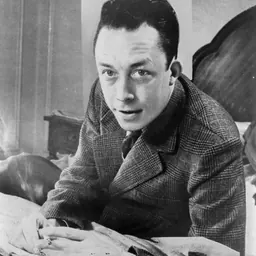



Related people
Same field, nearest in time

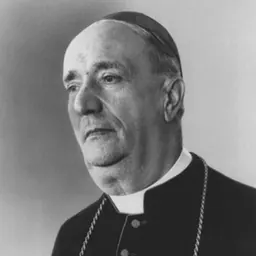

Contemporaries
People whose lives overlapped Liselotte Richter's
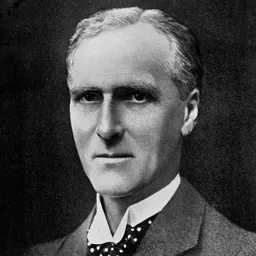
Frequently asked questions
Who was Liselotte Richter?
German theologian (1906-1968)
When was Liselotte Richter born?
Liselotte Richter was born on 7 June 1906 in Berlin.
When did Liselotte Richter die?
Liselotte Richter died on 16 January 1968 in Berlin.
What was Liselotte Richter's occupation?
Liselotte Richter was a theologian, university teacher, philosopher and religious studies scholar.
What nationality was Liselotte Richter?
Liselotte Richter was German.
Sources & further reading
· Wikipedia: Liselotte Richter
Cite this page
APA: Biography.guide. (2026). Liselotte Richter. https://biography.guide/liselotte-richter/
MLA: "Liselotte Richter." Biography.guide, https://biography.guide/liselotte-richter/.
Chicago: "Liselotte Richter." Biography.guide. https://biography.guide/liselotte-richter/.
Data last updated: 2026-09-20 · Spot an error? Report a correction.
Page generated 2026-09-27 05:07 UTC