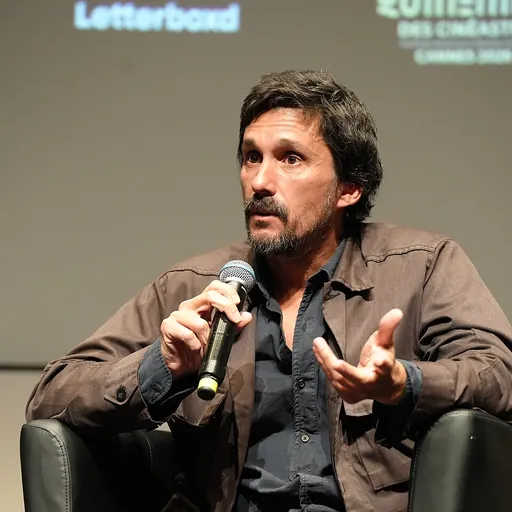
Lisandro Alonso
Argentinan film director and screenwriter (born 1975)
About Lisandro Alonso
Born 1975. Lisandro Alonso is an Argentine film director, screenwriter and film editor.
Lisandro Alonso (born 2 June 1975) is an Argentine filmmaker. A leading figure in the slow cinema and the New Argentine Cinema movement, he is most known for his minimalist, observational films featuring long takes, sparse or absent dialogue, blending elements of documentary and fiction.
All his feature films have premiered at the Cannes Film Festival. His drama film Jauja (2014) won the FIPRESCI Prize at the 67th Cannes Film Festival.
Early life Alonso was born on 2 June 1975 in Buenos Aires. He studied filmmaking for three years at the Universidad del Cine in Buenos Aires, where he trained in sound design and directing.
After graduating, Alonso worked as an assistant director and sound designer on various productions until 2000 to finance his own filmmaking.
Career
2000s Alonso's debut feature, Freedom (2001), was a low-budget production financed primarily with family funds. Shot over nine days in the rural Pampas with a minimal crew, the film follows the daily routine of a solitary lumberjack, played by non-professional actor Misael Saavedra, a real woodcutter Alonso had encountered. It was selected for the Un Certain Regard section of the 2001 Cannes Film Festival and was praised by critics as a pioneering example of slow cinema for its unadorned depiction of rural work life in Argentina.
After founding his own production company, 4L, Alonso directed Los muertos (2004), which premiered in the Directors' Fortnight section of the 2004 Cannes Film Festival. Variety called Alonso "the poet and master" of the slow-moving minimalism of new Argentine cinema.
Alonso shifted toward a more fictional approach in Liverpool (2008), following a young sailor who returns to the remote villages of Tierra del Fuego in search of his mother. The film also premiered at the Directors' Fortnight section of the 2008 Cannes Film Festival and won the Best Feature Film award at the Gijón International Film Festival, whose jury praised it as "a commitment to a radical cinema that takes risks and is seldom catered to by commercial circuits".
In 2009, Alonso and Spanish filmmaker Albert Serra participated in a filmic exchange project in which each revisited a previous work using the same crew and actors. The project, titled Sinergias: Diálogo entre Albert Serra y Lisandro Alonso (2011), produced two short films: Serra's Lord Worked Wonders in Me and Alonso's Untitled (Letter to Serra), in which Alonso re-examined La libertad and employed its lead, Misael Saavedra.
2010s Alonso returned with a significant departure of his slow cinema origins with Jauja (2014), his first film to employ a professional foreign actor (Viggo Mortensen) and his first period setting production, set in nineteenth-century Patagonia. The film premiered at the Un Certain Regard section of the 2014 Cannes Film Festival, where it won the FIPRESCI Prize. Following the film's success, the Film Society of Lincoln Center named Alonso its 2014 Filmmaker in Residence.
After Jauja, Alonso received a fellowship at the Radcliffe Institute for Advanced Study at Harvard University for the 2016–17 academic year, during which he began developing what would become his most ambitious project.
2020s Almost ten years later, Alonso returned with Eureka (2023), a triptych spanning indigenous history between 1870 and 2019 in the Americas. Moving from a black-and-white western set in the Old West to a present-day drama on Pine Ridge to a sequence in the Amazon rainforest during 1970s Brazil. Starring Viggo Mortensen, Chiara Mastroianni, non-professional actors from the Pine Ridge community, and Brazilian indigenous actors, the film was co-written with Martín Caparrós and Fabián Casas. It premiered at the Cannes Premiere section of the 2023 Cannes Film Festival, it won the Fiction Jury Prize at the 27th Lima Film Festival.
He starred in Luca Guadagnino's Queer (2024) as Mr. Cotter, the partner of Dr. Cotter (Lesley Manville). The couple plays a key role in the film. Guadagnino cast three of his close filmmakers friends in the film, including Alonso, Ariel Schulman and David Lowery.
Future projects During early 2026, he filmed his next feature film project The Scent of the Pitanga, a remake of Abbas Kiarostami's Iranian film Taste of Cherry (1997). Set in Palmas, capital of Tocantins, a state bisected by the Amazon rainforest. Starring Wagner Moura, it will be Alonso first production fully in Portuguese.
Style Alonso's filmmaking is characterised by long takes, sparse or absent dialogue, ambient sound, and the use of non-professional actors drawn from the actual locations of his films. His work is frequently associated with the international slow cinema movement alongside directors such as Béla Tarr, Tsai Ming-liang, Carlos Reygadas, and Pedro Costa. He typically writes, directs, and edits his own films, often also serving as producer through his company 4L.
Alonso has consistently preferred to shoot on film stock rather than digitally, favouring 35 mm because, as he has explained, the physical weight of the camera encourages deliberate planning of each shot.
Filmography
Short films
Acting credits
The Dead Don't Hurt (2023) as Beto Acosta (cameo) Queer (2024) as Mr. Cotter
Don’t just read it —
keep it.
Full-length biographies made to live with: read them, listen on the way to work, watch them tonight.
- E-book
- Audio
- Video
Instant download · yours to keep · every purchase keeps this site free
Important facts
People in Lisandro Alonso's life
Named in this biography and alive at the same time



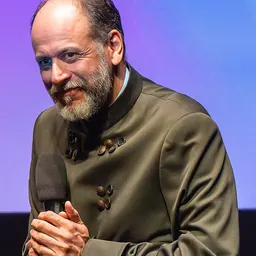
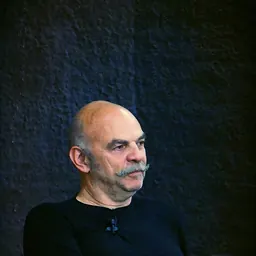
Related people
Same field, nearest in time

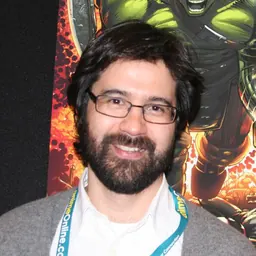

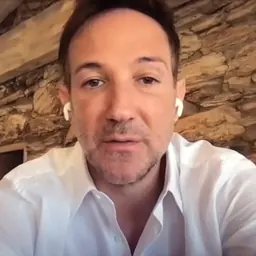
Contemporaries
People whose lives overlapped Lisandro Alonso's

Frequently asked questions
Who is Lisandro Alonso?
Argentinan film director and screenwriter (born 1975)
When was Lisandro Alonso born?
Lisandro Alonso was born on 2 June 1975 in Buenos Aires.
What is Lisandro Alonso's occupation?
Lisandro Alonso is a film director, screenwriter and film editor.
What nationality is Lisandro Alonso?
Lisandro Alonso is Argentine.
Sources & further reading
Cite this page
APA: Biography.guide. (2026). Lisandro Alonso. https://biography.guide/lisandro-alonso/
MLA: "Lisandro Alonso." Biography.guide, https://biography.guide/lisandro-alonso/.
Chicago: "Lisandro Alonso." Biography.guide. https://biography.guide/lisandro-alonso/.
Data last updated: 2026-09-22 · Spot an error? Report a correction.
Portrait: Wikimedia Commons · author & licence
Page generated 2026-09-27 05:03 UTC