
About Lippy Lipshitz
Lived 1903 – 1980 (aged 77). Lippy Lipshitz was a South African painter and sculptor.
Israel-Isaac Lipshitz (8 May 1903 – 17 May 1980) was a South African sculptor, painter and printmaker. He is considered to be one of the most important South African sculptors, along with Moses Kottler and Anton van Wouw.
Russia 1903 – 1908 Israel-Isaac Lipshitz was born on 8 May 1903 as the second son of Shlomeh Josef Lipshitz of Dvinsk and Chayah Meray Faktor of Plungė, Lithuania. His paternal grandparents were of the Jewish Chassidic sect, while his maternal grandparents were of the Misnaged sect in February 1904, Israel's father set out for Cape Town in search of better prospects than were available to him in Plungė. He left his wife and the infant with the maternal grandfather Yankeh Fivah Faktor for the next four-and-a-half years. In his care the young Israel was taught to draw, carve wood and model in dough and candle grease. His grandfather had built the synagogue in Plungian, and it was in the decorative art of the synagogue that Israel first felt the impetus to artistic expression.
In 1925 Lipshitz met the Russian Jewish sculptor Herbert Vladimir Meyerowitz,
It was not just a matter of taste that divided the establishment from the New Group. The battle lines were being drawn by events in Europe, with official censorship of Modern Art in Nazi Germany and the opening of the Entartete Kunst (degenerate art) exhibition on 30 June 1937 in Munich.
Lipshitz formed a working association with painter Cecil Higgs, exhibiting together at 52 Dorp Street, Stellenbosch, in September 1938, in collaboration with René Graetz and Maggie Laubser. They would exhibit again, with John Dronsfield, in 1940, 1941 and 1945. The animosity in art circles came home to Lipshitz when, in August 1939, Bernard Lewis criticised a nude by Higgs at a New Group in the Stellenbosch University Library, giving rise to its removal, over public protest. Moreover, in November 1940, Edward Roworth, then Director of Michaelis and the South African National Gallery, openly supported Adolf Hitler's suppression of modern art. Lipshitz attacked him in a speech to The People's Club, quoted in full in Trek on 7 November 1940. It was a resounding defeat for the traditionalists. The monotypes were the first to receive widespread attention in South Africa, In June 1934 they held their first joint exhibition at the studio. Financial problems eventually led to their eviction in May 1937, after which they took up space in Madeira House in Stal Plein, with Freida Lock, John Wright and Hetta Crouse. It was a serious setback for Kibel, who was ill with tuberculosis. He was to die on 29 June 1938.
England 1947 – 1948 Lipshitz left South Africa in May 1947, taking up a studio belonging to Lady Nicholson (daughter of Sir Lionel Phillips) in Glebe Place, Chelsea, London. He worked for six weeks and participated in the Gimpel Fils Summer Exhibition. After this he moved to 18 Ellersdale Road, Hampstead to prepare for a London debut, an exhibition to open at the Galerie Apollinaire in Litchfield Street on 12 April 1948. Lipshitz exhibited 25 carvings at this occasion. Despite being his first exposure to a mature, informed audience, the works were well received by Maurice Collis writing for Time and Tide, Colin MacInnes in The Observer and Vorticist painter Colin MacInnes.
Lipshitz exhibited again at the A.I.A. Gallery, and at The Little Gallery, with Dolf Dieser. Part of the Galerie Apollinaire exhibition was shipped to Johannesburg, where an exhibition was held at Gainsborough Galleries. He also met sculptors Henry Moore and Jacob Epstein, spending some time with the latter in his studio. During a trip to Paris with friend Yankel Adler he met Jean Arp. In 1948 he visited the artist's colony at Zennor, in Cornwall, stayed with David Lewis and met the carver Sven Berlin.
Lipshitz returned to Cape Town in November 1948.
Cape Town 1949 – 1967 The internationalist bent in South African art was to culminate in the establishment of a South African Branch of the International Art Club of Rome, with Maurice van Essche as chairman. Van Essche, Lipshitz, Cecil Higgs, John Dronsfield, Irma Stern, Jean Welz, Alexis Preller and Walter Battiss were invited to participate in the Art Club exhibitions in Turin and Rome in early 1949.
As a result of the exhibitions in Italy, South Africa was invited to exhibit at the Venice Biennale in 1950. A committee convened by Minister of Education, Arts and Science, C. R. Swart and consisting of John Paris, Director of the South African National Gallery, Dr. J. W. von Moltke of the Michaelis School and Prof. F. E. J. Malberbe of Stellenbosch University selected Van Essche, Lipshitz, Higgs, Dronsfield, Stern, Maud Sumner and sculptor Elsa Dziomba to represent the country at the Biennale. The selection and published photographs of selected works sparked an uproar in the Afrikaans press, particularly Die Burger. The result was that the works went to Venice with the aid of private funds.
John Paris, as Director of the South African National Gallery (SANG), moved to assert the institution's independence and orient acquisitions policy away from the British School and towards South African art. The SANG acquired two Lipshitz works: Tree of Life (1950) in November 1950, and Jacob Wrestling with the Angel (1946) in March 1959. Graphic works were purchased in 1954, 1959 and 1962.
Rupert Shepard, Director of the Michaelis School, offered Lipshitz a post, which he assumed in 1950. In 1952 he was chief advisor to the SANG for the exhibition The Meaning of Sculpture. His works were acquired by other major collection in Southern Africa, and in June 1964, he was awarded the medal for sculpture by the Suid-Afrikaanse Akademie vir Wetenskap en Kuns, followed in October 1964 by an Associate Professorship at Michaelis.
Lipshitz emigrated to Israel in 1978, where he died in 1980.
Don’t just read it —
keep it.
Full-length biographies made to live with: read them, listen on the way to work, watch them tonight.
- E-book
- Audio
- Video
Instant download · yours to keep · every purchase keeps this site free
Important facts
People in Lippy Lipshitz's life
Named in this biography and alive at the same time



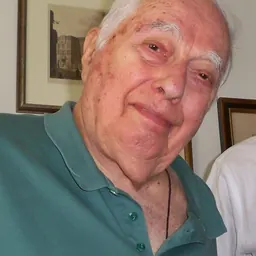
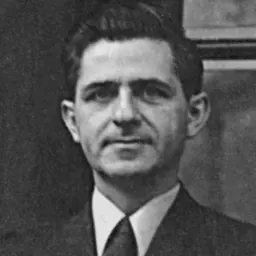

Related people
Same field, nearest in time
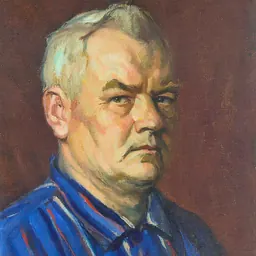
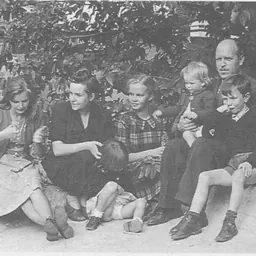


Contemporaries
People whose lives overlapped Lippy Lipshitz's
Frequently asked questions
Who was Lippy Lipshitz?
Sculptor and painter (1903-1980)
When was Lippy Lipshitz born?
Lippy Lipshitz was born on 8 May 1903 in Palanga.
When did Lippy Lipshitz die?
Lippy Lipshitz died on 17 May 1980 in Kiryat Tiv'on.
What was Lippy Lipshitz's occupation?
Lippy Lipshitz was a painter and sculptor.
What nationality was Lippy Lipshitz?
Lippy Lipshitz was South African.
Sources & further reading
Cite this page
APA: Biography.guide. (2026). Lippy Lipshitz. https://biography.guide/lippy-lipshitz/
MLA: "Lippy Lipshitz." Biography.guide, https://biography.guide/lippy-lipshitz/.
Chicago: "Lippy Lipshitz." Biography.guide. https://biography.guide/lippy-lipshitz/.
Data last updated: 2026-09-20 · Spot an error? Report a correction.
Page generated 2026-09-27 05:02 UTC