
About Lindsay Merritt Inglis
Lived 1894 – 1966 (aged 71). Lindsay Merritt Inglis was a New Zealand lawyer and judge.
Major-General Lindsay Merritt Inglis, (16 May 1894 – 17 March 1966) was a New Zealand military officer, lawyer and magistrate. Born in Mosgiel, he volunteered for service in the New Zealand Expeditionary Force during World War I. Inglis served on the Western Front and was awarded the Military Cross for his actions during the Battle of Flers-Courcelette. He ended the war as a company commander and returned to New Zealand in 1919.
In civilian life, Inglis worked as a solicitor and barrister in Timaru and also served in the Territorial Force. He re-enlisted in the New Zealand Army during World War II and commanded the 4th Infantry Brigade in Allied campaigns in Crete and North Africa. Inglis had two periods in command of the 2nd New Zealand Division. After the war, he was appointed to a military court of the Allied Control Commission, which administered Allied-occupied Germany. He later served as chief judge of the Allied Control Commission's Supreme Court from 1947 to 1950.
Early life Inglis was born in Mosgiel, Otago, New Zealand on 16 May 1894 to a banker and his wife. After completing his education at Waitaki Boys' High School in Oamaru, he commenced legal studies at the University of Otago in 1913.
Military career In late April 1915, eight months after the outbreak of the First World War, Inglis volunteered for the New Zealand Expeditionary Force (NZEF). He had some military experience, having served as an officer in the Territorial Force with the 2nd (South Canterbury) Regiment. Posted to the New Zealand Rifle Brigade, he served in Egypt and on the Western Front. As a company commander in his battalion, he participated in the Battle of Flers-Courcelette during the Somme Offensive in September 1916.
Inglis later transferred to the New Zealand Machine Gun Corps, in which he commanded a company for the remainder of the war. Inglis and his company were present at the capture of Le Quesnoy in late 1918, he was discharged from the NZEF in April 1919 and returned to New Zealand.
Second World War Inglis enlisted in the 2nd New Zealand Expeditionary Force (2NZEF) following the outbreak of the Second World War. He needed to have treatment on his thyroid before he could go on active service.
After being reformed during the early part of 1942, 4th Brigade spent time in Syria with most of the 2nd New Zealand Division. In June, the New Zealanders were rushed back to Egypt after the Panzer Army Afrika attacked Gazala, near Tobruk, to begin an advance into Egypt in pursuit of the retreating Eighth Army. The division made a stand at Minqar Qaim and was surrounded by German forces on 27 June. As the Germans probed the perimeter of the New Zealand positions, Freyberg was wounded. Inglis assumed temporary command of the division and successfully led it in an outbreak from Minqar Qaim that night. He would remain as divisional commander for the next two months as Freyberg recovered,
However, during this time Inglis' relationship with his brigade commanders, particularly Brigadier Howard Kippenberger, in command of the 5th Brigade, deteriorated. Kippenberger had become highly rated as a field commander during the war and Inglis may have become resentful. This was uncomfortable for Kippenberger, who had served under Inglis in the Territorial Force and considered him a mentor in the art of warfare. This was further exacerbated on 30 June when Inglis went to Cairo without informing his staff who, in his absence, subsequently asked Kippenberger to take temporary command of the division. Inglis returned on 1 July having become lost when returning from Cairo.
Lieutenant Colonel R. McGaffin, front left, accompanying Brigadier Leslie Inglis, the commander of 4th Armoured Brigade, on an inspection of the personnel of 19th Armoured Regiment in September 1943.
Prior to the First Battle of Ruweisat Ridge, which commenced on 14–15 July, Inglis failed to adjust his artillery support following concerns raised by Kippenberger and Jim Burrows, the commanders of the brigades involved in the planned advance on the defended ridge. Instead, he chose to rely on assurances from his corps commander, Lieutenant-General William Gott, commanding XIII Corps, that British armour would provide any necessary assistance. This proved to be a mistake; although the brigades manage to seize the ridge, they were unable to hold it in the face of stronger than expected counterattacks, and the expected armour support never fully eventuated. Afterwards, while Inglis was critical of the conduct of the brigades and laid primary blame for the failure on them and the lack of armour, he overlooked the influence of his own role as divisional commander on the outcome of the battle. An attack mounted a few days later by 6th Brigade was a further failure and highlighted Inglis' failings as a divisional commander by not ensuring adequate support from his corps commander.
In September 1942, Inglis reverted to command of 4th Brigade, and it was decided that the brigade would be converted to an armoured formation. As an infantry brigade, it had suffered heavy losses at Ruweisat Ridge. Inglis oversaw 4th Brigade's transition to armour, a process which took a nearly a year. He was again acting divisional commander from June to July 1943 when Freyberg was occupied elsewhere. Afflicted with dysentery, Inglis was repatriated to New Zealand in November 1943 for treatment.
In 1950, Inglis ended his appointment as chief judge and returned to New Zealand. He became a magistrate in Hamilton in 1953, and retired in 1965. He died in Hamilton the following year. His collection of military history books was donated to the Kippenberger Research Library in the QEII Army Memorial Museum at Waiouru.
Don’t just read it —
keep it.
Full-length biographies made to live with: read them, listen on the way to work, watch them tonight.
- E-book
- Audio
- Video
Instant download · yours to keep · every purchase keeps this site free
Important facts
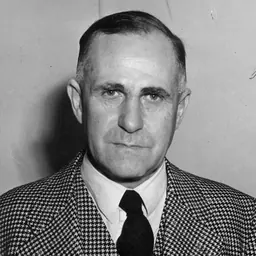
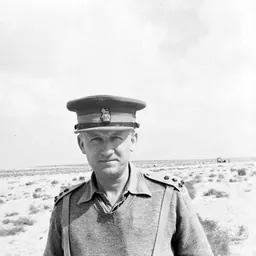
People in Lindsay Merritt Inglis's life
Named in this biography and alive at the same time

Related people
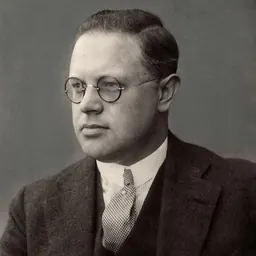
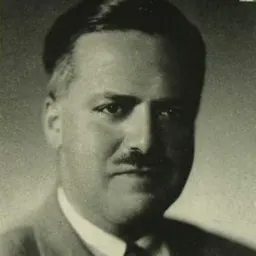
Same field, nearest in time


Contemporaries
People whose lives overlapped Lindsay Merritt Inglis's


Frequently asked questions
Who was Lindsay Merritt Inglis?
Lawyer, military leader, magistrate
When was Lindsay Merritt Inglis born?
Lindsay Merritt Inglis was born on 16 May 1894 in Mosgiel.
When did Lindsay Merritt Inglis die?
Lindsay Merritt Inglis died on 17 March 1966 in Hamilton.
What was Lindsay Merritt Inglis's occupation?
Lindsay Merritt Inglis was a lawyer and judge.
What nationality was Lindsay Merritt Inglis?
Lindsay Merritt Inglis was New Zealand.
Sources & further reading
· Wikipedia: Lindsay Merritt Inglis
Cite this page
APA: Biography.guide. (2026). Lindsay Merritt Inglis. https://biography.guide/lindsay-merritt-inglis/
MLA: "Lindsay Merritt Inglis." Biography.guide, https://biography.guide/lindsay-merritt-inglis/.
Chicago: "Lindsay Merritt Inglis." Biography.guide. https://biography.guide/lindsay-merritt-inglis/.
Data last updated: 2026-09-20 · Spot an error? Report a correction.
Page generated 2026-09-27 05:20 UTC