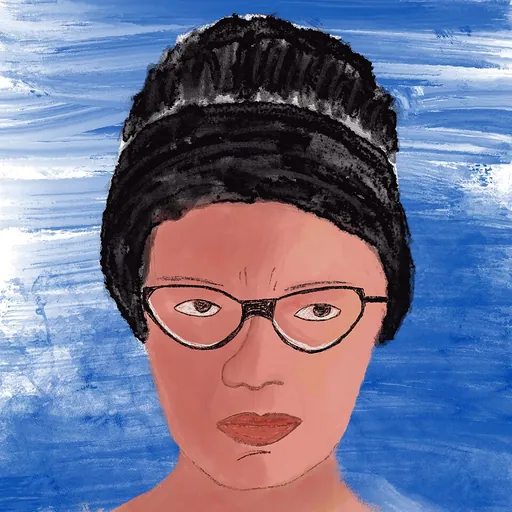
Lilica Boal
Cape Verdean historian, philosopher, teacher and anti-fascist activist
About Lilica Boal
Lived 1934 – 2024 (aged 89–90). Lilica Boal was a historian, philosopher, activist and politician.
Maria da Luz Freire de Andrade (1934 – November 6, 2024), better known as Lilica Boal, was a historian, philosopher, educator, and anti-fascist activist in Cape Verde. She fought for the independence of Guinea-Bissau and Cape Verde, and against the Portuguese Estado Novo dictatorship.
As the only woman serving in the first National Assembly of Cape Verde, she became the country's first female lawmaker.
Early life and education Boal was born in 1934 in Tarrafal, Cape Verde, on the island of Santiago. Her parents were fairly well-off merchants: Dona Eulália Andrade, better known as Nha Beba, and José Freire Andrade, better known as Nho Papacho.
She lived in Tarrafal until she was 11 years old, when she left for the island of São Vicente to study at the Liceu Gil Eanes, now the Liceu Ludgero Lima. She later moved to Portugal, where she finished secondary school in Braga. She attended the University of Coimbra, where she studied history and philosophy.
After two years in Coimbra, she moved to Lisbon, where she enrolled in the history and philosophy program at the University of Lisbon. There, she began to frequent Casa dos Estudantes do Império, a meeting place for students from African colonies of Portugal. It was then that she began to identify herself with the liberation movement. The students discussed the situations in their different countries and what role they could play in the fight for freedom.
Political career
"Flight to the fight" In June 1961, Boal returned to Africa along with other African students in a "flight to the fight," as they called it, with the goal of fighting for independence for their countries. Their trip was clandestine and took them through Porto, San Sebastián (where they were imprisoned for 48 hours), France, and Germany before they finally arrived in Ghana.
Director of the Pilot School Boal began traveling to Conakry, Guinea, to train teachers.
At the invitation of Amílcar Cabral, in 1969 she became the director of the Pilot School of the African Party for the Independence of Guinea and Cape Verde, which was launched in Conakry in 1965 with the goal of educating young fighters and war orphans.
Boal later said of Cabral, who was a significant African anti-colonial leader until his assassination in 1973, "Amílcar cared about the issue of gender. He said that women had to fight for their freedom. He chose women for all aspects of the struggle: education, health, information, logistics.
In this period, Boal joined the leadership of the Women's Democratic Union (UDEMU), the party's women's wing, taking responsibility for international relations. She participated in international women's conferences that dealt with the situation of women in Africa and the world.
From 1974 to 1979 she was the director of the party's Instituto Amizade in Guinea-Bissau, and she was later appointed to the No. 2 spot at the Ministry of Education, serving as director-general of coordination from 1979 until the end of 1980.
She was one of the founders, in 1981, of the Organização das Mulheres de Cabo Verde, an organization that aimed to support women's autonomy. Boal handled the organization's international partnerships. She was buried in her hometown of Tarrafal. On her death, Cabo Verde President José Maria Neves called her "a woman of courage and vision, one of the pillars of our history." The Women's Organization of Cape Verde's Professional Training and Qualification Center in Tarrafal has been named in her honor since 2022.
Don’t just read it —
keep it.
Full-length biographies made to live with: read them, listen on the way to work, watch them tonight.
- E-book
- Audio
- Video
Instant download · yours to keep · every purchase keeps this site free
Important facts
People in Lilica Boal's life
Named in this biography and alive at the same time


Related people
Same field, nearest in time

Contemporaries
People whose lives overlapped Lilica Boal's



Frequently asked questions
Who was Lilica Boal?
Cape Verdean historian, philosopher, teacher and anti-fascist activist
When was Lilica Boal born?
Lilica Boal was born in 1934 in Tarrafal.
When did Lilica Boal die?
Lilica Boal died on 6 November 2024 in Praia.
What was Lilica Boal's occupation?
Lilica Boal was a historian, philosopher, activist and politician.
What nationality was Lilica Boal?
Lilica Boal's recorded nationality: Cape Verde.
Sources & further reading
Cite this page
APA: Biography.guide. (2026). Lilica Boal. https://biography.guide/lilica-boal/
MLA: "Lilica Boal." Biography.guide, https://biography.guide/lilica-boal/.
Chicago: "Lilica Boal." Biography.guide. https://biography.guide/lilica-boal/.
Data last updated: 2026-09-22 · Spot an error? Report a correction.
Portrait: Wikimedia Commons · author & licence
Page generated 2026-09-27 05:02 UTC