
About Lilian Bland
Lived 1878 – 1971 (aged 92). Lilian Bland was a British journalist, aircraft pilot and military flight engineer.
Lilian Bland (28 September 1878 – 11 May 1971) was an Anglo-Irish journalist and pioneer aviator who, in 1910–11, became one of the first women in Great Britain and Ireland, and maybe even in the world, to design, build, and fly an aircraft – the Bland Mayfly.
Early life Bland was born in Maidstone, Kent on 28 September 1878, to a family of Anglo-Irish gentry, the third child of Emily Charlotte (née Madden) and John Humphrey Bland and lived at Willington House, on Willington Street (formerly Willington Lane). Around the turn of the century, she began working as a sports journalist and press photographer for various London newspapers, Bland lived an unconventional lifestyle for the period: smoking, wearing trousers, hunting, shooting, and fishing.
Between 1900 and 1906, following the death of her mother, Bland (aged 28) and her father moved to the family home Tobercorran House on Glebe Road West in Carnmoney, north of Belfast. Bland and her father moved in with her aunt Sarah Maria Wintringham Smythe (d. 1918). Sarah had married General William James Smythe on 15 December 1857; the couple had no children and Smythe had died on 12 July 1887.
From here, Bland continued her photographic work, spending days on remote Scottish islands photographing seabirds, which increased her fascination with flying.
Aviation career
Bland's uncle Robert sent her a postcard of the Blériot monoplane from Paris, inspiring her to take up flying. She studied the measurements of the monoplane during the first official aviation meeting held in Blackpool in 1909, and added her own thoughts into the design of her plane, the Mayfly. The Mayfly had similar wings to Blériot's design, but it could get off the ground by itself. At that point, no one in Ireland had yet made a powered flight – the first would be Harry Ferguson, in December – and to make an aircraft would involve building it herself. Her late uncle, General William James Smythe, an astronomer and member of the Royal Society, provided a house with a workshop. After some background reading on the Wright brothers, and becoming inspired by their achievements, Bland successfully built a flyable model biplane with a wing span of six feet.
From this, she progressed to a full-scale glider with others' help, which was built from spruce, bamboo and canvas and completed early in 1910. For months of experiments, she made numerous glider flights to improve the plane. The finished glider had a wingspan of 20 feet and 7 inches, and weighed 200 pounds. Due to the doubts that were expressed to her about its flying capability, Bland, with deliberate irony, named it Mayfly. The resulting Mayfly was tested by gliding it from Carnmoney Hill, being progressively strengthened and tested with heavier loads, until Bland felt it was strong enough to take an engine. The load test was done by four Irish constables. Since the plane could lift four men, Bland believed it could carry one English engine.
She continued experimenting with further flights, mostly around thirty feet (ten metres) in length, sometimes requiring examination of the ground to identify when the Mayfly had actually lifted off. The longest flight after the first try was approximately one-quarter of a mile (400 metres). She began to plan an improved version and offered biplanes for sale at £250 apiece without an engine and gliders for £80 to fund further development. The Mayfly was able to stably glide over 90 yards and rise 30 feet even in gusty winds, according to Bland's words. The aircraft was, however, not capable of much more and would not cope with a larger engine. Finally, Bland gave the Mayfly air-frame to a boy's gliding club and sold the engine.
Later life By April 1911, she was running a Ford car dealership in Belfast, Ireland, but in 1911, she gave up the business to marry her cousin Charles Loftus Bland (born 21 October 1881). Charles was a lumberjack from British Columbia and had returned to Ireland to propose to Lilian.
Bland returned to the United Kingdom in 1935, settling in Kent. She became a gardener and gambled her wages on the stock market in the hopes of getting more money. Four of her paintings were put up for auction in Penzance in July 2021.
A 2021 exhibition on Irish innovators presented by National Museums NI the Ulster Transport Museum in Cultra, Belfast, featured Bland's contribution to Irish aviation.
Zara Rutherford, the youngest woman to fly solo around the world (at age 19 in 2022), credited Lilian Bland as one of her sources of inspiration.
Don’t just read it —
keep it.
Full-length biographies made to live with: read them, listen on the way to work, watch them tonight.
- E-book
- Audio
- Video
Instant download · yours to keep · every purchase keeps this site free
Important facts
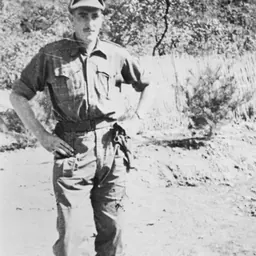
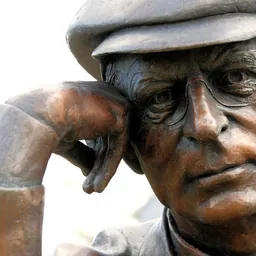
People in Lilian Bland's life
Named in this biography and alive at the same time



Related people
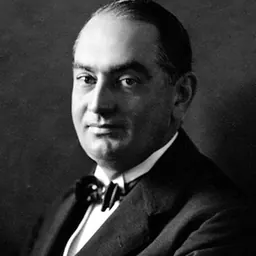
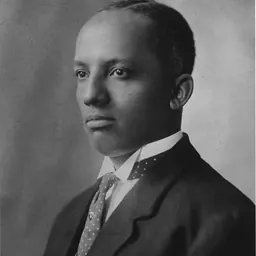
Same field, nearest in time


Contemporaries
People whose lives overlapped Lilian Bland's




Frequently asked questions
Who was Lilian Bland?
English aviator (1878-1971)
When was Lilian Bland born?
Lilian Bland was born on 22 September 1878 in Maidstone.
When did Lilian Bland die?
Lilian Bland died on 11 May 1971 in Sennen.
What was Lilian Bland's occupation?
Lilian Bland was a journalist, aircraft pilot and military flight engineer.
What nationality was Lilian Bland?
Lilian Bland was British.
Sources & further reading
Cite this page
APA: Biography.guide. (2026). Lilian Bland. https://biography.guide/lilian-bland/
MLA: "Lilian Bland." Biography.guide, https://biography.guide/lilian-bland/.
Chicago: "Lilian Bland." Biography.guide. https://biography.guide/lilian-bland/.
Data last updated: 2026-09-20 · Spot an error? Report a correction.
Page generated 2026-09-27 05:33 UTC