
About Lilia Carrillo
Lived 1930 – 1974 (aged 43). Lilia Carrillo was a Mexican painter.
Lilia Carrillo García (2 November 1930 – 6 June 1974) was a Mexican painter from the Generación de la Ruptura, which broke with the Mexican School of Painting of the early 20th century. She was trained in the traditional style but her work began to evolve away from it after studying in Paris in the 1950s. While she and husband abstract artist Manuel Felguérez struggled to get their work accepted, even selling Mexican handcrafts and folk art to survive, she eventually had her canvas work exhibited at large venues in Mexico City and various cities in the world. Her work was part of the inaugural exhibition of the Museo de Arte Moderno in Mexico City in 1964. After her death in 1974, her work received honors from the Palacio de Bellas Artes and has been exhibited in various venues.
Life Lilia Carrillo was born on November 2, 1930, to General Francisco Carrillo, a pilot, and Socorro García, their only child. The father abandoned the family when Lilia was young and her mother raised her alone.
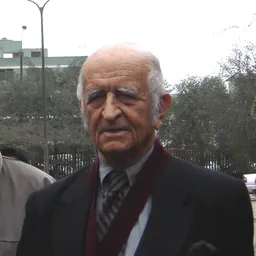
When she was little, Carrillo wanted to be an astronomer. During her childhood, she was surrounded by intellectuals, poets and artists that visited her home in Colonia Roma in Mexico City. Her mother was good friends with María Asúnsolo and was well acquainted with people such as Diego Rivera, David Alfaro Siqueiros, Carlos Pellicer and Juan Soriano . While in school, she participated in a mural at the former Monastery of San Diego. During this time, she fell from the scaffolding, injuring her back. Although she recovered, it is possible that this was the source of her future ailment. Both were of the new Generación de la Ruptura artist movement, which had trouble selling paintings in established venues. Carrillo and Felguérez turned to Mexican handcrafts and folk art to make money to survive. Carrillo had two children to support as well, prompting her to take on a Czechoslovak persona of "Felisa Gross" to produce purely for commercial purposes. In 1962, she traveled to Peru with Felguérez to exhibit her work at the Instituto de Arte Contemporáneo. On this occasion, she met Peruvian vanguard artists such as Fernando de Szyszlo.
Her first professional exhibitions were in Paris, at the Maison du Mexique and the Foreign Artists Exhibition in 1954.
Major exhibits during her career include the Gallery of the Pan American Union in Washington, D.C., in 1960, VI Tokyo Biennale in 1961, the Instituto de Arte Contemporáneo in 1962 in Lima, Peru, the Arte Actual de América y España exhibition in 1963, the Casa del Lago in Mexico City in 1964, Pintura Contemporánea de México exhibition at the Casa de las Américas in Havana in 1966.
Artistry While Carrillo was studying at La Esmeralda, she rejected abstract art, with her work heavily influenced by the dominant Mexican School of painting. Her very early work is figurative such as her self-portrait from 1950. After she graduated Juan Soriano encouraged her to explore other artistic trends and she went to Paris. There she began to experiment with Cubism, influenced by Matisse, Modigliani and Picasso, and the Cubism, Surrealism, Expressionism and abstract art movements in general. When she returned to Mexico in the mid-1950s, her work was already showing influence from abstract art.
In the 1950s she became an adherent of automatism, a theory introduced to Mexico by Austrian painter Wolfgang Paalen. It is based on Surrealism and posits that the artist’s hand should be guided by its own movement in order to tap the subconscious. She then moved onto her own abstract style which has been classified as “lyrical informal abstractionism” or “informal expressionism.” She never rejected the labels but always insisted that she did not have a real method for creating her works, or if she did, it changed often.
She was part of the Generación de la Ruptura along with Vicente Rojo, Francisco Corzas, José Luis Cuevas and others. These artists broke with the styles and mythology of the Mexican School of Painting and struggled to get their work shown through established channels. This resulted in much criticism from the old guard but some of the older generation such as Rufino Tamayo, Carlos Mérida and Juan Soriano came to accept the new movement.
Don’t just read it —
keep it.
Full-length biographies made to live with: read them, listen on the way to work, watch them tonight.
- E-book
- Audio
- Video
Instant download · yours to keep · every purchase keeps this site free
Important facts
Family & relationships
People in Lilia Carrillo's life
Named in this biography and alive at the same time

Related people
Same field, nearest in time


Contemporaries
People whose lives overlapped Lilia Carrillo's

Frequently asked questions
Who was Lilia Carrillo?
Mexican painter (1930-1974)
When was Lilia Carrillo born?
Lilia Carrillo was born on 2 November 1930 in Mexico City.
When did Lilia Carrillo die?
Lilia Carrillo died on 6 June 1974 in Mexico City.
What was Lilia Carrillo's occupation?
Lilia Carrillo was a painter.
What nationality was Lilia Carrillo?
Lilia Carrillo was Mexican.
Sources & further reading
Cite this page
APA: Biography.guide. (2026). Lilia Carrillo. https://biography.guide/lilia-carrillo/
MLA: "Lilia Carrillo." Biography.guide, https://biography.guide/lilia-carrillo/.
Chicago: "Lilia Carrillo." Biography.guide. https://biography.guide/lilia-carrillo/.
Data last updated: 2026-09-22 · Spot an error? Report a correction.
Page generated 2026-09-27 05:09 UTC